
Lieferung heute & morgen

Qualitätsgarantie

Willkommens-Angebote freischalten: KOSTENLOSE Lieferung | Bis zu 80 % RABATT | Kostenlose 30-Tage-JoyPlus-Testphase
App herunterladen
A cake tin should bake your mixture evenly, release it without damage and be as easy to clean as possible after use. In practice, though, it’s not just the material and diameter that can lead to a poor purchase. Fastenings, coatings and conflicting care instructions are often overlooked too.
This buying guide from the Joybuy Product Recommendation Officer helps you choose a cake tin, springform tin or round baking tin using clear, practical criteria.
A non-stick baking tin can make it easier to release your bake. However, it will only stay in good condition if you follow the manufacturer’s instructions. Metal knives, scouring pads and sudden changes in temperature can damage the surface. And “easy to clean” doesn’t automatically mean “dishwasher-safe”.
So check the specific guidance on:
A 20 cm cake tin, a 26 cm cake tin and a 28 cm cake tin differ in more than just diameter. With the same amount of mixture, a cake will be deeper in a smaller tin and may need longer to bake. In a larger tin, the mixture will spread out more thinly.
If you often use recipes from cookbooks or websites, try to match the tin size specified as closely as possible. A difference of several centimetres can change the depth of the cake and affect the result.
The side fastening on a springform tin needs to be secure. If the ring isn’t fully closed, runny cheesecake mixture or tart fillings may leak out. Check that the mechanism clicks firmly into place and that the base sits securely in the ring.
Steel and carbon steel are widely used for cake tins. The thickness of the material affects how sturdy the tin is and how it responds to heat. Thin tins are usually lightweight, but are more likely to warp at high temperatures. Heavier versions take longer to heat up, but can distribute heat more evenly through the mixture.
Cast iron retains heat for a long time and is correspondingly heavy. It’s a good choice if you can handle the weight comfortably and want a versatile tin for cakes or tarts.
If you’re choosing a coated cake tin, make sure the surface is even and undamaged. A removable base makes it easier to release delicate bakes. Depending on the product, an enamelled base may also be suitable for cutting and serving straight from the tin. Always follow the manufacturer’s specific instructions.
Also check the internal depth. A shallow flan tin isn’t necessarily suitable for tall sponge cakes or layered desserts.
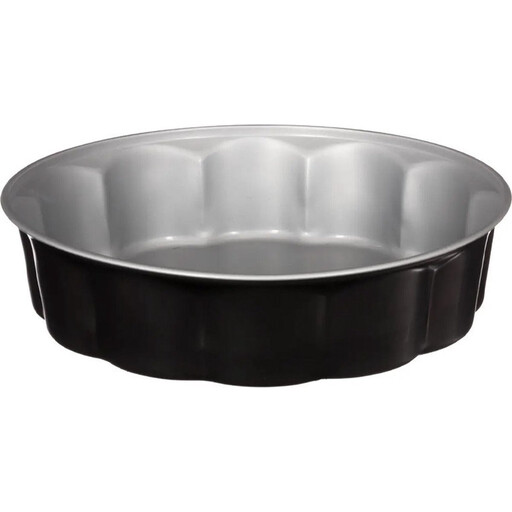
Why this product suits this profile: This round metal tin has a diameter of 26 cm, making it suitable for many classic cake recipes. At 300 g, it’s also easy to handle.
The stated diameter and 6.5 cm depth make it easy to check against your existing recipes. The care instructions are clear: hand wash rather than put it in the dishwasher.
26 cm diameter, metal construction and stated non-stick coating; suitable for oven use.
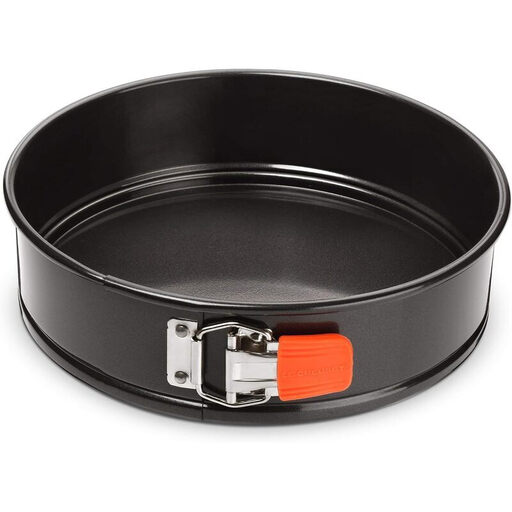
Why this product suits this profile: This 20 cm springform tin combines a removable base with a side fastening. It’s designed for delicate cakes, gateaux and soft cheesecakes.
The manufacturer states that it’s oven-safe up to 240 °C and provides clear care instructions: hand wash with a soft sponge and avoid sharp tools. The fastening should be fully closed before baking.
Carbon steel, removable base, non-stick coating and rolled edges with silicone inserts; not dishwasher-safe.
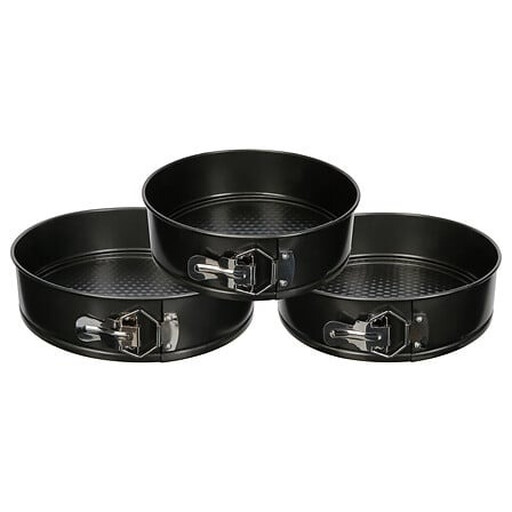
Why this product suits this profile: Three sizes—22 cm, 24.5 cm and 26 cm—accommodate different cake heights and recipe quantities. The tins can also be stacked inside one another.
Having a range of sizes means you’re less likely to have to use a tin that isn’t right for the recipe. Before buying, though, check you have room in your kitchen cupboard for all three tins.
Three steel springform tins with a non-stick coating and removable bases; stated to be oven-safe up to 280 °C.
We’ve put together a complete, regularly updated list of products that meet these strict selection criteria and fully comply with the safety regulations in force in the EU.
Before using your cake tin for the first time, wash it with warm water and mild washing-up liquid, then dry it thoroughly. For coated models, a thin layer of grease is recommended if the manufacturer advises it.
Also remember to:
A springform tin with a removable base is usually practical, as you won’t need to turn the cake out. If the filling is runny, make sure the fastening closes securely. For particularly soft cakes, you can also use baking paper on the base, provided this is suitable for the recipe.
A 26 cm or 28 cm cake tin offers more surface area than a 20 cm model. The amount of mixture and the recipe instructions are still key. If you bake a recipe designed for a 20 cm tin in a larger one, the cake may be flatter and bake more quickly.
There’s no set lifespan that applies to every tin. It depends on the temperature, cleaning, storage and how you treat the coating. Hand washing, soft sponges and suitable kitchen utensils can help protect the surface. Replace the tin if you notice visible scratches or flaking.