
Lieferung heute & morgen

Qualitätsgarantie

Willkommens-Angebote freischalten: KOSTENLOSE Lieferung | Bis zu 80 % RABATT | Kostenlose 30-Tage-JoyPlus-Testphase
App herunterladen
An electric stand mixer can take much of the effort out of kneading, mixing and whisking. However, a high wattage alone isn’t a reliable way to choose one. If you focus only on big power figures or a long list of accessories, you could overlook important factors such as the amount of dough you can make, how noisy the machine is and how easy it is to clean.
When buying a stand mixer with a bowl, there are three common pitfalls to watch out for:
If you’re looking for a stand mixer for kneading or a dough kneader, consider the power transmission and intended use as well as the rated power. Models with 1,200 W are often marketed for more demanding doughs. One example is the BioloMix BM601, with a 1,200 W DC motor, six speed settings and a pulse function.
However, a higher wattage doesn’t mean you can run the machine continuously without limits. Follow the instructions, don’t exceed the stated maximum quantity and start heavy doughs at a low speed. Overload protection can help protect the machine, but it doesn’t replace correct use.
Bowl sizes between 5 and 7 litres are handy for families, frequent baking and larger quantities. A stand mixer with a stainless steel bowl is generally easy to care for and resistant to common ingredients. Even so, make sure the capacity suits your available storage space: a large machine needs plenty of room on the worktop and beneath wall cupboards.
A more compact 3- or 4-litre bowl may be a better choice for smaller households. The key is not to go for the largest capacity possible, but to find the right balance between recipe size, worktop space and storage.
Several speed settings make it easier to combine ingredients gently, knead dough and whisk mixtures. A stand mixer with a timer can help you stick to consistent mixing times. An LCD display or OLED touchscreen makes the settings easier to read, but it can’t replace clear instructions.
When choosing a quiet stand mixer, take a close look at the stated decibel rating. According to the product details, the BioloMix BM601 operates at up to 60 dB. However, how loud it seems will depend on the work surface, speed, attachments and dough consistency. A non-slip base reduces vibrations and can help keep noise down during everyday use.
A planetary mixing action moves the attachment around the bowl while also rotating it on its own axis. This helps it reach ingredients in different parts of the bowl. Even so, you may still need to scrape down the sides by hand when mixing small quantities.
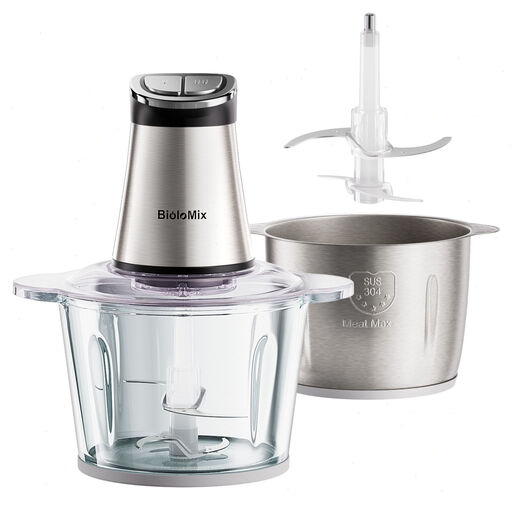
Why it suits this profile: The 3-litre bowl and two speed settings are suited to simple mixing and baking tasks in a smaller household. According to the product details, the bowl and accessories are dishwasher-safe.
The straightforward set-up avoids unnecessary extra features and makes the machine easy to use.
3-litre bowl, LED timer display, 300 W motor and dishwasher-safe components according to the product description.

Why it suits this profile: For regular baking projects, the product details list a 1,200 W motor, two bowls of 7 and 5 litres, and built-in scales.
Having two bowl sizes means you don’t have to process small quantities in a very large bowl.
Built-in EasyWeigh scales, 7- and 5-litre bowls, stepless speed control and several baking attachments.

Why it suits this profile: According to the product description, this machine combines mixing, kneading, blending and meat processing. It comes with a 1,300 W motor, a 6-quart stainless steel bowl and several attachments.
The listed safety features, such as the locking mechanism and overload protection, help address common risks during use.
6-quart bowl, eight speed settings plus pulse function, and mincer and blender attachments according to the product details.
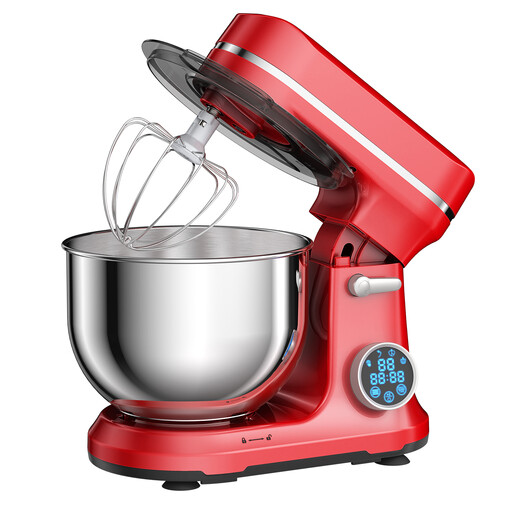
Why it suits this profile: According to the product details, the 5-litre stainless steel bowl, planetary mixing action and eleven speed settings are designed to handle different batch sizes and types of dough.
Clearly stated speed settings and bowl capacity make it easier to match the machine to your recipe and batch size.
1,200 W DC motor, planetary mixing action, OLED touchscreen, eleven speeds and dishwasher-safe parts according to the product description.
Energy consumption depends on the motor power, running time and selected speed. A 1,200 W machine running at its full rated power would theoretically use 1.2 kWh per hour; actual consumption is often lower during normal mixing. For running costs, short operating times and choosing a machine that suits your needs matter more than wattage alone.
Also bear the following points in mind:
We’ve put together a complete, regularly updated list of products that meet these strict selection criteria and fully comply with the safety regulations applicable in the EU.
For bread dough, you’ll need a suitable dough hook, sturdy construction, effective power transmission and a bowl that’s right for your recipe size. A stand mixer for bread and cakes should also be able to start at a low speed. The maximum dough quantity stated in the instructions is more important than the advertised maximum power.
Noise levels vary depending on the model, speed, surface and dough consistency. Manufacturer or retailer claims such as ‘up to 60 dB’ are a useful guide. Don’t assume that the machine will reach this level every time you use it.
A timer is useful when you need to stick to set mixing times. An LCD display makes the time and speed easier to see. However, when choosing a machine, these features should come after motor power, bowl size, safety features, accessories and ease of cleaning.