
Lieferung heute & morgen

Qualitätsgarantie

Willkommens-Angebote freischalten: KOSTENLOSE Lieferung | Bis zu 80 % RABATT | Kostenlose 30-Tage-JoyPlus-Testphase
App herunterladen
A lab-grown diamond ring is increasingly the focus for buyers who value modern aesthetics, traceable origins, and excellent value. The decision to choose such a ring, whether as a lab-diamond engagement ring or a personal piece of jewelry, often raises questions. This guide is designed to provide you with objective information and clear guidance, helping you make an informed choice that aligns with your vision.
As your Joybuy Product Recommendation Officer, I have analysed market data and product features to present a curated selection of rings and explain the key criteria for your purchase.
Selecting the right ring depends on several factors. Understanding a few fundamental characteristics will help you objectively assess the quality and value of a piece of jewelry.
The internationally recognised evaluation criteria for diamonds, known as the "4 Cs," apply equally to both lab-grown and mined diamonds.
The ring's metal influences not only its appearance but also its durability and how it feels to wear.
An ethical diamond ring is distinguished by its transparent origin. Lab-grown diamonds offer a clear advantage here, as their creation history is fully traceable. For larger stones (often 1 carat and up), renowned gemological institutes like the IGI (International Gemological Institute) issue certificates. These documents confirm the diamond's properties (the 4 Cs) and guarantee its authenticity as a synthetic diamond ring. This fosters confidence in sustainable jewelry.
Based on design, material quality, and the specified diamond specifications, we have curated a few models for you.
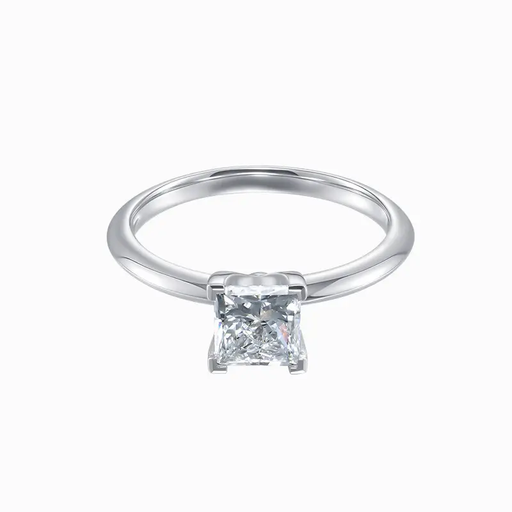
Why It Stands Out: This ring's design is inspired by geometric architecture. The centrally placed 1-carat princess-cut diamond is known for its clean symmetry and intense light refraction. The silver-plated sterling silver setting creates a modern yet lightweight frame.
Advantages:
Who It's For: For those who appreciate a clean, architectural design and are looking for a ring that combines modern elegance with an impressive stone.
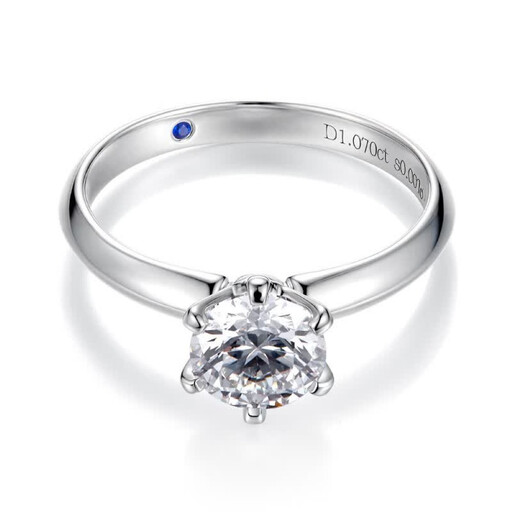
Why It Stands Out: This ring combines a central diamond with a double halo design. Its unique feature is the prong-less setting technique, which creates the illusion that the diamonds are floating. A blue sapphire, discreetly set inside the ring, serves as a symbolic detail.
Advantages:
Who It's For: For buyers seeking a classic halo ring with a modern, sophisticated detail. Its high diamond quality makes it an excellent choice for a special occasion like an engagement.
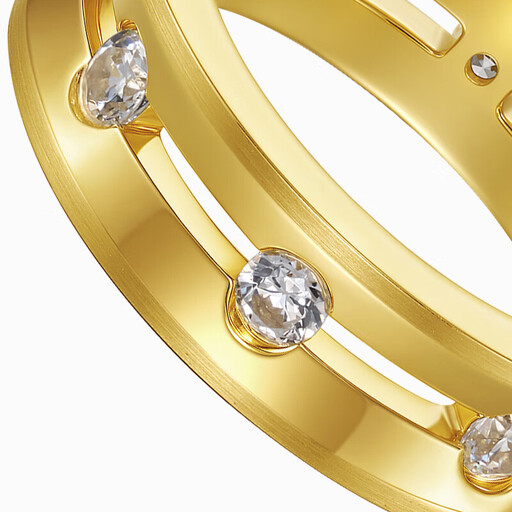
Why It Stands Out: This model is a statement piece. It combines S925 silver with yellow gold and features a double halo design framing two round brilliant diamonds with a total weight of 2.03 carats. The platinum (PT 950) setting secures the precious stones.
Advantages:
Who It's For: For anyone seeking an opulent and luxurious ring to symbolise a significant life milestone and achieve maximum visual impact.
The selection presented here represents only a small fraction of the available designs. If you wish to explore more styles, settings, or carat sizes, you may find the perfect piece in our broader collection.
Discover More Diamond Fashion Rings Here
Yes. A lab-grown diamond possesses the exact same chemical, physical, and optical properties as a diamond formed in nature. It is made of pure carbon that has crystallised into a crystal structure under high pressure and high temperature. The only difference is its origin.
The main advantages fall into three areas:
Care is identical to that for rings with mined diamonds. Avoid contact with harsh chemicals like chlorine or cleaning agents. For regular cleaning, a soft cloth is usually sufficient. For a more thorough cleaning, you can soak the ring in warm water with a little mild soap and gently brush it with a soft brush. It is best to store jewelry separately to avoid scratches. For plated rings, contact with lotions and perfumes should be avoided to preserve the coating.