Which setup is right for you?

Detail photographers

If you want to show individual stitches and threads in close-up, consider the magnification, focusing distance and depth of field of the specific lens. Canon Germany and the Canon Academy highlight the need for precise focusing in close-up photography.

Table-setting photographers

If you want to capture the whole table arrangement as well as different compositions, compare the angle of view and the lens actually included in the kit. Canon Germany and Nikon Germany specify the lenses supplied with their respective kits.

Photographers working in changing window light

If you want to photograph bright lace repeatedly and keep the colours consistent, plan for white balance, exposure and a stable setup. Nikon Germany explains that you can adjust white balance when lighting conditions change; the Canon Academy covers camera shake in close-up photography.

What should you look for when buying?

Keep using your existing camera

A good fit if: The whole decoration is already large and sharp enough in the frame, and you mainly want to improve the lighting, colours or camera shake.

Trade-off: A stable setup won’t improve the close-up capability of a lens that can’t show the details large enough.

Compact camera with fixed zoom

A good fit if: You want to photograph table scenes and occasional details without changing lenses; check the close-up capability at your preferred zoom setting.

Trade-off: The built-in lens can’t be replaced with a separate macro lens later.

Mirrorless kit with standard zoom

A good fit if: You want to photograph whole arrangements and switch between different compositions, with the option to add a close-up lens later.

Trade-off: A kit zoom isn’t automatically a macro lens; check the minimum focusing distance and magnification of the lens included.

Interchangeable-lens camera with macro lens

A good fit if: You regularly want individual stitches and threads to fill a large part of the frame; make sure the camera mount and lens are compatible.

Trade-off: An extra lens and possibly a tripod mean more equipment; at close shooting distances, you’ll need space for the camera and lighting.

What you want to do What to check before buying Who is this important to?
Show fine lace patterns in close-up Check the magnification of the specific lens, its minimum focusing distance and the space in front of the lens. If I want to show individual stitches in close-up, magnification and precise focusing matter to me. Around 36% of consumers rank close-up photography as their top buying priority.
Frame the whole table setting Check whether the product includes a camera body or a kit with a lens, then compare the focal length range and composition with your own table. If I want to switch between an overall view and different compositions, the angle of view and included lens matter to me. Around 29% of consumers prioritise an overall view of the table.
Photograph bright lace in changing window light Look for accessible exposure and white balance settings, and plan for a stable camera position. When the light from the window changes, I want better control over colour and sharpness from one shot to the next. Around 21% of consumers prioritise consistent shots in changing light.
Find a simple all-in-one package Compare what’s included with the setup you need, and check whether your existing camera can capture the details you want. If I want to keep extra equipment to a minimum, I look for a straightforward package and consider what I already own. Around 14% of consumers prioritise a simple all-in-one package.

Common buying misconceptions

  • Assuming more megapixels mean better close-up photography

    With fine lace patterns, the composition and size of the details also depend on the lens’s magnification and focusing distance. At higher magnifications, depth of field also becomes shallower.

    Before you buy, check how large you want the smallest subject to appear and what magnification the lens actually included can achieve.

    A suitable lens may also be needed for greater magnification.

  • Treating a camera body as a complete photography kit

    Whether a lens is included depends on the specific offer. A standard zoom isn’t automatically designed for the macro magnification you need.

    Compare the camera body, kit and any additional macro lens you may need, based on what each package includes.

    An extra lens and possibly other accessories mean additional equipment.

  • Relying on image stabilisation instead of a stable setup and accurate focus

    Camera movement can show up in close-up shots. Image stabilisation won’t freeze a moving subject or increase depth of field.

    Choose a stable position and check that the focus is precisely on the lace detail you want to capture.

Key camera brands at a glance

Canon

Canon offers both an interchangeable-lens system camera and a compact camera with a fixed zoom.

  • Canon Germany lists an RF-S 18–45 mm lens with the EOS R50 kit; the separately listed RF 35mm F1.8 MACRO IS STM achieves 1:2 magnification, according to Canon.
  • The built-in lens on the PowerShot G7 X Mark III can’t be replaced with a macro lens. This information comes from Canon Germany and is not an independent comparison test.

Nikon

The Z50II kit with Z DX 16–50 mm VR lens is an option for flexible table scenes; you’ll need to choose a macro lens separately.

  • Nikon Germany lists 1:1 magnification for the separately available NIKKOR Z MC 50 mm 1:2.8.
  • For the close-up scenario described, Nikon specifies a distance of around 5 cm between the front of the lens and the subject. This limited space can make it harder to position the lighting. These are manufacturer specifications, not the findings of an independent hands-on test.

Fujifilm

Pair the X-S20 with the separately available XF30mmF2.8 R LM WR Macro to create a system camera setup for close-up photography.

  • FUJIFILM X Germany lists sensor-shift stabilisation for the X-S20 body and maximum 1:1 magnification for the XF30mm macro lens.
  • The macro lens isn’t included when you buy the camera body alone. Also check that there’s enough room for lighting at a short shooting distance.

OM SYSTEM

The OM-5 Mark II is an interchangeable-lens option if you’re considering in-camera features such as Focus Stacking as well as table photography.

  • OM SYSTEM lists Focus Stacking as a camera feature.
  • That doesn’t mean every lens is suitable or that you can get the shot without a stable setup. Check the specific lens combination and the conditions required for your intended use.

Joybuy camera deals

The Joybuy offers below include cameras for different types of photography. For fine lace patterns, check whether each model’s lens and close-focusing ability can achieve the composition you want.
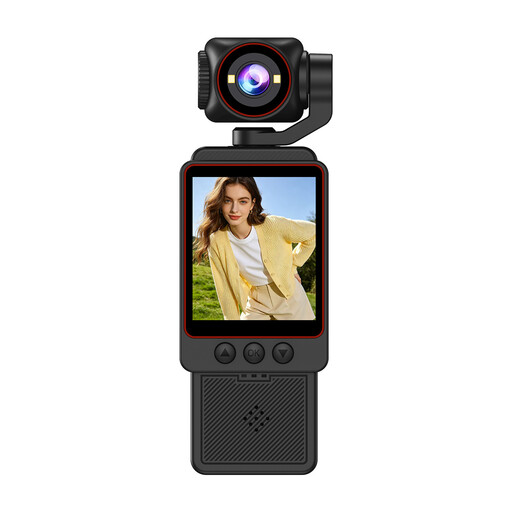
Small video camera with 1080P HD video and HD photo specification

Small Video Camera, 1080P HD Video

The product title mentions photography but not macro features. For close-ups, check the lens’s magnification and minimum focusing distance.

Listed in the title: 1080P HD video, HD photos and Wi-Fi transfer.

Joybuy
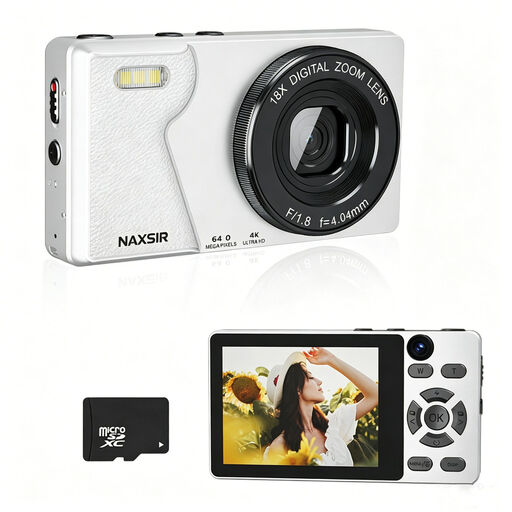
NAXSIR digital camera with 64 MP and 18× digital zoom

NAXSIR digital camera, 64 MP, 18× digital zoom, 32 GB memory card

The title mentions autofocus and digital zoom, but not macro features. Before choosing it for close-ups of lace, check the magnification and minimum focusing distance.

Listed in the title: 4K Ultra HD, 64 MP photo resolution, 18× digital zoom and a 32 GB memory card.

Joybuy
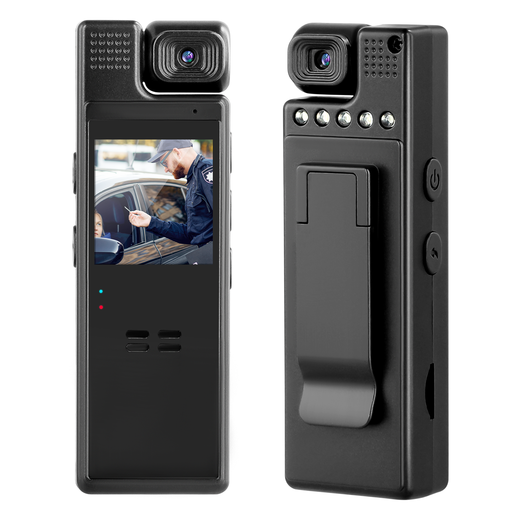
Compact camera with 1080P and a 180° rotating lens

Compact camera with audio, 1080P and 180° rotating lens

The title lists indoor use as one application, but doesn’t mention macro features. For fine lace patterns, check whether the focus covers the close-up distance you need.

Listed in the title: 1080P and a 180° rotating lens.

Joybuy
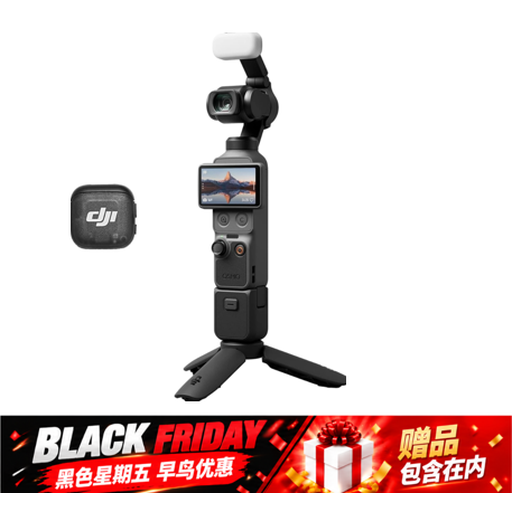
DJI Osmo Pocket 4 Creator Combo

DJI Osmo Pocket 4 Creator Combo

The product title describes a gimbal camera for vlogging. For close-ups of lace, check whether the focus can achieve the composition you want.

Listed in the title: 1″ CMOS, 2× zoom, 3-axis stabilisation and 107 GB of built-in storage.

Joybuy

DJI Osmo Pocket 4 Standard Combo

DJI Osmo Pocket 4 Standard Combo

The product title describes a camera for vlogging and photography, but doesn’t mention macro features. For fine lace patterns, check the focus range of the specific model.

Listed in the title: 1″ CMOS, 2× zoom, 107 GB of built-in storage and a rotating 2-inch screen.

Joybuy

Frequently asked questions

Do I definitely need a macro lens for individual lace stitches?

Not for every table photograph. If you want a small stitch to fill a large part of the frame, check the maximum magnification of the specific lens; a standard zoom may be enough for the whole decoration. The right magnification depends on the composition you want.

How can I avoid blurry close-ups by the window?

Set the camera up securely and check the focus on the lace detail you want to capture. Depth of field is shallow in close-up photography, so try different apertures if needed. Stabilisation can reduce camera movement, but it won’t freeze a moving subject.

What extra costs and requirements should I consider when buying?

Check what’s included: a camera body doesn’t necessarily come with a lens, and a kit zoom won’t automatically replace a macro lens. When you buy from a trader in the EU, faulty goods are covered by a legal guarantee for at least two years from receipt; this is separate from any additional manufacturer’s warranty, as explained by Your Europe. For online purchases in Germany, consumers generally have 14 days from receipt to notify the seller that they wish to withdraw from the contract, according to the Verbraucherzentrale; check for possible exceptions and return conditions.

Do I need to consider data protection when publishing photos in Germany?

It depends on whether the images reveal personal data. If, for example, people or other identifying details are shown and personal data is being processed, a legal basis under the GDPR is required, according to the Federal Commissioner for Data Protection and Freedom of Information. Consent is one possible legal basis, but not the only one; this does not mean that a table setting on its own requires general permission.