Shoppers looking for a lactose-free label
You want the dry mix to be explicitly labelled lactose-free. You’ll still check the ingredients and allergen information, particularly if you have other intolerances or allergies.


If you need the dry mix to be explicitly labelled lactose-free, choose a variety with that label and also check its ingredients and allergen information. Plain oats give you more control over the liquid and ingredients in your finished serving. With protein or chocolate porridge, it’s especially important to check the recipe for the specific variety, as these mixes may contain milk ingredients.
You want the dry mix to be explicitly labelled lactose-free. You’ll still check the ingredients and allergen information, particularly if you have other intolerances or allergies.
You want to choose the oat base, liquid and sweetness separately. Plain oats or an unflavoured mix could work for you, as long as the other ingredients in your finished serving also meet your needs.
You’re looking for a particular flavour or nutritional profile. With these mixes in particular, check the recipe for milk ingredients rather than assuming the product type means it’s lactose-free.
First, check that the specific dry mix and your planned method of preparation meet your needs. Then you can weigh up a ready-made mix against putting together your own oat base.
| What matters to you | What to check when buying | Who it matters to |
|---|---|---|
| Lactose-free labelling | The label on the specific variety, as well as the ingredients and allergen information on the pack. | If the dry mix itself needs to be clearly labelled lactose-free, I don’t want to rely on the product type alone. This is likely to be the main concern for around 42% of consumers. |
| Making it your own | Whether the instructions say your chosen oat base can be made with water or a suitable plant-based alternative. | I want to choose the liquid and other ingredients myself rather than pick a pre-flavoured mix. This flexibility is likely to come first for around 33% of consumers. |
| Flavour and nutrition | The ingredients list and nutritional information for the specific variety, especially for protein or chocolate porridge. | If I’m looking for a particular flavour or protein profile, the recipe still needs to meet my needs. Around 25% of consumers are likely to consider this their most important concern. |
The liquid and toppings are part of your finished serving too. In a basic porridge recipe, Kölln lists water and oat drink as possible alternatives to milk; this doesn’t automatically apply to every mix.
Check the instructions for your variety and choose all the ingredients to suit your needs.
Kölln’s Feine Basis, which is labelled lactose-free, contains almonds and, according to Kölln, carries a warning that it may contain traces of milk. So a lactose-free label doesn’t tell you whether a product is suitable if you have a milk or nut allergy.
If you have other allergies, read the ingredients list and allergen information on the specific pack. Seek professional advice about any medically necessary dietary restrictions.
According to Seitenbacher, its Protein Porridge Schokolade contains milk protein and whole milk powder. Neither ‘protein’ nor ‘chocolate’ reliably tells you whether a variety is labelled lactose-free.
Compare only varieties whose ingredients and labelling meet your needs. Then consider their flavour and nutritional information.
Kölln’s Hafer-Porridge Feine Basis is a dry mix labelled lactose-free. This applies to this variety, not to all Kölln products.
Seitenbacher offers products including Protein Porridge Schokolade.
Alnatura offers Hafer-Beeren-Porridge for children from 10 months old.
When searching for porridge, REWE offers a filter for lactose-free products.
EDEKA offers Haferhimmel Porridge Beeren under its Herzstücke range.
These oats are suited to an option where you choose the liquid and other ingredients yourself. For a lactose-free meal, check the information on the relevant pack and all the ingredients in your finished serving.
 Image unavailable
For porridge made with coarse oats, where you choose the liquid yourself.
Check the pack size, current lactose-free labelling and allergen information on the packaging.
 Image unavailable
For porridge made with fine oats and a liquid of your choice.
For a lactose-free shop, check the labelling and allergen information on the specific pack.
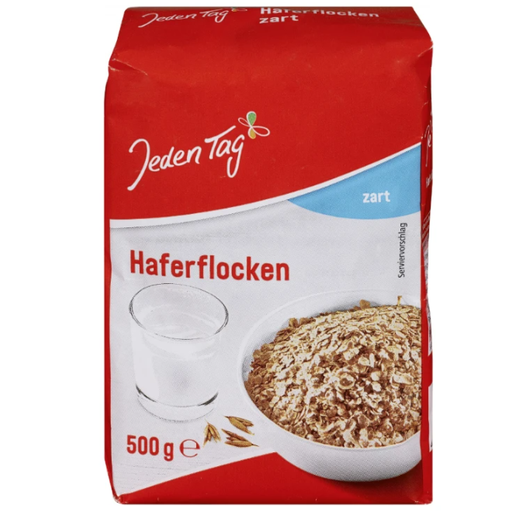 Image unavailable
An oat base for homemade porridge, provided the product format suits how you want to use it.
Check the pack to see whether it contains oats or oat flour, and look at the lactose-free labelling and allergen information.
 Image unavailable
For homemade porridge with a coarse oat base, if that’s the texture you’re looking for.
Check the product name against the pack: the product information refers to both oats and oat flour. Also check the labelling and allergen information.
No. A lactose-free label doesn’t automatically mean a product is dairy-free or suitable if you have a milk protein allergy. The Allergy Information Service distinguishes between intolerances and allergies. If you have a milk allergy, check the ingredients and allergen information on the specific pack, and seek professional advice about any necessary dietary restrictions.
No, follow the instructions for the specific variety. Kölln lists water as a possible liquid in a basic porridge recipe, while Alnatura’s instructions for its Hafer-Beeren-Porridge say to make it with whole milk.
Yes. A lactose-free label doesn’t replace checking the ingredients and allergen information. For example, Kölln Feine Basis contains almonds and, according to Kölln, carries a warning that it may contain traces of milk.
No. A mix that’s explicitly labelled lactose-free isn’t a blanket requirement if you don’t need one. Choose according to the ingredients, how you plan to prepare it and your personal needs. If you have recurring symptoms, it’s worth seeking professional advice.