Shoppers keeping an eye on total sugar
You want to compare porridge products by their sugar content per 100 g, and choose your own fruit, spices or liquid for preparation. Plain oats are a straightforward base for this.


If you want to avoid lactose in your porridge and compare sugar content, check the labelling on the specific product and its sugar value per 100 g. Plain oats let you choose the other ingredients yourself; a ready-made fruit mix may contain more sugar despite being labelled ‘no added sugar’. If you have a milk protein allergy, ‘lactose-free’ alone is not enough to confirm that a product is suitable.
You want to compare porridge products by their sugar content per 100 g, and choose your own fruit, spices or liquid for preparation. Plain oats are a straightforward base for this.
You want a ready-made porridge mix and check the labelling for the specific variety. If you have a milk protein allergy, you’ll need to check the ingredients and allergen information separately from the lactose-free claim.
You’re looking for a fruit mix with no added sugar. The sugar in the fruit still counts towards the total sugar value, which you can compare in the nutritional information.
First, check whether the specific mix meets your requirements for lactose and, where relevant, milk allergens. Then compare the sugar value per 100 g and decide whether you’d prefer a ready-made mix or a base you can add to yourself.
| Criterion | What to check when buying | Who it matters most to |
|---|---|---|
| Total sugar | Sugar in g per 100 g and sweetening ingredients such as dried fruit or syrup. | If a low total sugar value matters more to me than a ready-made fruit mix, I want to choose the sweetness myself; around 33% of shoppers put total sugar first. |
| Lactose and milk | The lactose-free labelling for the specific variety, plus its ingredients and allergen information; lactose-free does not mean free from milk allergens. | When buying a ready-made mix, I want to know whether it suits my lactose-free diet. Avoiding lactose is a priority for around 33% of shoppers. |
| Preparation | A suitable liquid and preparation instructions for the hot or cold meal you want. | If I want breakfast to be hassle-free, I need to be able to make the mix with a liquid that suits me; easy preparation is the main consideration for around 20% of shoppers. |
| Ingredient preferences | Organic or wholegrain claims and the ingredients list; these features do not replace checking sugar or allergens. | I prefer a clear ingredients list or particular grains, while keeping my other requirements in mind. Around 14% of shoppers put these ingredient preferences first. |
Fruit ingredients can contribute to the sugar value. Kölln labels its Hafer-Porridge Früchte ‘no added sugar’; this variety contains 15 g of sugar per 100 g.
Compare the nutritional information per 100 g and read the ingredients list before choosing a fruit mix over a plain base.
A lactose-free claim does not cover all milk components or possible traces. The Kölln Shop labels Hafer-Porridge Früchte lactose-free, while also warning that it may contain milk.
If you have a milk protein allergy, check the ingredients and allergen labelling separately from the lactose-free claim.
According to the manufacturer, Seitenbacher High Protein Porridge 32.0 Vanille contains milk protein concentrate and has 11 g of sugar per 100 g. The term ‘protein porridge’ does not answer questions about lactose or sugar.
Check the ingredients, specific labelling and sugar value for the variety you’re considering.
Portion sizes can vary. According to the German Food Federation, nutritional information per 100 g or 100 ml provides a common basis for comparison.
First compare dry porridge products per 100 g, then take account of the amount you actually use and the liquid you prepare it with.
The information relates to the specific products and varieties mentioned, not to a brand’s entire range.
Kölln sells porridge varieties with different labelling and sugar values.
Seitenbacher offers oats and porridge mixes with a range of ingredients.
Alnatura’s range includes both plain oats and porridge mixes.
REWE Bio Basis Porridge is another base option for making your own porridge.
Haferhimmel Porridge Beeren is a fruity mix in the EDEKA Herzstücke range.
These oats could work as a porridge base that you can add to yourself. Compare the nutritional information to help you choose, and check the lactose and allergen labelling on the relevant pack.
 Image unavailable
A coarse oat base for when you want to choose the other ingredients in your porridge yourself.
The product’s quantity details differ, so check the pack size before buying. If you have a milk protein allergy, the current allergen labelling is essential.
 Image unavailable
Fine oats for a porridge whose ingredients you can choose yourself.
Check the current pack labelling, especially if possible traces of milk could affect your choice.
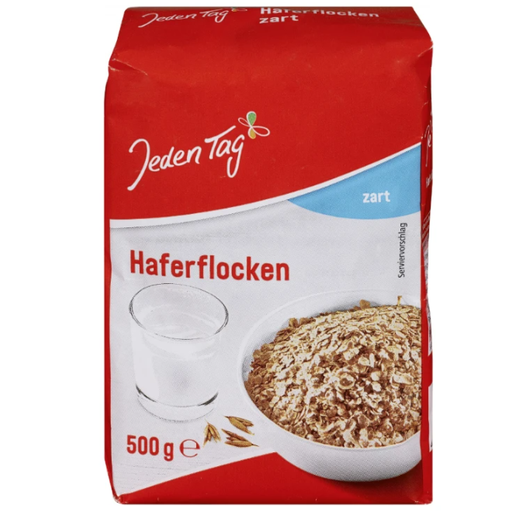 Image unavailable
Fine oats for a porridge where you choose the other ingredients and the liquid for preparation.
Before buying, check the labelling on the specific pack if you need an explicitly lactose-free option.
No. Sugar from ingredients such as dried fruit can still appear in the nutritional information. The consumer advice centre recommends checking these ingredients too; for a comparison of specific porridge products, the sugar value per 100 g is also useful.
A lactose-free claim doesn’t rule out a warning about possible traces of milk. The Kölln Shop lists Hafer-Porridge Früchte as lactose-free and also warns about possible traces of milk. If you have a milk protein allergy, the lactose-free claim is therefore not enough to confirm that it’s suitable.
Yes, as long as the dry mix itself meets your requirements and the preparation instructions say water is suitable. Seitenbacher notes that making it with water gives a less creamy and less flavourful consistency; check the labelling of any other liquid you choose, too.
Follow the storage instructions on the specific pack and reseal the opened bag. This way, you can rely on the guidance for the variety you’ve chosen.