
Lieferung heute & morgen

Qualitätsgarantie

Willkommens-Angebote freischalten: KOSTENLOSE Lieferung | Bis zu 80 % RABATT | Kostenlose 30-Tage-JoyPlus-Testphase
App herunterladen
The right lighting should suit your room, how you use it and your personal interior style. But striking designs and impressive-sounding features don’t automatically make a lamp the right choice. If you choose based only on appearance or wattage, you could overlook important details.
Common pitfalls include:
Light output is measured in lumens (lm). For example, a 360 lm desk lamp is suitable for focused tasks over a limited area. For general living room lighting, it’s often useful to combine several light sources.
Colour temperature in kelvin (K) describes the effect of the light:
Dimmable lamps with adjustable colour temperature offer a flexible solution. The CRI or Ra value indicates how naturally colours appear under the light. The right choice will depend on your room and how you plan to use the lamp.
When comparing LED lamps, consider their wattage alongside their light output in lumens. Energy efficiency classes on the EU energy label range from A to G. A low wattage alone isn’t enough to make a meaningful comparison.
For LEDs with built-in modules, it’s also worth checking:
Lamps with an E27 fitting offer more flexibility, as you can choose and replace the bulb separately. For decorative pendant lights and battery-powered lamps, check whether bulbs and batteries are included.
Before you buy, compare the height, base diameter, cable length and footprint with the space you have in mind. A slim floor lamp takes up little floor space, but it still needs to stand on a firm, level surface.
Night lights with light sensors can be handy in children’s bedrooms, hallways and by the bed. Check how they switch on and off, how bright they are and how much heat they generate. Mains electrical work should be carried out by a suitably qualified professional. Don’t use lamps in damp areas unless their protection rating is suitable.

Why it suits this profile: Two compact night lights with automatic light sensors are ideal for a hallway, bedside table or child’s room if you’d rather not switch them on and off manually.
The specifications list 0.3 W, 20 lm and a dimming range of 10 to 100 per cent, so you can assess the energy use and brightness before buying.
Automatic sensor, warm white light at 2800–3000 K and 110–240 V operation.
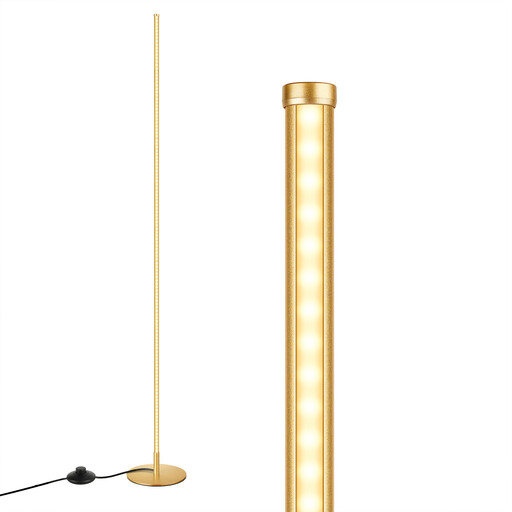
Why it suits this profile: Designed for living rooms, bedrooms and home offices, this slim floor lamp is operated using a foot switch.
The product details specify 3000 K, stepless dimming, an adjustable height of up to 146 cm and a weighted base.
Memory function, foot switch and an integrated LED light source with a warm white colour temperature.
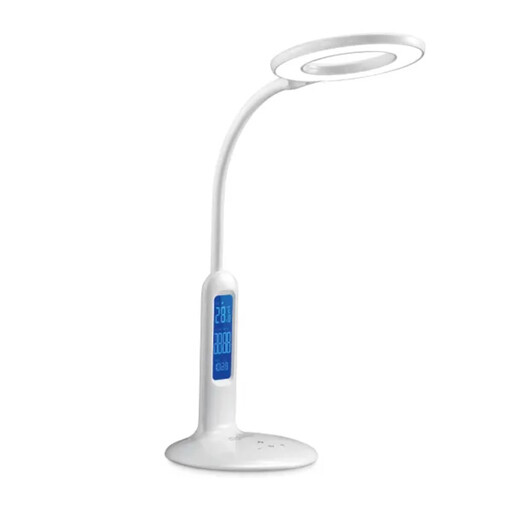
Why it suits this profile: Ideal for a study, desk or bedside table, this desk lamp combines adjustable lighting with handy display and timer features.
Alongside 7 W and 360 lm, the specifications list an adjustable colour temperature of 2700–6500 K and stepless dimming via the touch panel.
Adjustable lamp arm, calendar, clock, temperature display and alarm function with a CR2032 battery.

Why it suits this profile: This RGB floor lamp is designed for anyone who wants to control changing colours and lighting effects by remote in the living room or party room.
The product details list 125 lm, 6.5 W, IP20 and an integrated dimming function, helping you assess where it can be used and how much light it provides.
RGB colour changes, music sensor, remote control and a height of 150 cm.
We’ve put together a complete, regularly updated list of products that meet these strict selection criteria and comply with the safety regulations in force in the EU.
It depends on the size of the room, the ceiling height, the wall colours and the atmosphere you want to create. A combination of a ceiling light, floor lamp and table lamp is often more practical than relying on a single, very bright light source. For specific tasks such as reading, your lamp should light the seating or work area well without dazzling you.
Manufacturers state the lifespan in operating hours. It can depend on factors such as heat dissipation, switching cycles and operating conditions. With integrated LEDs, bear in mind that the module may not be replaceable. With lamps that have an E27 fitting, you can replace the bulb separately.
Dimming often reduces energy use, but not necessarily in proportion to the drop in brightness. The product’s technical specifications are what matter. When choosing RGB floor lamps, reading lamps or office lighting, check the wattage, lumens and dimming technology.