
Lieferung heute & morgen

Qualitätsgarantie

Willkommens-Angebote freischalten: KOSTENLOSE Lieferung | Bis zu 80 % RABATT | Kostenlose 30-Tage-JoyPlus-Testphase
App herunterladen
The right lighting can determine whether a room feels functional, comfortable or impractical. However, there is a wide choice of lamps and lights: LED bulbs, floor lamps, table lamps, night lights, pendant lights and cabinet lighting differ not only in design, but also in power supply, colour temperature, installation and operation.
Anyone who chooses based solely on appearance or advertising claims may overlook important details. Three common purchasing pitfalls occur particularly often:
The luminous flux in lumens (lm) describes how much visible light a lamp emits. A night light only needs a few lumens, whereas a reading lamp or desk lamp requires considerably more light. Wattage alone is not a reliable basis for comparison.
The colour temperature in Kelvin (K) helps with selection:
The CRI or Ra value describes colour rendering. A value of Ra ≥ 80 is specified for many products intended for general home lighting. Colours appear more true to life in everyday use than with bulbs that have a lower value.
For energy-saving lamps, it is worth checking the wattage, energy consumption per 1,000 hours and energy efficiency class. For example, an Aigostar E27 LED bulb is specified as 9 W, 840 lm, 3,000 K and 9 kWh/1,000 h. According to the product description, it is not designed for use with a dimmer. This should be checked before fitting it in a dimmable light.
The fitting and maximum wattage are equally important. A light with an E27 fitting requires a compatible E27 bulb. The bulb is not included with the Keli floor lamp; the specified fitting is E27 and the maximum power is 40 W.
Permanently installed hanging lights and pendant lights should be fitted to a suitable ceiling mount. A qualified professional should be consulted for electrical connections. For kitchens, bathrooms or outdoor areas, the IP rating must be suitable for the surroundings. IP20 products are intended exclusively for dry indoor areas.
For rechargeable lamps and cabinet lighting, the charging connection, battery capacity and mounting method are more important. A PIR sensor responds to movement, while a dusk sensor responds to the ambient light level. These two functions are not the same.
The following recommendations group specific products according to typical requirements. Details such as brightness, battery capacity and dimensions correspond to the respective product information.
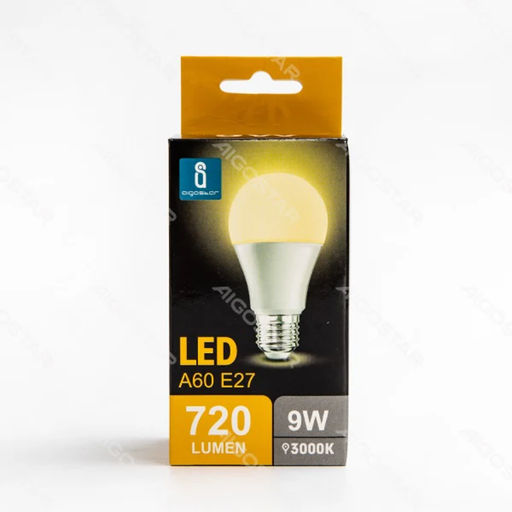
Why this product suits this profile: The standardised E27 bulb is suitable for compatible table lamps, floor lamps and ceiling lights. With 840 lm and 3,000 K, it is designed for general warm-white home lighting.
The product details specify the luminous flux, colour temperature, fitting and energy consumption. The clear note that it is not dimmable should also be taken into account.
E27 fitting, 9 W power consumption, 840 lm and 3,000 K warm-white light.
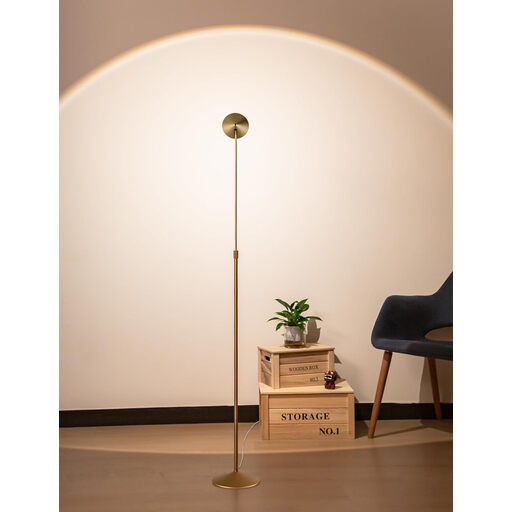
Why this product suits this profile: This floor lamp combines an adjustable-height design with a lamp head that swivels through 150° and three-level touch dimming. This lets you direct the light where you need it in the living room, bedroom or office.
Rather than providing a fixed light source, it offers clearly defined adjustment options. Before buying, check the available floor space, stability and cable position.
150° swivelling head, telescopic height adjustment and three brightness levels controlled by touch.

Why this product suits this profile: This cabinet lighting is designed for kitchen worktops, wardrobes, shelves and hallways. The motion sensor detects movement within a range of 3 to 5 metres.
The lights charge via USB and do not require permanent wiring. Before mounting them, make sure the surface is clean, dry and suitable for adhesive mounting.
Two lights, three colour temperatures, 800-mAh battery and tool-free installation with adhesive strips.
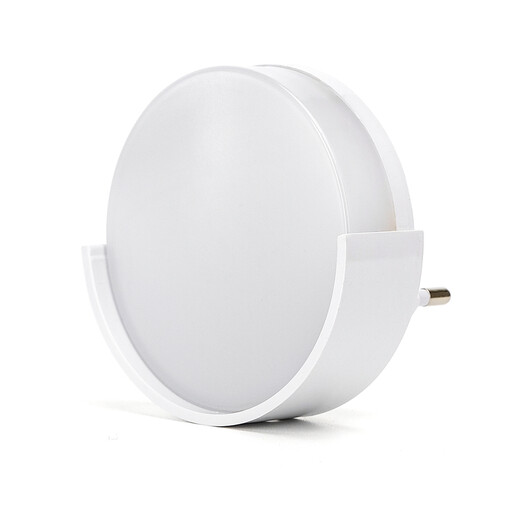
Why this product suits this profile: This plug-in night light is designed for indoor hallways, stairwells and children's rooms. According to the product information, it switches on when the light level falls below 20 lux and switches off again when there is sufficient brightness.
It requires neither batteries nor charging. The IP20 rating also makes clear that it is suitable only for dry indoor areas.
1 W power, 40 lm, integrated dusk sensor and connection for 220–240 V.
We have put together a complete, regularly updated list of products that fully meet these strict selection criteria and the safety regulations applicable in the EU.
Consumption depends on the power rating and daily usage time. A 9-W LED bulb uses around 9 kWh over 1,000 operating hours. To calculate the running costs, multiply this figure by your current electricity tariff. Rechargeable and battery-powered lamps also incur charging or battery costs.
The manufacturer specifies the lifespan in operating hours, and it depends on factors including heat dissipation, switching cycles and the environment in which the bulb is used. When choosing a product, you should therefore consider not only the stated number of hours, but also the suitable light fitting opening and permitted ambient temperature.
Night lights with a low light output or sensor function are suitable for orientation. Check that the product is intended for dry indoor use, and consider heat generation, safe positioning and the guidance on keeping it away from children. For reading or crafts, however, a separate, adjustable reading lamp with a higher luminous flux is a sensible choice.