
Lieferung heute & morgen

Qualitätsgarantie

Willkommens-Angebote freischalten: KOSTENLOSE Lieferung | Bis zu 80 % RABATT | Kostenlose 30-Tage-JoyPlus-Testphase
App herunterladen
Choosing the right lighting is crucial for a room's atmosphere. However, the market for lamps and lighting is overwhelming, and well-intentioned purchases often lead to disappointment. Certain design flaws or overlooked technical details can prevent a new lamp from achieving the desired effect or prove to be impractical. This guide will help you identify common pitfalls and make an informed decision.
Before deciding on a model, it's wise to understand the typical weaknesses that often only become apparent after the purchase.
To find the right light fixture, you should focus on a few crucial technical features.
The lamp socket determines which bulb you can use. The most common types in Europe are E27 (the classic wide screw base) and E14 (the narrower "candle" socket).
Check if the lamp is suitable for dimmable bulbs if you want to regulate the brightness. This not only requires a dimmable bulb but often also a compatible external dimmer, unless one is already integrated into the lamp.
The choice of material affects not only the aesthetics but also the functionality and safety.
Consider the purpose the light fixture is meant to serve.
Instead of presenting an overwhelming list, we have matched a few models based on different user profiles and needs.

Why This Fits Their Persona: Ideal for users seeking a functional and flexible industrial-style lighting solution. The three light sources and dimming function allow for adaptation to various situations, from bright task lighting to dim ambient light.
The heavy metal base ensures high stability, avoiding the risk of tipping. The stepless dimming function (0-100%) prevents the mistake of an unsuitable, fixed lighting atmosphere.
Includes three E27 LED bulbs (2700K Warm White). Compatibility with bulbs up to 60W offers flexibility for the future.
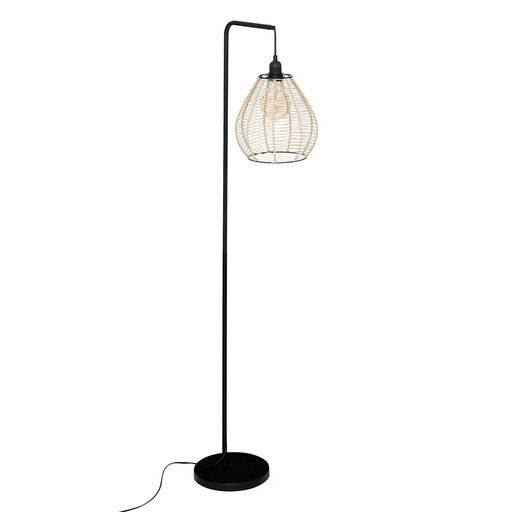
Why This Fits Their Persona: Perfect for anyone looking for a statement piece with Scandinavian flair. This arc lamp creates a warm, inviting atmosphere and acts as a stylish focal point in the living or dining area.
The steel and cement base provides the necessary stability, which is critical for arc lamps. The woven paper shade produces a soft, diffused light, avoiding harsh glare.
The design combines natural materials (paper) with a slim metal structure. The E27 socket allows for the use of a decorative filament bulb.

Why This Fits Their Persona: A compact, vintage-style table lamp ideal as a bedside light or for creating a cosy corner on a side table. It combines functionality with a warm, homey design.
The sturdy solid wood tripod base prevents wobbling. The linen lampshade provides soft, glare-free light, avoiding the problem of unpleasantly harsh illumination.
The timeless design complements both modern and traditional interiors. A 4W LED bulb is included, so the lamp is ready to use out of the box.
We have compiled a complete, up-to-date list of products that fully meet these strict selection criteria and rigorous safety standards.
What light colour (Kelvin) is suitable for the living room? For living rooms and bedrooms, a warm white light colour between 2700 and 3000 Kelvin is recommended. This light feels cosy and relaxing. Neutral white light (approx. 4000 Kelvin) is better suited for kitchens or bathrooms, while daylight white (over 5000 Kelvin) is useful in workspaces or basements.
Can I use an LED bulb in any lamp? In most cases, yes, as long as the socket (e.g., E27 or E14) and the shape of the bulb fit. LEDs are more energy-efficient and longer-lasting than traditional incandescent bulbs. Pay attention to the maximum wattage rating of the fixture. An LED with comparable brightness has a much lower wattage, so this is rarely an issue. For dimmable fixtures, you must use both a dimmable LED bulb and a compatible dimmer.
How many lumens do I need for good room illumination? The required brightness, measured in lumens (lm), depends on the room size and its use. As a general guideline: