
Lieferung heute & morgen

Qualitätsgarantie

Willkommens-Angebote freischalten: KOSTENLOSE Lieferung | Bis zu 80 % RABATT | Kostenlose 30-Tage-JoyPlus-Testphase
App herunterladen
The right lighting can determine whether a room feels evenly lit, cosy or suitable for focused work. When buying lamps, however, design is not the only consideration. Details such as lumens, kelvin, fittings and IP rating determine whether a light is genuinely suitable for its intended everyday use.
Many disappointing purchases result from three typical pitfalls:
It is therefore worth checking the technical specifications and considering how the lamp will actually be used in the room before buying.
Lumens (lm) describe luminous flux, in other words the amount of light emitted. With modern LED lamps, watts mainly indicate power consumption. Both values are relevant when choosing a lamp:
According to the product specifications, the LEDVANCE COMACT Floor Lamp provides up to 12,600 lumens and divides the light into direct and indirect components. This is a different class of application from a small battery-powered lamp with 30 lumens.
Colour temperature is measured in kelvin (K):
Dimmable lamps allow you to adjust the lighting to suit the time of day and the activity. With integrated LEDs, check whether dimming is controlled via a touch panel, remote control, app or voice control. On certain models, colour temperature control, or CCT, also allows you to switch between warmer and cooler light colours.
With lights that use replaceable bulbs, the fitting is crucial. Common options include E27 for larger standard bulbs and E14 for smaller fittings. The maximum wattage must not be exceeded.
The IP20 rating means that a light is intended for dry indoor areas and does not offer any special protection against water. For bathrooms, covered outdoor areas or damp rooms, check the information on the product label and make sure the IP classification is suitable.
With floor lamps, you should also consider the base area, cable direction and weight. A heavy base can improve stability, but it does not replace placing the lamp on a level surface.
The following recommendations match specific lamps to typical requirements. The details are based on the respective product descriptions.
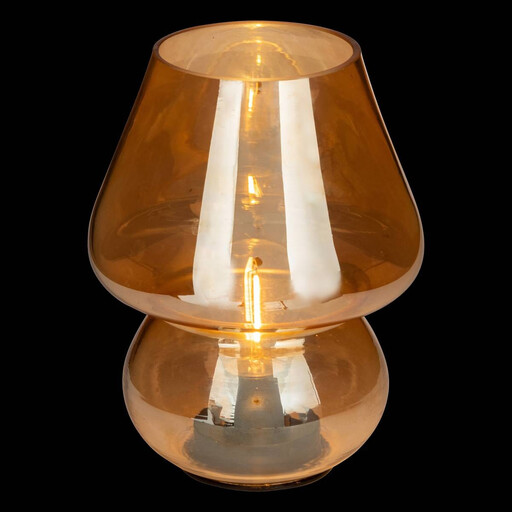
Why this product suits the profile: According to the product description, the compact LED table lamp is designed for sideboards, coffee tables or bedside tables and requires two batteries.
The stated 30 lumens make it clear that this is accent lighting rather than full room illumination.
19 cm high, with an integrated LED and, according to the specifications, up to 48 hours of battery life.
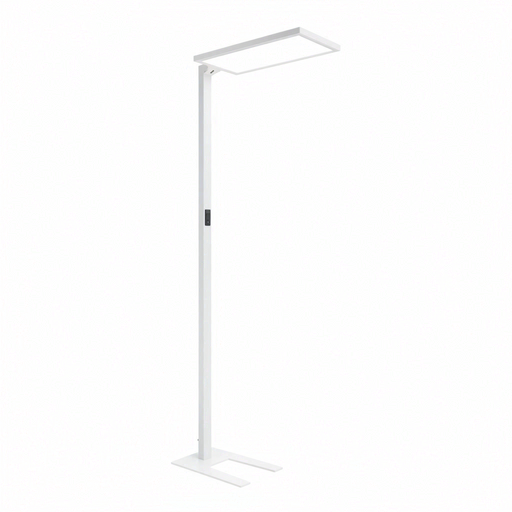
Why this product suits the profile: According to the product data, this floor lamp is designed for work areas and home offices where direct and indirect lighting need to be controlled separately.
The technical specifications state the luminous flux, colour temperature, UGR value and sensor functions clearly, rather than simply describing the lamp as “bright”.
Up to 12,600 lumens, 4,000 K, daylight and presence sensors, plus a touch panel for dimming.
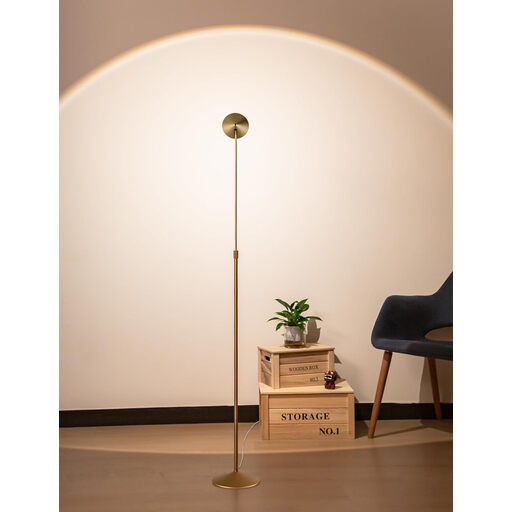
Why this product suits the profile: According to the description, this lamp has an adjustable head and height-adjustable construction for reading, sewing, crafting or working.
The direction of the light can be adjusted, so you do not have to use a fixed, inflexible light source for every activity.
150° rotatable lamp head, telescopic function and three-stage touch dimming with integrated LED.
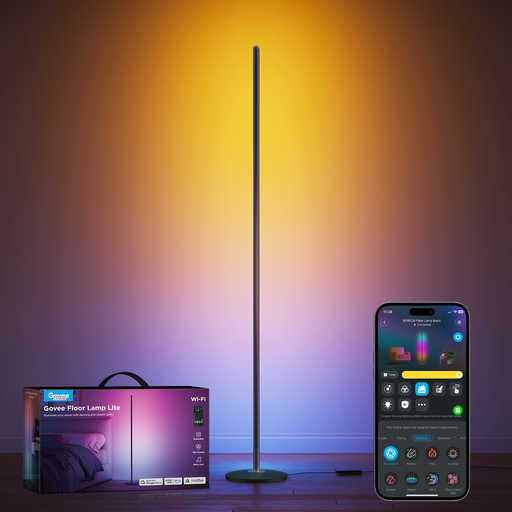
Why this product suits the profile: This smart lamp is designed for living rooms, bedrooms, gaming areas and entertainment zones with app or voice control.
The control options, 1,000-lumen output and number of scenes are clearly specified, making it easier to understand what the lamp offers.
Wi-Fi, Bluetooth, Alexa and Google Assistant control, dimming function, timer and 58 scene modes.
We have put together a complete, regularly updated list of products that fully meet these strict selection criteria and the safety regulations applicable in the EU.
For living room lamps, combining ceiling lights, floor lamps and indirect lighting can be a sensible choice. An arc lamp beside a sofa or armchair avoids the need for wall installation and can define a reading area. In the bedroom, warm-white dimmable lamps or small table lamps are often easier to incorporate into evening lighting.
With pendant lights above the dining table, the height, cable length and table size should work well together. Wall lamps require a suitable connection or installation option. For flexible positioning, battery-powered lamps are worth considering; check the battery type, timer function and moisture protection.
This depends on the size of the room, the type of light and the desired distribution of light. Full ambient lighting requires significantly more lumens than a table lamp or decorative accent light. Several light sources can complement one particularly bright lamp.
LED lamps often require less electrical power than comparable bulbs using older technology. However, wattage, daily operating time and electricity tariff are the key factors affecting running costs. Check the energy efficiency class and consumption per 1,000 hours before buying.
With integrated LEDs, the product specifications must explicitly state that the lamp is dimmable. With lamps that use replaceable bulbs, the bulb fitted must also be dimmable. You should also check whether the lamp is controlled via a switch, touch panel, remote control or app.