
Lieferung heute & morgen

Qualitätsgarantie

Willkommens-Angebote freischalten: KOSTENLOSE Lieferung | Bis zu 80 % RABATT | Kostenlose 30-Tage-JoyPlus-Testphase
App herunterladen
Whether it is the living room, kitchen, bedroom, hallway or home office: lamps and light fittings influence brightness, the feel of a room and everyday convenience. The choice ranges from LED light fittings and classic LED lamps to pendant lights and floor lamps, as well as cupboard lighting, smart lamps and battery-powered lamps.
However, many poor purchases are not caused by the design, but by unclear technical specifications. An attractive housing says little about whether the light fitting is bright enough, compatible with your existing electrical installation or easy to use in everyday life.
Wattage mainly indicates energy consumption. The luminous flux in lumens determines the actual brightness. An LED light fitting with a low wattage can emit more light than an older fitting with higher energy consumption. Therefore, compare lumens, beam angle and room size rather than looking only at the wattage.
Light colour is measured in Kelvin:
A pendant light with warm white light can create a pleasant atmosphere above the dining table. For a worktop or cupboard lighting, however, a more neutral colour temperature is often more practical. Light fittings with several colour temperatures offer particularly good flexibility.
A motion-sensor lamp is not automatically suitable for every location. Check the detection range, response logic and whether the sensor can be covered or manually deactivated. With a battery-powered lamp, the charging connection, battery capacity and expected runtime are also important.
For permanently mounted light fittings, check the installation method, cable connection and voltage before buying. Work on a 230-volt connection must be carried out by a suitably qualified person.
For room planning, luminous flux in lumens (lm) is important. A small hallway will usually need less total light than a home office. The beam angle is also important: a narrow angle creates accents, while a wide-beam ceiling light illuminates the room more evenly.
The colour rendering index, Ra or CRI, describes how naturally colours appear under the light. A higher value can be useful for living rooms, kitchens and work areas. Manufacturer specifications should clearly distinguish between technical measurements and marketing claims.
A dimmable lamp is suitable for changing situations, such as reading, relaxing or creating indirect lighting. Check whether it is dimmed via touch control, remote control, an app or voice control, and whether a compatible dimmer is required.
A smart lamp should be compatible with your existing system. For example, the Hama model in this selection uses 2.4 GHz Wi-Fi and, according to the product description, connects to Alexa, Google Assistant, Apple Siri and Matter-compatible systems. A stable Wi-Fi connection and the relevant app are required for setup.
For kitchens, bathrooms or outdoor areas, check the appropriate IP rating. A light fitting without a specified moisture-protection rating should not be used in areas exposed to splashing water. For adhesive lights, the surface must be clean, dry and able to support the fitting. With ceiling and wall lights, pay attention to drilling distances, weight and connection type.
Also check the product labelling, safety information, manufacturer details and the responsible person in the EU. This information is useful if you have questions and helps you assess the product. A CE marking does not replace checking whether the specific light fitting is suitable for its intended location.

Why this product suits this profile: Two slim LED lights for kitchens, cupboards, shelving or hallways, with tool-free installation and USB charging.
The description specifies PIR detection from 3 to 5 metres, three colour temperatures and an 800-mAh battery instead of leaving the sensor or power supply details unclear.
Dimensions of 200 × 38 × 10 mm, USB charging, 21 LEDs per light and adhesive installation without drilling.
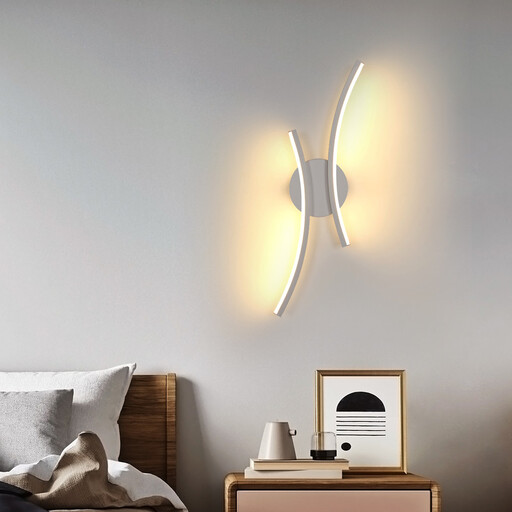
Why this product suits this profile: This LED wall light combines a slim design with warm white illumination at 3,000 Kelvin, making it suitable for living rooms, bedrooms or hallways.
The specified depth of 5 cm makes it easier to plan installation on narrow wall surfaces. The colour temperature is clearly stated rather than being described simply as “cosy”.
20 W, aluminium housing, 3,000 K and light emitted upwards and downwards according to the product description.
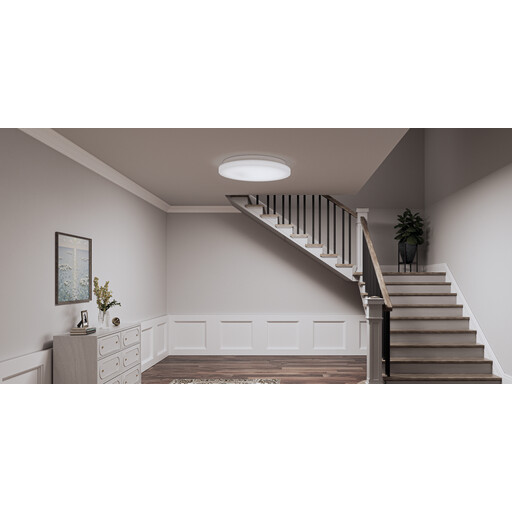
Why this product suits this profile: A sensor ceiling light for households looking for central room lighting with automatic presence detection.
Presence detection is already stated in the product name. Nevertheless, check the detection area, settings and room size before installation.
Designed for ceiling installation; the product name specifies presence-detection sensors.
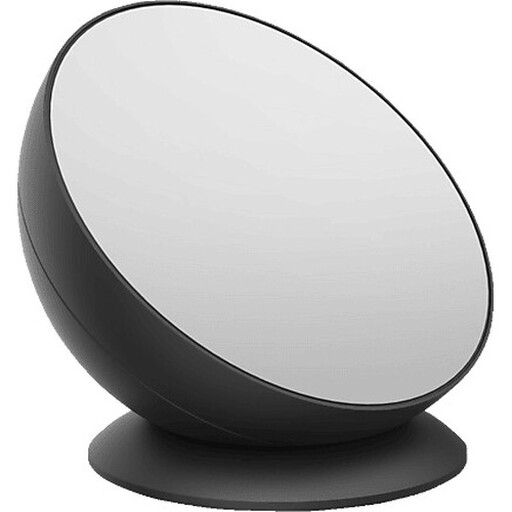
Why this product suits this profile: This freestanding table lamp can be controlled via an app and is designed for users who want to combine RGBW lighting, dimmable settings and voice control.
The description specifies the protocol, frequency range, supported voice assistants and Matter compatibility. This lets you check compatibility before buying.
6 W, RGBW lighting, app and voice control, dimmability and freestanding use without installation.
We have put together a complete, regularly updated list of products that fully meet these strict selection criteria and the safety regulations applicable in the EU.
A combination of ambient, zone and accent lighting can be used in the living room. A ceiling light provides general brightness, while a floor lamp, LED wall light or table lamp can brighten individual areas. Warm white lighting between approximately 2,700 and 3,300 Kelvin is often chosen to create a welcoming atmosphere.
Consumption depends on wattage, daily usage time and the number of light fittings. The simple calculation is: Wattage × operating hours ÷ 1,000 = kilowatt-hours. With smart lamps and sensor lights, standby consumption may also be relevant. Therefore, check the power consumption and switch off lights completely when they are not needed.
The manufacturer states the lifespan in operating hours. Among other factors, it depends on heat generation, switching cycles, the power supply and usage. Enclosed light fittings or high ambient temperatures can increase the load. As well as checking the stated lifespan, find out whether the LED module can be replaced or whether the entire light fitting will need to be replaced.