
Lieferung heute & morgen

Qualitätsgarantie

Willkommens-Angebote freischalten: KOSTENLOSE Lieferung | Bis zu 80 % RABATT | Kostenlose 30-Tage-JoyPlus-Testphase
App herunterladen
Choosing the right lighting can transform a room, but the path to the perfect fixture is often paved with uncertainty. A lamp that looks appealing online can turn out to be a disappointment in your own home—whether due to unsuitable light, poor durability, or inappropriate materials. As your Joybuy Product Recommendation Officer, I'll help you identify the typical pitfalls and make an informed decision that harmonises function and aesthetics.
Before you make a purchase, you should be aware of three common issues that often lead to dissatisfaction:
living room lamp without adequate moisture protection will quickly corrode or cause a short circuit in a bathroom or as an outdoor light. The IP rating is a crucial but often ignored factor here.LED lamps are energy-efficient and long-lasting. However, if the light source is permanently installed and fails prematurely, the entire fixture often has to be discarded. Pay attention to the specified lifespan or consider models with replaceable bulbs.To avoid these mistakes, focus on three core technical features. These will give you an objective basis for your choice.
Colour temperature determines whether light is perceived as warm or cold. It is essential for the atmosphere of a room.
bedroom lamps. A value around 3000 K is a common and popular choice here.The IP (Ingress Protection) code indicates how well a fixture is protected against the ingress of foreign objects (first digit) and water (second digit).
outdoor lights and garden solar lights exposed to rain.The choice of light source affects flexibility and lifespan.
Here are some recommendations tailored to specific needs and lifestyles, which take the aforementioned quality criteria into account.
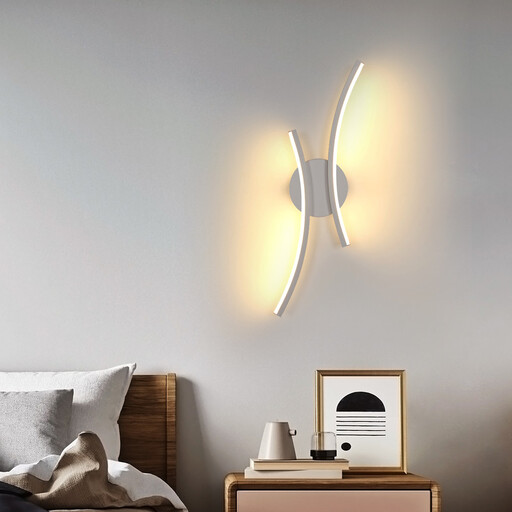
Why it's a great fit: Ideal for anyone looking to make a clean, modern statement. The curved design acts as a piece of art and blends seamlessly into minimalist living concepts without being overbearing.
With 3000K warm white light, this fixture provides a pleasant, homely atmosphere, avoiding the problem of overly cold, sterile light. The flicker-free LED technology is also easy on the eyes.
The slim profile, with a depth of only 5 cm, is extremely space-saving. The up-and-down lighting creates an indirect, geometric light effect on the wall.
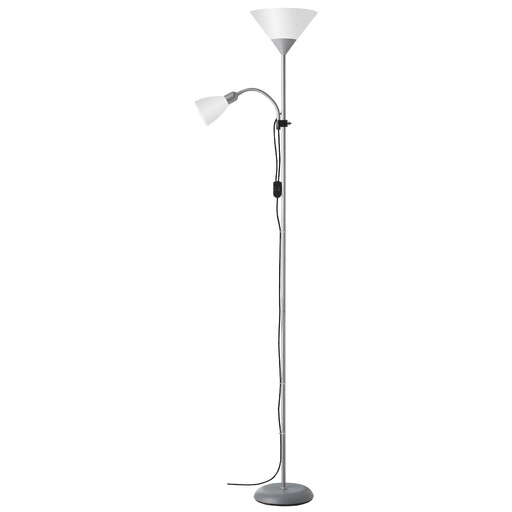
Why it's a great fit: This `floor lamp` is a classic 2-in-1 solution. It provides indirect ambient light via the uplighter and targeted light for reading or tasks via the flexible reading arm—perfect next to a sofa or armchair.
By using standard sockets (E27 and E14), you are not tied to integrated LEDs. If a bulb fails, it can be replaced affordably, making the lamp more durable and sustainable.
The flexible reading arm allows for precise light direction. The two light sources can be switched independently, offering a high degree of functional flexibility.
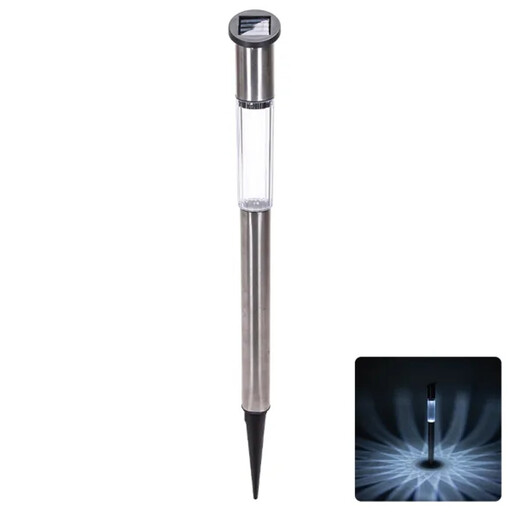
Why it's a great fit: Perfect for gardeners who want to illuminate paths or flowerbeds without complex wiring. These `garden solar lights` are self-sufficient, easy to install, and use renewable energy.
With an IP44 rating, this light is explicitly designed for outdoor use and is protected against splashing water. The stainless steel housing is also weather-resistant and prevents rust.
No installation or electricity costs. The polycrystalline solar panel charges the battery during the day, providing 8-12 hours of light at night.
We have compiled a complete, up-to-date list of products that fully meet these strict selection criteria and German safety regulations.
As a general guideline, about 100 to 150 lumens per square metre are recommended for the ambient lighting of a living room. For a 20 m? room, that would be 2000 to 3000 lumens. This can be distributed across multiple light sources such as ceiling lights, floor lamps, and wall lights to create flexible and pleasant illumination.
Colour temperature, measured in Kelvin (K), describes the light colour of a lamp. Lower values (e.g., 2700 K) produce a warm, yellowish light that is perceived as cosy. Higher values (e.g., 6500 K) produce a cool, bluish light that resembles daylight and promotes concentration. The choice depends on the room and the desired atmosphere.
No, not necessarily. There are different dimming technologies (e.g., leading-edge or trailing-edge dimmers). Especially with dimmable lights using LED technology, it is important that the lamp and dimmer are compatible. Otherwise, it can lead to flickering, buzzing, or inadequate dimming performance. Check the manufacturer's specifications for both the light and the dimmer for compatibility.