
Lieferung heute & morgen

Qualitätsgarantie

Willkommens-Angebote freischalten: KOSTENLOSE Lieferung | Bis zu 80 % RABATT | Kostenlose 30-Tage-JoyPlus-Testphase
App herunterladen
Anyone looking to buy lamps and lighting online will find a wide range of options for living rooms, bedrooms, hallways, balconies and gardens. However, product names are not always as clear as the technical specifications. A higher wattage does not automatically mean greater brightness, for example, and a light described as “outdoor” is not necessarily suitable for use in the rain.
The following criteria can help you avoid unsuitable purchases and choose a light that matches its intended location.
For LED lights, wattage primarily describes power consumption. The lumen value is what determines the amount of light actually produced. A 20-watt light can emit different amounts of light depending on its construction. For work areas, paths or security lighting, you should therefore compare the stated lumens rather than just the power consumption.
Colour temperature also affects the overall effect: warm white light between around 2,700 and 3,000 Kelvin usually creates a subtle atmosphere in living areas, while neutral white light at around 4,000 Kelvin can show contours more clearly outdoors.
An outdoor lamp should include specific information about its IP rating. The first digit describes protection against solid foreign objects, while the second indicates protection against water. Without this information, it is not possible to assess reliably whether the light can be used permanently on an unprotected external wall, on a patio or in the garden.
For an outdoor wall light, it is also important to check whether the cable connection, mounting bracket and fixing materials are suitable for the intended surface. A portable battery-powered outdoor lamp, on the other hand, does not require a permanent power cable, but it does need to be charged regularly and checked before being stored for an extended period.
A decorative light may look perfect and still prove impractical. Before buying, check the following:
For a black floor lamp in the living room, for example, height, base, cable length and maximum wattage all matter. With a decorative table lamp, the footprint, light output and switch position are often more important than its appearance alone.
Lumens (lm) indicate the amount of light produced. A night light generally needs considerably fewer lumens than a work light or outdoor light. Warm white light between 2,800 and 3,000 Kelvin is often suitable for hallways, bedrooms or children’s rooms. A dimmable night light allows you to adjust the brightness to suit the situation.
The CRI value describes colour rendering. A value above 80 is a useful benchmark for many living areas. According to the product data, the stated 2-pack of night lights achieves a CRI of over 85 and offers stepless dimming from 10 to 100 per cent.
A night light with a motion or light sensor can reduce the need for manual operation. However, the two should be distinguished: a light sensor responds to ambient brightness, while a motion sensor responds to movement within its detection range. According to the product data, the night light switches on at 20 lux or below and switches off in daylight. It therefore uses a light sensor rather than motion detection.
For outdoor lights, you should also check whether a sensor is included or whether the lamp needs to be operated manually. Permanently switched-on LED outdoor lighting can result in higher running costs than a sensor- or timer-controlled solution, depending on its power consumption.
Mains-powered lights provide a constant power supply, but require a suitable socket or fixed connection. Battery-powered and solar lights can be positioned more flexibly. With solar and garden lighting, operating time depends, among other things, on the location, time of year, charging surface and amount of sunlight.
A rechargeable light should provide details of the battery type, charging method and any accessories included. The Atmosphera light includes a rechargeable 18650 lithium-ion battery. According to the product description, a USB charging cable and mains adapter are not explicitly specified, so these should be checked before purchase.
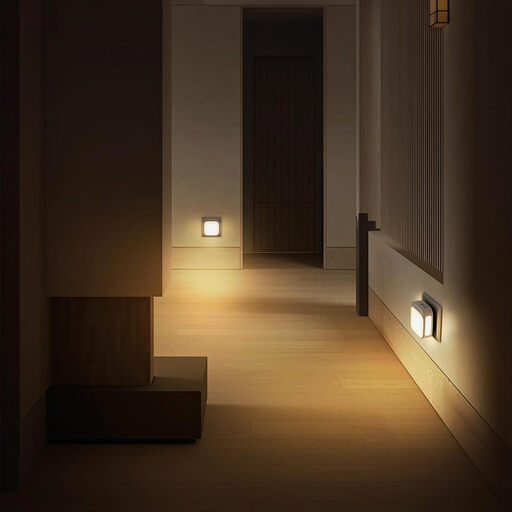
Why this product suits this profile: The 2-pack is designed for hallways, near bathrooms or bedrooms and plugs directly into a standard socket. The light sensor switches it on and off automatically when it gets dark.
The product data specifies power consumption, light colour, lumens, dimming range and sensor threshold. This makes it easier to assess everyday practicality than a design description alone.
0.3 watts power consumption, 20 lumens, warm white light at 2,800–3,000 Kelvin and stepless dimming from 10 to 100 per cent.
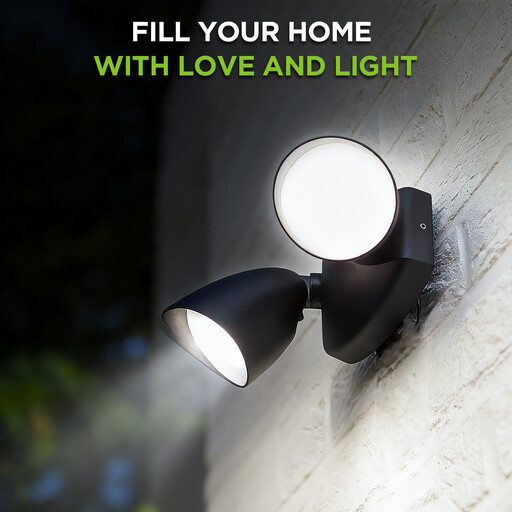
Why this product suits this profile: This dual-head outdoor light is designed for patios, gardens, courtyards or external walls and provides neutral white light at 4,000 Kelvin.
The specifications state 1,800 lumens, 20 watts, a dual-head design, metal housing and water resistance. Before installation, however, you should still check the specific IP rating in the full product data.
1,800 lumens, 4,000 Kelvin, two light heads and a metal construction for the intended outdoor area.
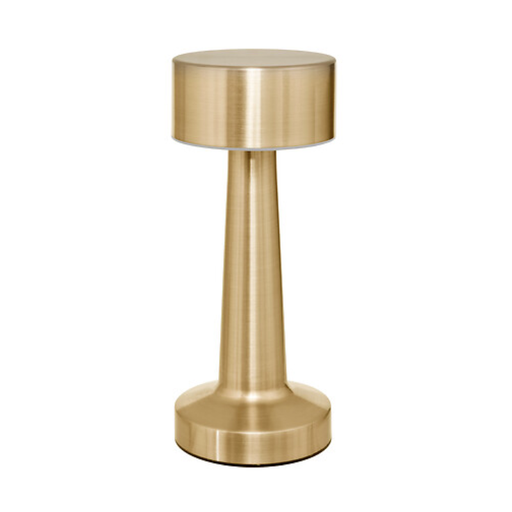
Why this product suits this profile: This compact rechargeable light can be moved around a balcony, patio or garden table. Its 21.5-centimetre-high steel housing is designed for portable, decorative lighting.
The rechargeable 18650 lithium-ion battery is listed as included. As a charging cable and adapter are not explicitly specified, you should check the accessories before buying.
Cordless operation, a weight of 270 grams, a diameter of 9 centimetres and a gold-coloured steel housing.
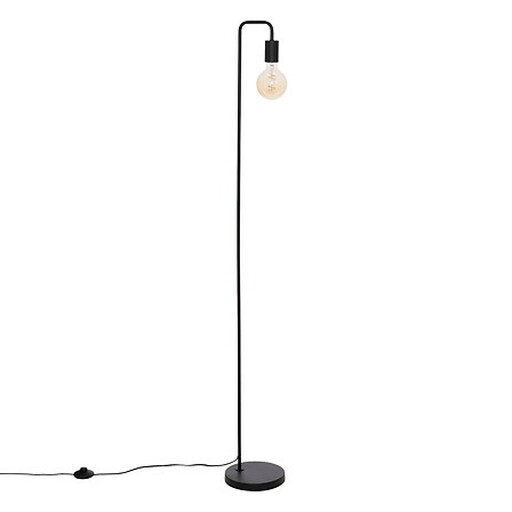
Why this product suits this profile: This straight black floor lamp requires an E27 bulb and can be used in living rooms, bedrooms or offices.
The product data clearly states that no bulb is included and that a maximum of 40 watts may be used. This makes it clear what type of E27 bulb is suitable.
150-centimetre height, concrete and steel construction, 180-centimetre cable and E27 fitting with a maximum of 40 watts.
We have put together a complete, regularly updated list of products that fully meet these strict selection criteria and the safety regulations applicable in the EU.
For use on the go, an LED keyring light may be more practical than a larger torch. According to the product data, the VARTA model has two brightness levels, 15 lumens, two CR2016 batteries included and an automatic switch-off after ten minutes. Batteries must not be opened, heated or disposed of in household waste.
For seasonal decorations, check the cable routing, stability and intended indoor or outdoor use of a Christmas decorative light. A decorative table lamp, on the other hand, should have enough space to stand securely and a switch that is easy to reach.
Compact LED lights with a light sensor, warm white light and moderate brightness are practical for hallways. With a night light with a light sensor, the stated switch-on level should be suitable for the ambient brightness. For permanent general lighting, ceiling or wall lights with a sufficient lumen rating are more suitable.
Look for the battery type, charging accessories, operating time, materials and a specific IP rating. A portable light is not automatically waterproof for permanent outdoor use. If it will not be used for an extended period, the battery should be stored and checked regularly in accordance with the manufacturer’s instructions.
The key factors are power consumption in watts, daily operating time and your electricity tariff. With the same usage time, a 0.3-watt light consumes considerably less energy than a 20-watt model. For a realistic estimate, you should also take standby consumption, sensor control and the actual time the light is switched on into account.