
Lieferung heute & morgen

Qualitätsgarantie

Willkommens-Angebote freischalten: KOSTENLOSE Lieferung | Bis zu 80 % RABATT | Kostenlose 30-Tage-JoyPlus-Testphase
App herunterladen
The right indoor lighting should do more than complement your interior style. It should also provide enough light, be easy to operate and suit the room it is intended for. When choosing lamps and lighting for your home, disappointing purchases often result from three common pitfalls:
It is therefore worth checking the technical specifications and considering exactly where the light will be placed before you buy.
Brightness is measured in lumens (lm). A reading lamp needs more focused illumination than purely ambient lighting. For a living room floor lamp, a combination of indirect light and a separate reading arm can be a practical choice.
The colour temperature in Kelvin (K) affects how the light feels:
A dimmable lamp offers greater flexibility. Check whether the dimming function is integrated into the lamp or whether a compatible bulb is required.
The fitting type is also important when using replaceable bulbs. An E27 bulb will not fit an E14 socket. You should also check the maximum wattage and the bulb’s shape.
Before buying, compare the height, base diameter and cable length with the intended location. A living room floor lamp should stand securely beside a sofa or armchair without obstructing walkways. A heavy or wide base can improve stability, but it will require more floor space.
For a clip lamp, the maximum clamping width and the type of tabletop are crucial. A rechargeable clip lamp can be positioned flexibly, but it needs to be charged regularly. For a permanently installed light, cable routing is a key consideration.
A battery-powered pendant light can be hung without a fixed power connection. Before buying, check whether batteries are included, how the timer works and whether the light is intended only for dry indoor areas.
Sensor lights respond to brightness or movement. A sensor night light should be positioned so that the sensor is not blocked by furniture or decorations. For plug-in models, check the mains voltage, IP rating and suitability for indoor use.
The following applies to all lights:
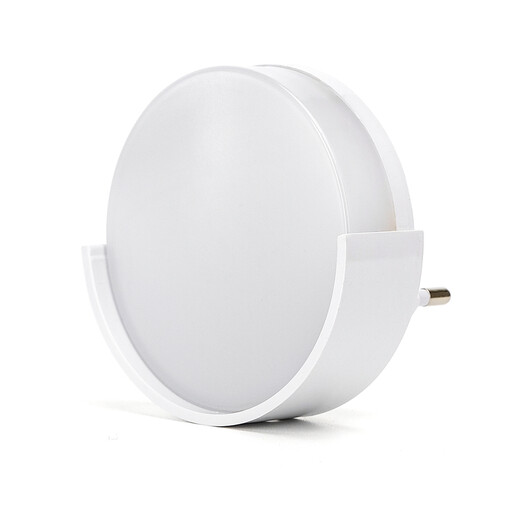
Why this product suits the profile: According to the product specifications, this compact plug-in light needs no batteries and switches on automatically when the light level falls below 20 lux.
With a light output of 40 lm, it is clearly intended as an orientation light and is not a substitute for room lighting or a reading light.
1 W power consumption, 40 lm, integrated twilight sensor and IP20 rating for dry indoor areas.
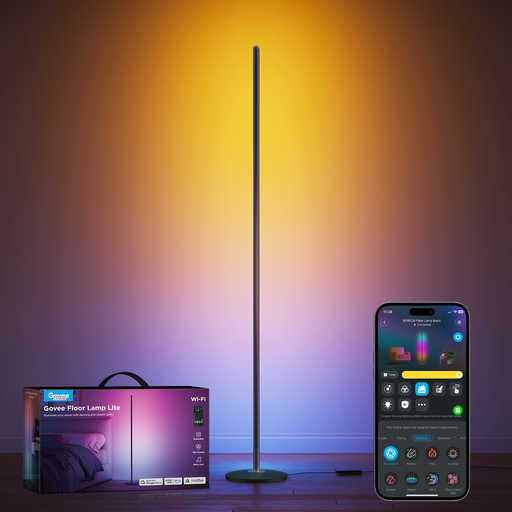
Why this product suits the profile: This smart floor lamp can be controlled via the Govee app, Wi-Fi and Bluetooth, as well as through Alexa and Google Assistant.
The technical specifications state 1,000 lm, 24 W, a height of 136 cm and dimmable control. This makes it easier to assess how it can be used than with purely design-focused specifications.
16 million colours, 58 scene modes, music synchronisation and a timer function according to the product description.
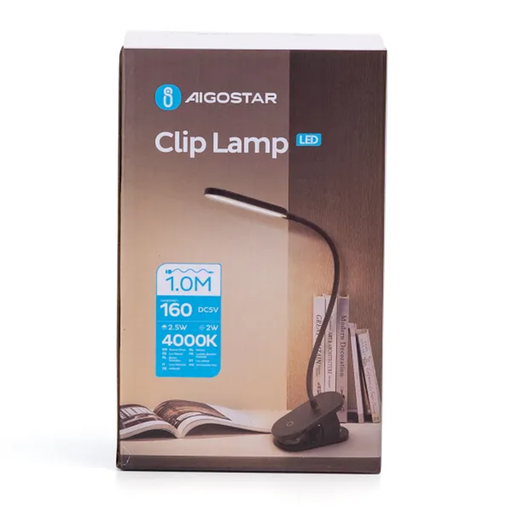
Why this product suits the profile: This rechargeable clip lamp is ideal for flexible workstations, shelves or a temporary reading area without a nearby socket.
The lamp clearly specifies 160 lm, 2.5 W, three settings and a battery capacity of 1,200 mAh. Depending on the setting, the stated operating time ranges from 3 to 30 hours.
Neutral white light at 4,000 K, a 120° beam angle, touch controls and an adjustable silicone holder.
We have put together a complete, regularly updated list of products that fully meet these strict selection criteria and the safety regulations applicable in the EU.
A living room floor lamp can provide indirect lighting beside a sofa or cabinet. For reading, an adjustable reading arm or a separate reading lamp is a sensible choice. An LED floor lamp with a dimming function offers several brightness levels, while a smart floor lamp can also be controlled via an app or voice commands.
Their lifespan depends on the design, operating time, heat dissipation and the quality of the electronics. With replaceable bulbs, the light source can be changed later. For integrated LEDs, check the lifespan stated by the manufacturer. A specification such as 20,000 or 25,000 hours is a technical guideline, not a guarantee for every usage scenario.
Running costs depend on the wattage, daily usage time and electricity tariff. A simple calculation is: Wattage ÷ 1,000 × operating hours × electricity price. A 10 W light uses 5 kWh over 500 operating hours. Sensors, timers and dimming functions can reduce the actual operating time, but they do not replace comparing power consumption.