
Lieferung heute & morgen

Qualitätsgarantie

Willkommens-Angebote freischalten: KOSTENLOSE Lieferung | Bis zu 80 % RABATT | Kostenlose 30-Tage-JoyPlus-Testphase
App herunterladen
Choosing the right lighting can transform a room. However, the path to the perfect lamp is often paved with disappointment. A model that looks impressive online can turn out to be impractical or of poor quality after installation. As your Joybuy Product Recommendation Officer, I'm here to help you identify common purchasing pitfalls and make an informed decision that balances function and aesthetics.
Before you invest in a new lighting concept, be aware of three typical problems that often only become apparent after your purchase:
To avoid these mistakes, focus on objective, technical specifications. These three parameters are essential for selecting the right light fixture.
Color temperature, measured in Kelvin, is a key factor in determining a room's atmosphere. It's a crucial detail that is often overlooked.
Forget watts. With modern LED bulbs, lumens (lm) is the definitive unit for brightness. As a rough guideline:
Therefore, a modern ceiling light for a 20 m? living room should provide at least 2,000 lm for adequate general brightness.
The IP rating indicates how well a fixture is protected against the ingress of foreign objects (first digit) and water (second digit). This is especially important for lights in bathrooms or outdoor areas.
Here are a few models tailored to specific needs that cleverly avoid the pitfalls mentioned.

Why This Fits Their Persona: Ideal for those who want to use a single light source flexibly—from the nightstand to the dining table to the patio. This cordless table lamp adapts to your lifestyle, not the other way around.
The enclosed, matte ABS shade provides true 360° ambient light without direct glare, solving the problem of the false "glare-free" promise.
IP44 certified for outdoor and bathroom use. The 4000 mAh battery provides up to 80 hours of light at minimum brightness, according to the manufacturer.
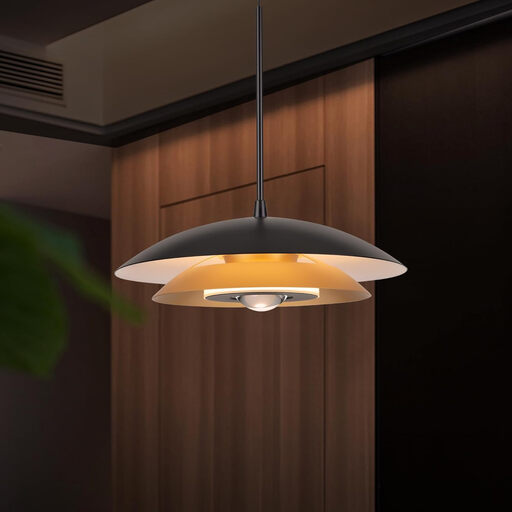
Why This Fits Their Persona: Perfect for anyone looking to make a bold visual statement. The combination of a black industrial lamp and gold is an eye-catcher over any kitchen island or dining table.
The double-layered metal construction prevents direct glare by reflecting light off the inner golden shade. The materials are clearly declared as metal (aluminum/steel), which bypasses the material deception trap.
The integrated 12W LED with 3000K (Warm White) is compatible with most modern dimmers, allowing for flexible brightness control. The height is adjustable.
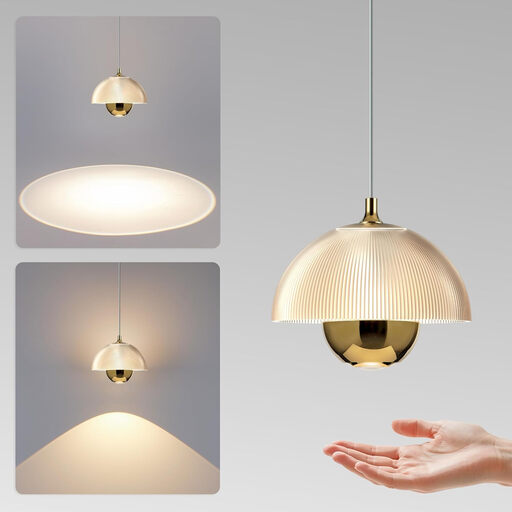
Why This Fits Their Persona: For users who want to combine elegant aesthetics with cutting-edge technology. This gold designer lamp offers touchless control that is both hygienic and futuristic.
It completely sidesteps the dimmer compatibility trap, as the stepless dimming and control are handled by an integrated infrared sensor. No external wall switch is needed.
Three selectable color temperatures (2700K/3850K/5000K) and stepless dimming via hand gestures. The dual-light design illuminates the surface below and the ceiling above.
We have compiled a complete, up-to-date list of products that fully meet these strict selection criteria and rigorous safety standards.
For a dining room of about 15 square meters, a general illumination of approx. 1,500 lumens (15 m? x 100 lm) is recommended. If the dining table is also used as a workspace, the pendant light above it should provide an additional 400-700 lumens. A dimmable fixture offers the most flexibility here.
IP44 means the fixture is protected against splashing water from all directions. This rating is the required standard for bathrooms in the zones around the shower, bathtub, and sink. It is also a great choice for kitchen lights over the sink or for sheltered outdoor areas like covered balconies and patios.
No. Only LED lamps explicitly marked as "dimmable" can be dimmed. Furthermore, the dimmer switch used must be compatible with the LED's technology. To avoid compatibility issues, fixtures with integrated dimming functions (e.g., via remote, touch control, or sensor) are a safe bet, as they require no external hardware.