
Lieferung heute & morgen

Qualitätsgarantie

Willkommens-Angebote freischalten: KOSTENLOSE Lieferung | Bis zu 80 % RABATT | Kostenlose 30-Tage-JoyPlus-Testphase
App herunterladen
There is a wide range of lamps and lights to choose from: LED lamps, wall lights, ceiling lights, pendant lights, floor lamps and night lights differ in more than just design. Light colour, installation, energy consumption and intended use all determine whether a light is genuinely suitable for everyday life.
Three common buying habits often lead to the wrong choice:
Checking a few technical details before buying makes it much easier to choose the right lighting for your living room, bedroom, hallway, kitchen or dining area.
With LED lamps, wattage primarily describes power consumption, not brightness. The luminous flux in lumens is a more useful guide. A light with 125 lumens, such as the Brilliant Multicolour Floor Lamp, is better suited to creating ambience than illuminating a large living room on its own.
The colour temperature in Kelvin affects the way the light feels:
You should also check whether the light is dimmable. A light described as “dimmable” should clearly state whether its brightness is controlled via remote control, wall switch, app or an external dimmer.
For pendant lights and ceiling lights, check whether a hardwired connection is required. Models requiring hardwiring or ceiling installation should be installed in Germany by a suitably qualified electrician. The power supply must be switched off before carrying out any work on the electrical system.
An E27 fitting offers flexibility, as the bulb can be selected and replaced separately. With integrated LED lamps, however, the light source is permanently built in. If it fails, the entire light may need to be replaced, depending on its construction.
You should also check:
A pendant light with a large shade needs sufficient clearance from furniture and doors. Above a dining table, it should not obstruct your view. For wall lights, projection and installation height are important, particularly in narrow hallways or beside the bed.
Material specifications help you assess a light: metal, glass, aluminium, acrylic, wood-effect finishes and fabric all affect weight, care requirements and light distribution. A bedroom light should ideally minimise glare. For night lights with motion sensors, detection angle, range and automatic shut-off are the key considerations.
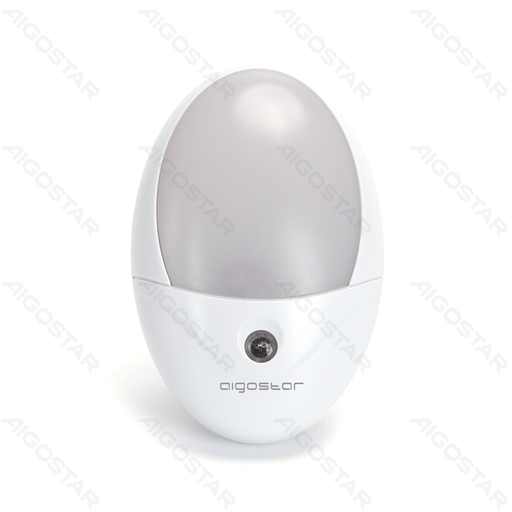
Why this product suits this profile: The plug-in light does not require batteries and can be used in hallways, bedrooms, bathrooms or stairwells without any installation.
The specifications state 20 lumens, 3000 Kelvin, 1 W, a PIR sensor with a 7 m range and a 120° detection angle. This clearly defines it as an orientation light.
Warm white light, automatic motion detection and direct connection to a 220–240 V socket.
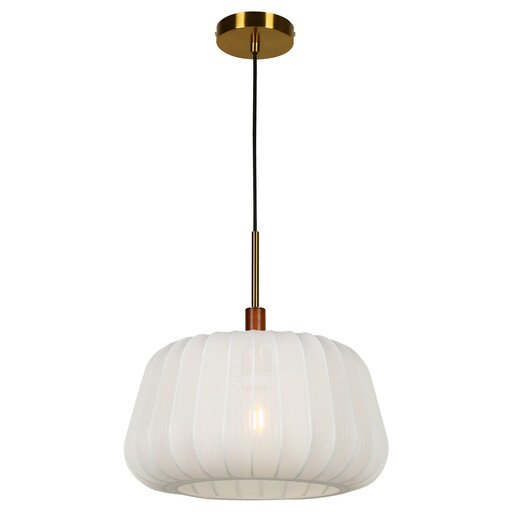
Why this product suits this profile: The pumpkin-shaped fabric shade and E27 fitting combine decorative style with the option to choose your own bulb.
The product data specifies indoor use, a plastic E27 fitting and a maximum power of 60 W. It is therefore not intended for outdoor use or unsuitable bulbs.
Large D380 × H205 mm fabric shade, 1200 mm exposed main cable and mounting plate with bracket.
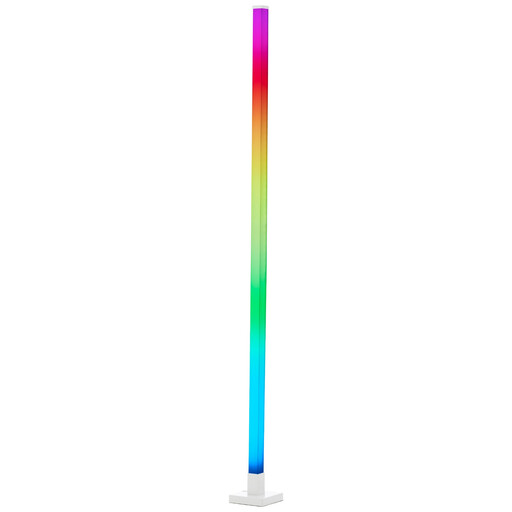
Why this product suits this profile: At 150 cm high, this floor lamp is designed for users looking for RGB lamps, colour changes and controllable lighting effects in living rooms or party spaces.
The functions are clearly specified: remote control, internal dimming, digital RGB colour changes and an integrated music sensor. The energy efficiency class G and 4 kWh/1000 h should be taken into account during everyday use.
Integrated 6.5 W LED, remote control, 125 lumens and IP20 for dry indoor areas.
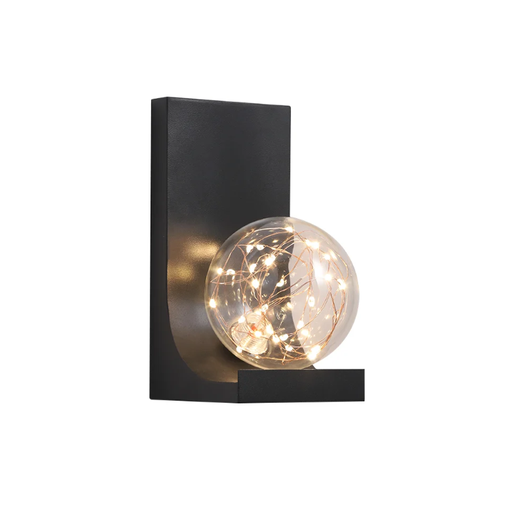
Why this product suits this profile: The slim wall-mounted design is ideal for hallways, bedrooms and areas with limited depth.
The specifications explicitly state that a hardwired connection and installation are required, and that the integrated LEDs are non-replaceable. These points should be checked against your existing installation before buying.
6 W LED with a warm white light colour, metal-and-glass construction and compact dimensions of 120 × 125 × 240 mm.
We have put together a complete, regularly updated list of products that fully meet these strict selection criteria and the safety regulations applicable in the EU.
For lamps for living rooms and bedrooms, a combination of ambient, accent and reading light is recommended. A ceiling light provides general illumination, while floor lamps or wall lights add light to specific areas. RGB lamps can change the atmosphere, but should not be the only light source when clear, practical illumination is needed.
For cordless or battery-powered lights, check the battery type, timer function and protection against moisture. A light with a battery box is not automatically suitable for outdoor use. Decorative lanterns with glass or candles also require sufficient clearance from flammable materials and adequate ventilation.
Warm white light between 2700 and 3000 Kelvin is often used in bedrooms. Compared with neutral white light, it creates a less clinical feel. For reading or getting dressed, an additional light with a higher output may be useful.
Lifespan depends on the construction, operating time, heat dissipation and the quality of the electronics. The manufacturer’s stated operating hours are the key reference. With integrated LED lamps, you should also check whether the LED module can be replaced. With E27 lights, the bulb can be replaced separately.
Running costs depend on wattage, daily usage time and the electricity price. Approximate kilowatt-hours can be calculated using wattage × operating hours ÷ 1000. With a 6 W LED, consumption is lower than with a 60 W light when used for the same length of time. Dimming, timers and motion sensors can reduce the actual time the light is switched on.