Which microphone is right for you?

Reviewers who stay in one spot

If you usually speak in the same place, getting the microphone position right and choosing a compatible connector often matter more than being able to move around. As a general rule of thumb, RØDE Microphones recommends clipping the microphone at chest height, around 20–30 cm from your mouth.

Reviewers using a smartphone

If you’re recording directly to your smartphone, check that the connector and microphone version are compatible: USB-C, TRRS and TRS aren’t interchangeable. RØDE Microphones lists the smartLav+ as TRRS and the Lavalier GO as TRS; Sennheiser describes the XS Lav USB-C as suitable for compatible mobile devices and computers with USB-C.

Presenters who need to move around

If you move around while showing a book or record with other people, a wireless set can make positioning easier. Check that the receiver is compatible with your recording device and how many transmitters are included in the set you’ve chosen.

What should you consider when choosing?

Wired lavalier microphone

A good fit if: You usually record reviews in the same place and your device supports the specific USB-C, TRRS or TRS connector.

Things to consider: The cable and connector limit how you can set things up. Check adapter requirements and device compatibility in advance.

Wireless lapel microphone system

A good fit if: You move around while presenting, need to stand away from the camera or record with other people.

Things to consider: The transmitter and receiver need to be compatible with your recording device and charged; wireless connections can be subject to interference.

Consideration What to check before buying Who should consider this?
Clear speech Check the clip and how it attaches; your test recording should include the sound of clothing and page-turning. RØDE Microphones gives a general rule of thumb of positioning the microphone on your chest, around 20–30 cm from your mouth. According to music retailer Thomann, audible flutter echo may require measures to address reflections. If you speak in one fixed spot, your voice needs to remain clear despite room reverberation. Around 36% of consumers prioritise speech clarity.
Compatible connector Check the exact smartphone or camera model, its input and the microphone version. For wireless sets, check the receiver version too. If you want to record directly with a device you already own, the microphone, connector or receiver must be compatible. Around 29% of consumers prioritise compatibility.
Freedom to move Check the number of transmitters and the receiver’s connector; consider range and battery-life claims only in the context of the relevant test conditions. If you stand up while presenting or speak alongside someone else, a cable could get in the way. Around 21% of consumers prioritise freedom to move.
Avoiding extra purchases Check what’s included, which adapters you’ll need and whether the set is compatible with your recording device before ordering. If you want a suitable set-up without unnecessary adapters or extra accessories, it’s important to check exactly what’s included. Around 14% of consumers prioritise this.

Avoid common misconceptions

  • Confusing noise cancellation with room treatment

    A feature designed to reduce continuous background noise isn’t the same as treating flutter echo. If you can hear reflections, the room may still sound reverberant even with this feature enabled.

    Make a short test recording and listen back before choosing a more advanced set because of an advertised noise-reduction feature.

    Finding a better microphone position or taking steps to address audible reflections may require extra effort.

  • Assuming all 3.5 mm connectors are the same

    RØDE Microphones lists the smartLav+ as a TRRS microphone and the Lavalier GO as a TRS model. A connector that fits doesn’t necessarily mean your recording device will support the microphone.

    Before buying, check the connector on your specific device and find out whether an adapter is required and supported.

    Depending on the connector, you may need a compatible adapter or a different microphone version.

  • Choosing a wireless system based only on range or battery life

    Manufacturers’ range and battery-life claims apply under the conditions they specify. They can’t rule out interference at your recording location.

    Test the connection where you’ll be recording, and check the battery level and audio before longer sessions.

    Interruptions to your recording could mean extra time spent charging and recording again.

Brands to consider

RØDE

The product lines mentioned here differ in several ways, including their connectors and how they record.

  • The smartLav+ is listed as a TRRS microphone and the Lavalier GO as a TRS model; Wireless Micro is available with a USB-C or Lightning receiver.
  • The connector version must be compatible with your recording device. Manufacturer claims about noise reduction don’t demonstrate that room reflections will be eliminated.

Sennheiser

The XS Lav USB-C is a wired option for compatible mobile devices and computers with USB-C.

  • Sennheiser lists a 2 m cable, clip and windscreen as included.
  • Check that your recording device supports the microphone and that the cable is long enough for your set-up.

DJI

The Mic Mini is a wireless option for video recording; the receiver and set version need to suit your intended use.

  • DJI describes two levels of noise cancellation.
  • Manufacturer claims about noise reduction aren’t independent proof that the system can compensate for reverberant indoor spaces.

Hollyland

The LARK M2 is another wireless option, available with different sets and receiver versions.

  • Hollyland describes a magnetic attachment and switchable noise cancellation.
  • Manufacturer claims about sound quality and range don’t prove that the system will eliminate room reverberation during book reviews.

Joybuy products for book reviews

This selection includes wireless lapel microphone systems for book presentations and voice recordings with compatible mobile devices. Before use, check that the receiver version is suitable and consider the wireless conditions at your recording location.
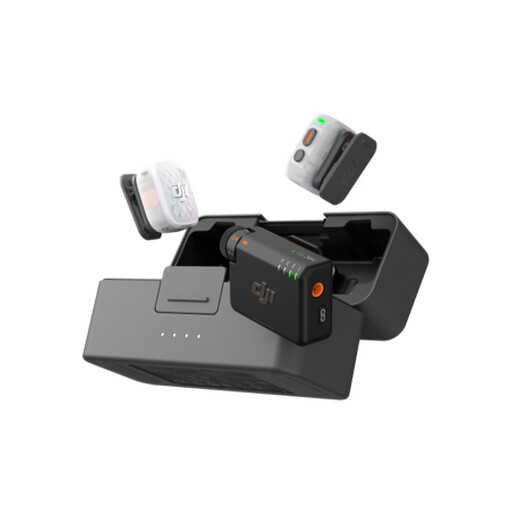
DJI Mic Mini 2S (2 TX + 1 RX + Charging Case)

DJI Mic Mini 2S (2 TX + 1 RX + Charging Case)

The two transmitters and one receiver could be useful for book presentations with several speakers; check that the receiver is compatible with your recording device.

The product title lists two transmitters, one receiver and a charging case.

View at Joybuy
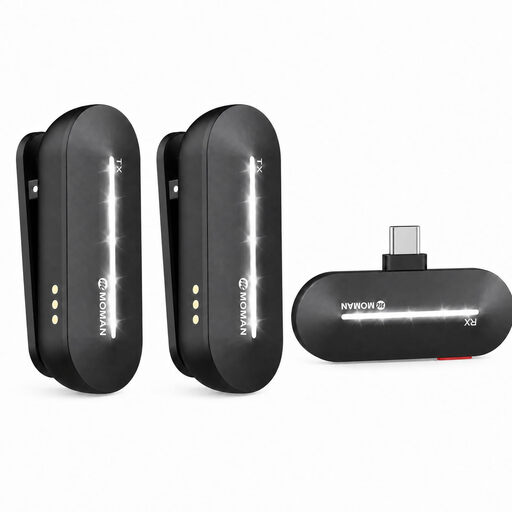
Moman M1CXT Wireless Lavalier Microphone, USB-C, 2TX+1RX, 150m Range

Moman M1CXT, USB-C, 2TX+1RX

This set could suit recordings with two speakers if your recording device supports the USB-C receiver.

The product title lists USB-C, two transmitters, one receiver and a range of 150 m. Check the actual wireless connection at your recording location.

View at Joybuy
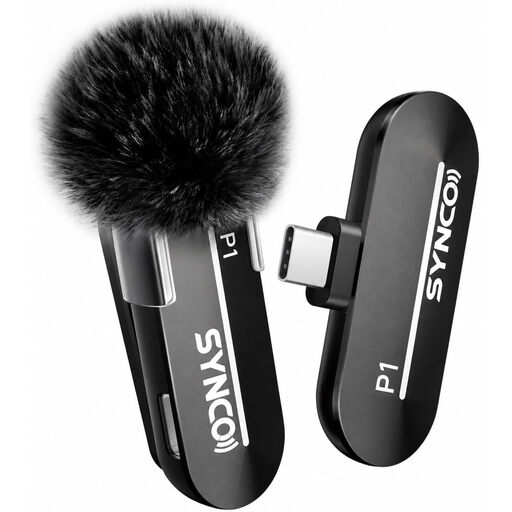
SYNCO P1XT USB-C Wireless Microphone for Vlogging, Streaming, YouTube

SYNCO P1XT, USB-C

This wireless option is designed for recording with a compatible USB-C device; check that the receiver works with your smartphone or recording device.

The product title lists USB-C and a wireless design.

View at Joybuy
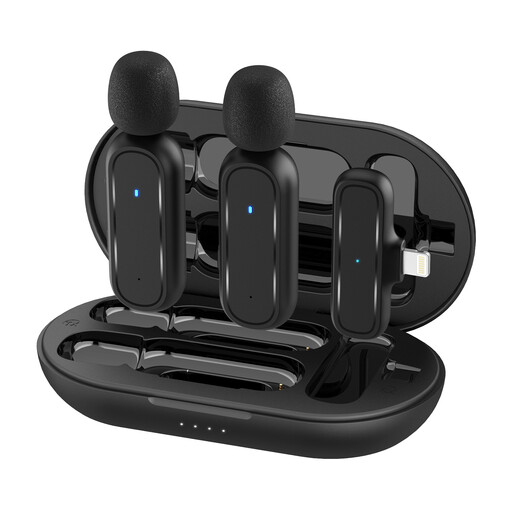
Moman MC1(C) Wireless Lavalier Microphone for Mobile Phones, 2.4 GHz for USB-C Phones (1TX&1RX)

Moman MC1(C), 2.4 GHz, USB-C, 1TX&1RX

This set could work for voice recordings with a USB-C mobile device, provided the device supports the receiver.

The product title lists 2.4 GHz, USB-C, one transmitter and one receiver.

View at Joybuy
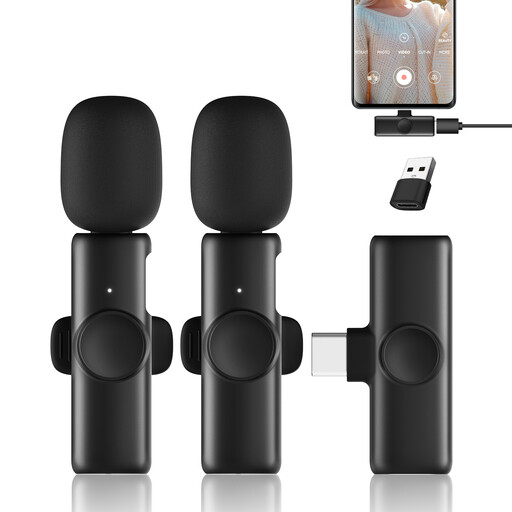
Moman MS1X(C) Wireless Lavalier Microphone for Mobile Phones, 2.4 GHz for USB-C Android Phones (2TX&1RX)

Moman MS1X(C), 2.4 GHz, USB-C Android, 2TX&1RX

The two transmitters could be useful for a review with several speakers; check that your USB-C Android device supports the set.

The product title lists 2.4 GHz, USB-C for Android, two transmitters and one receiver.

View at Joybuy

Frequently asked questions

Can noise cancellation get rid of the echo in my room?

You shouldn’t assume it will. RØDE describes the Wireless Micro’s noise reduction as being mainly for continuous background noise; a source on room acoustics recommends addressing reflections when flutter echo is audible. So make a short test recording and listen back.

Where should I clip the microphone if I’m holding books while speaking?

As a general rule of thumb, RØDE Microphones recommends clipping it to your chest, around 20–30 cm from your mouth. Make sure your clothes don’t rub against the capsule, and test turning pages before you start recording.

What happens if the product develops a fault after purchase?

For a consumer purchase from a commercial seller in the EU, you have a statutory guarantee claim against the seller for at least two years from the date you receive the goods, as explained in the EU’s consumer information. This is separate from any voluntary manufacturer’s guarantee.

Can I use any wireless microphone in Germany on any frequency?

No. The specific frequency band and the conditions of the applicable general allocation are what matter. In 2026, Germany’s Federal Network Agency published a general allocation for wireless microphones and also lists rules for short-range devices. For the specific model, check the frequency information, EU conformity documents and any restrictions on use. This does not mean that every wireless microphone requires an individual licence.