With a fan running, a lapel microphone clipped close to the speaker is a sensible place to start. A directional capsule may help if you can position it appropriately for the speaker and point it away from the fan. For two people, consider a set with two transmitters; if you need an additional separate recording, look for a recorder or a system with internal recording. Check the connection and what’s included, then listen to a test recording featuring the dialect sounds you’ll be capturing: noise reduction alone doesn’t prove that speech details will be preserved.
Which setup is right for you?
Interviews in rooms with a fan
If the fan needs to stay on during the conversation, you can clip the capsule close to the speaker and take care with its positioning. Shure highlights microphone placement and polar pattern as important factors when recording speech with background noise.
Documenting dialect
If you’ll need to assess the speech sounds later, listen to a test recording before settling on settings for a longer session. When using noise reduction, what matters is whether the specific features of the dialect remain clear in the recording.
Interviews with two speakers
If both people need to be miked up close, check whether the set includes two transmitters. DJI says the Mic Mini receiver can be paired with two transmitters at the same time.
What should you look for when buying?
Directional lapel microphone
A good fit if: the interviewee’s position is largely fixed and you can point the capsule towards them.
Keep in mind: the microphone, transmitter and recording device need to be compatible; the polar pattern alone doesn’t prove that it will reduce the noise from the specific fan.
Wireless set with two transmitters
A good fit if: you want to mic up both speakers separately or need freedom to move around.
Keep in mind: DJI lists fan noise as a use case for the Mic Mini’s basic noise-cancelling level; test a recording to see whether processing changes the dialect sounds.
Internal recording or a body-worn recorder
A good fit if: your workflow calls for an additional file or a recording that doesn’t rely on a wireless connection.
Keep in mind: an additional recording won’t remove fan noise that’s been captured; make sure you plan for file storage and backups.
For an interview with a fan running, shoppers may want to prioritise clear speech, speech details, separate recordings of two voices or the right connection.
| Priority |
What to check before buying |
Who is this important to? |
| Understand speech over the fan |
Clip the capsule close to the speaker; check the polar pattern and how it can be positioned in relation to the fan. |
If the fan can’t be switched off during the conversation, you’ll want to capture speech clearly against the room noise. Around 31% of shoppers prioritise clear speech over the fan in this interview setup. |
| Preserve dialect details |
Record and listen to the same short passage with and without noise reduction. |
If specific speech sounds will be assessed later, you’ll want to hear whether processing changes any important details. Around 25% of shoppers put preserving dialect features first. |
| Record two voices separately |
Look for two transmitters and one microphone for each person. |
If both speakers need to be miked up from a similar distance, you’ll need a suitable two-transmitter setup. Around 25% of shoppers prioritise recording two voices separately. |
| Connection and file backup |
Check the input, connector and power supply, and how files will be saved or transferred. |
If you want to keep using your existing recording device or save an additional file, the whole recording setup needs to work together. Around 19% of shoppers first check the connection and recording backup options. |
Common microphone-buying misconceptions
-
Noise reduction automatically preserves dialect sounds
A manufacturer’s claim about reducing fan noise isn’t a comparison test showing whether the speech details you need will be preserved.
Record the same sentence with the actual fan running and try different settings. Listen to the files before the interview.
If the test recording isn’t suitable for your needs, you may have to repeat the interview.
-
A lapel capsule is a complete recording setup on its own
Models such as the Sennheiser ME 4 and Shure WL185 have specific system or connector requirements; the capsule won’t automatically work with every recording device.
Start with your recording device and check its input, power supply and transmitter requirements, as well as the connector on the exact model you’re considering.
Depending on the equipment you already have, you may also need a compatible bodypack transmitter or recorder.
-
32-bit float gets rid of room noise
A recording feature or a particular level workflow won’t automatically separate speech from the fan.
First, improve the microphone position and its distance from the noise source. Use internal recordings as part of a planned workflow for backing up files.
Key microphone brands at a glance
Sennheiser
The ME 4 is a directional lapel microphone option for compatible evolution Wireless SK bodypack transmitters.
- Sennheiser describes the ME 4 as a cardioid microphone for speech in noisy environments.
- This description isn’t a measurement of the fan at your interview location; the transmitter and microphone need to be compatible.
Shure
The WL185 is a directional lapel microphone with a TA4F connector, for use with a compatible transmitter or input.
- Shure lists a cardioid pattern and good rejection of ambient noise for the WL185.
- The TA4F connector doesn’t prove direct compatibility with a smartphone or guarantee any particular sound quality for dialect recording.
DJI
The Mic Mini is available as a wireless set, including a version with two transmitters and one receiver.
- DJI lists fan noise as a use case for the basic level of noise cancellation.
- This is a manufacturer claim and doesn’t prove that all the relevant speech sounds in a particular dialect will be preserved.
RØDE
The Wireless PRO is a wireless set for two people, supplied with Lavalier II microphones and internal recording in both transmitters.
- You can plan to use the internal recordings as additional files in your workflow.
- The supplied Lavalier II microphones are omnidirectional; internal recordings or 32-bit float don’t prove that fan noise will be removed.
Zoom
The F2 is a body-worn recorder supplied with a lapel microphone, for recording without a wireless link.
- Zoom lists 32-bit float WAV, battery power and microSD storage.
- The supplied LMF-2 is omnidirectional; this microphone alone doesn’t provide a directional recording pattern.
Joybuy microphones for interviews
The following Joybuy products are lapel or wireless microphones for interviews. If the fan is running, a test recording will show whether speech details are preserved well enough for your dialect interview.
 No image available
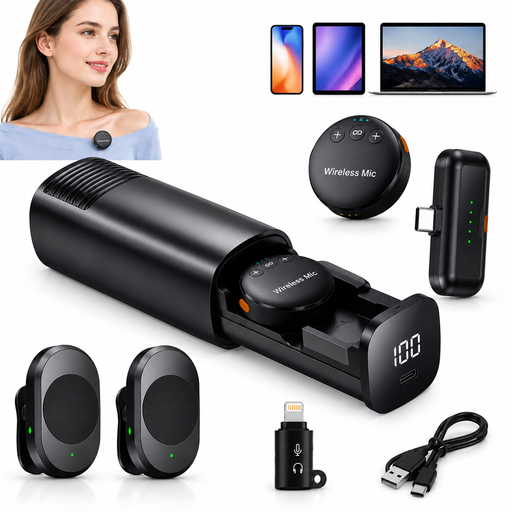
DJI Mic Mini 2S (2 TX + 1 RX + Charging Case)
The two transmitters are useful for interviews where two people need to be miked up separately.
The product name lists two transmitters, one receiver and a charging case.
Test the recording with the dialect sounds you’ll actually be capturing before settling on settings for longer conversations.
View at Joybuy
 No image available
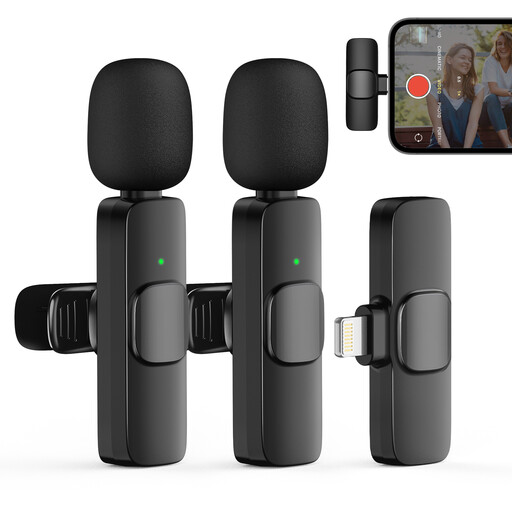
Wireless Lapel Microphone Set with 2 Transmitters, 2.4 GHz, USB-C and Lightning
The listed two-transmitter setup is useful for interviews where two people need to be miked up separately.
The product name lists DSP noise cancellation, latency under 20 ms, a range of up to 40 m and a 500-mAh charging case.
Check which connector works with your recording device, and listen to a test recording with noise cancellation enabled.
View at Joybuy
 No image available
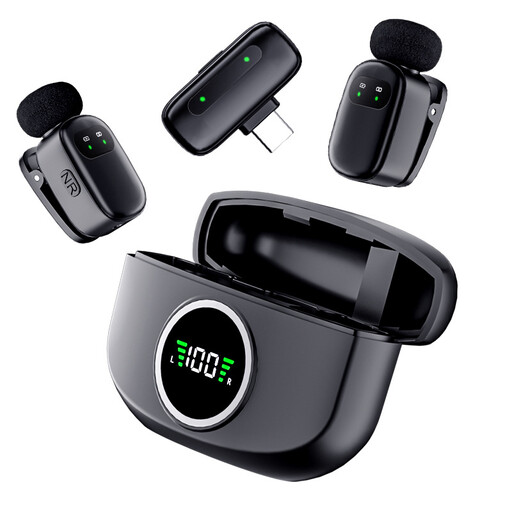
Moman CP1XA Wireless Lavalier Microphone, 2 TX + 1 RX
The listed two-transmitter setup is useful for interviews with two people.
The product name describes it as a lapel microphone for iPhone and lists two transmitters and one receiver.
Check the connection with your specific recording device and listen to see whether noise reduction preserves the dialect features you need.
View at Joybuy
 No image available
Verbex K21 Dual Microphone with Type-C
The dual-microphone description makes this model worth considering for an interview with two speakers.
The product name lists a Type-C interface and noise reduction.
Check that it connects to your recording device and listen to a test recording to assess the speech details.
View at Joybuy
 No image available
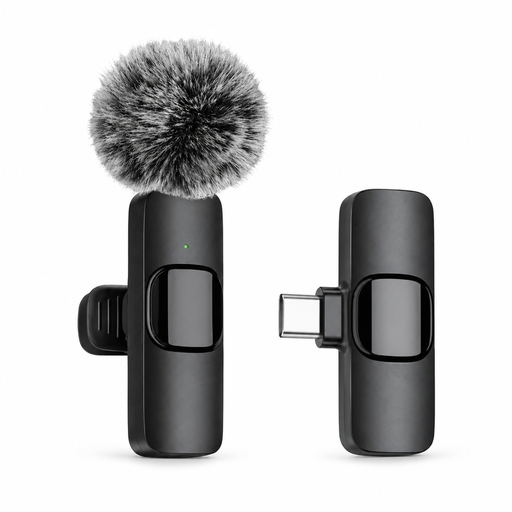
Verbex K9-Black Wireless Mini Microphone with Type-C
The described single-microphone setup is relevant if you’re recording one person.
The product name lists a wireless lapel microphone with a Type-C interface and noise reduction.
The described one-to-one setup is only partly suited to recording two people separately.
View at Joybuy
Frequently asked questions
How can I test a microphone before a longer dialect interview?
Clip the capsule to your clothing without it rubbing, then listen to a short recording with the fan actually running. If the device has noise cancellation, compare the same spoken sentence with the feature switched on and off.
What extra equipment or costs should I plan for?
It depends on your setup. For a Sennheiser ME 4 or Shure WL185, you’ll need a compatible transmitter or input. With the Zoom F2, storage media, batteries and file transfer are all part of the recording workflow. DJI notes that a Lightning adapter is required to use the Mic Mini set with a Lightning iPhone, unless it’s included in the combination you choose.
Can I record a private interview in Germany without the other person’s knowledge?
Section 201 of the German Criminal Code (StGB) covers the unauthorised recording of another person’s non-public spoken words. Before recording, make sure you have permission to do so. If you later process recordings containing personal data, data protection obligations may also apply, depending on the purpose and who is responsible for the processing.


