Solo speakers who stay seated
If you record your meditation in the same place most of the time, you can choose a wired microphone without a wireless link. The right attachment and a listening test in the actual recording environment are what matter.


If you speak in the same place most of the time, a wired lavalier microphone with a connector that’s confirmed to be compatible is a sensible starting point. How you position it and whether it stays securely in place without rustling are still crucial. A wireless set can keep the cable out of your way when you move around, but it also raises additional questions about the receiver, power and wireless operation. A lapel microphone won’t eliminate room echo.
If you record your meditation in the same place most of the time, you can choose a wired microphone without a wireless link. The right attachment and a listening test in the actual recording environment are what matter.
If you’re recording directly to a phone or tablet, check that the microphone’s connector matches your device. Sennheiser offers a USB-C model; for the MVL, Shure specifies a compatible 3.5 mm TRRS connection or a suitable CTIA-compliant adapter.
If you move around while guiding a session, a wireless set can do away with the cable to your recording device. The DJI Mic Mini and Hollyland LARK M2 are available in different transmitter and receiver configurations, so check that you choose the right set.
A good fit if: you record while seated with a compatible USB-C device and the cable is long enough.
The trade-off: There’s no wireless link to worry about, but check device recognition and cable routing in advance.
A good fit if: your mobile device has a suitable TRRS input, or you have a compatible CTIA adapter.
The trade-off: TRRS isn’t interchangeable with every adapter or TRS microphone input.
A good fit if: you already have a compatible transmitter or recorder with a TRS microphone input.
The trade-off: A lavalier microphone on its own isn’t a complete wireless set; the connection and power supply must be compatible with your device.
A good fit if: you move around while guiding a session and a cable to your recording device would get in the way.
The trade-off: You’ll also need to consider the set configuration, receiver connection, charging and the wireless requirements that apply to the specific device.
| What you need | What to check when buying | Who is this especially important for? |
|---|---|---|
| A clear voice in an untreated room | Record a quiet passage in the place you plan to use and listen back through headphones. RØDE recommends starting with the microphone on your chest, around 20–30 cm from your mouth; adjust its position after listening to a test recording. | When I speak quietly, I want to be able to hear my voice clearly in the recording without mistaking a microphone feature for a way to remove room echo. Around 36% of consumers put voice clarity first. |
| The right connection for your device | Check that USB-C, 3.5 mm TRRS or 3.5 mm TRS matches the specific input, and use an adapter if needed. Then make a test recording. | If I want to record with a phone, tablet or recorder I already own, the microphone needs to work with its actual connection. Around 29% of consumers prioritise device compatibility. |
| A secure fit that doesn’t rustle | Test the clip, clothing and cable through a full range of movements. Keep the capsule clear and secure the cable to prevent it being tugged. | When I speak quietly, I want to avoid clothing or cable movement disrupting the recording. Around 21% of consumers pay particular attention to a secure fit that rustles as little as possible. |
| Freedom to move | Check what’s included in the set, the receiver connection and the power supply. For wireless sets, the specific device configuration must comply with the applicable wireless requirements. | If I stand up or demonstrate movements while guiding a session, I don’t want to be restricted by a cable to my recording device. Around 14% of consumers put freedom of movement first. |
3.5 mm TRRS for mobile devices and 3.5 mm TRS for microphone inputs are different types of connection.
Before buying, check the full connection type and, if necessary, the CTIA requirement. Then make a test recording and check that the lavalier microphone is being used.
Without compatible receiving and recording equipment, you may need to buy additional compatible kit.
Manufacturers’ claims about noise cancellation don’t tell you how a quiet voice will sound in your own untreated room.
Make a test recording at your usual speaking volume, wearing the clothes you plan to record in and in the place you intend to use. Treat these features as additional points to consider, not a substitute for listening to a test recording.
The XS Lav USB-C is designed for a wired USB-C setup, while the XS Lav Mobile is a separate 3.5 mm TRRS option.
The MVL is designed for mobile recording via a suitable 3.5 mm TRRS connection.
The Lavalier GO is designed for compatible 3.5 mm TRS microphone inputs, such as those on suitable transmitters or recorders.
Mic Mini is a wireless option for speakers who move around; you’ll need to choose the right set configuration separately.
The LARK M2 is a wireless option with different receiver versions for mobile devices or cameras.
The selection includes wired lavalier microphones and wireless sets for the specified smartphone, USB-C and other recording connections. Before buying, check that the connection and set configuration match your recording device.
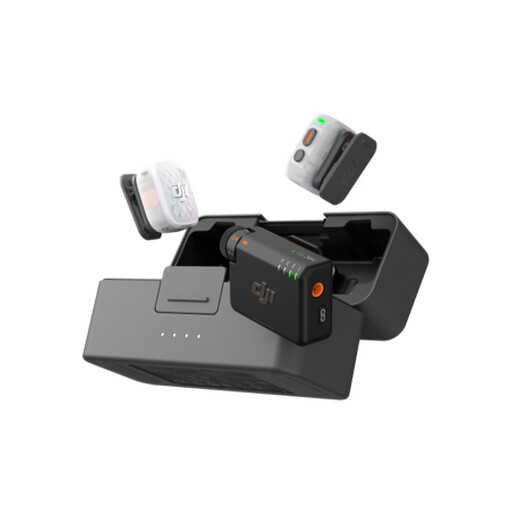 Image unavailable
This wireless lavalier microphone system is worth considering if you want to move around while recording.
According to the product name, this version includes two transmitters, one receiver and a charging case. The product description mentions clip or magnetic attachment, noise cancellation and several sound profiles; none of this guarantees echo-free recordings.
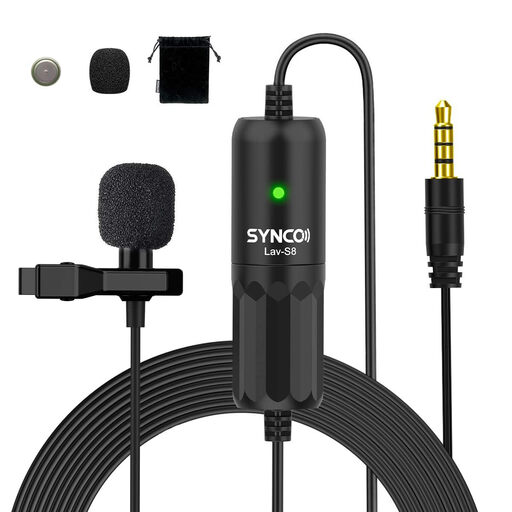 Image unavailable
This wired lavalier microphone is an option if its connection is compatible with your recording device.
The product name lists smartphones, PCs, laptops and cameras as compatible devices. The product description mentions a clip, windscreen and adapter kit; check in advance which connection your particular setup requires.
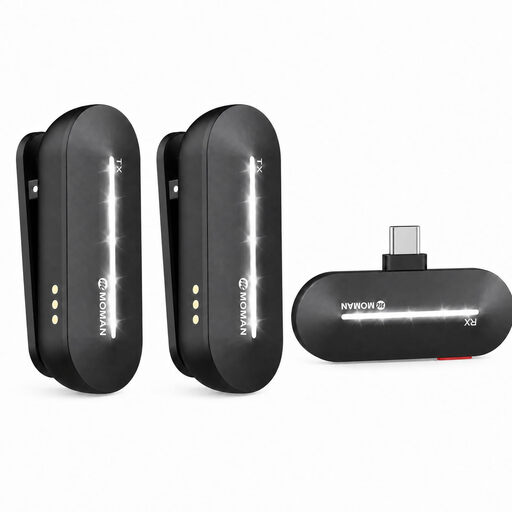 Image unavailable
This wireless microphone system is an option for recording without a cable, using a compatible USB-C receiver.
This version includes two transmitters and one receiver. The product title gives a range of 150 m; check the conditions for using it in your recording environment. The product description mentions noise cancellation and audio monitoring, but doesn’t guarantee a particular sound in your room.
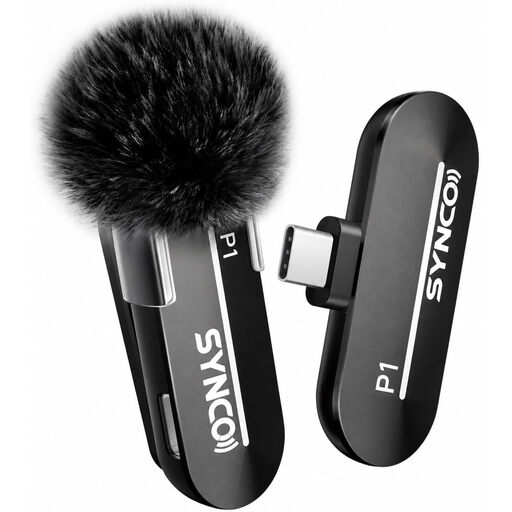 Image unavailable
This wireless microphone system is worth considering if your recording device supports the USB-C receiver.
The product description lists compatible USB-C Android devices with OTG functionality, as well as certain other devices. It also describes switchable noise reduction, audio monitoring and charging your phone while in use; check compatibility with your specific device.
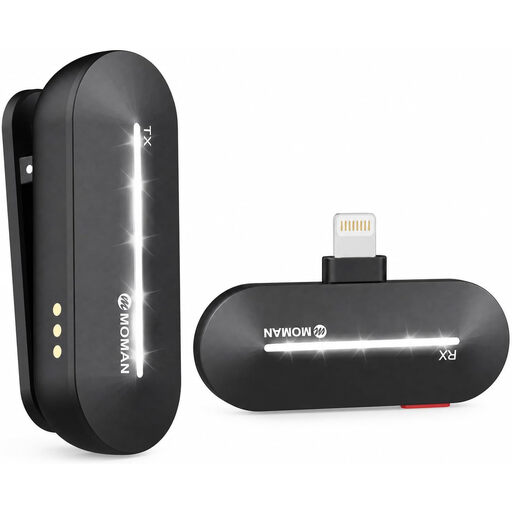 Image unavailable
This wireless lavalier microphone is an option if you use one of the iPhone models listed in the product title.
The title lists iPhone 14/13/12/11/X, as well as one transmitter and one receiver. The product description specifies 2.4 GHz transmission and noise cancellation; check that the receiver connects to your device.
No, you shouldn’t base your buying decision on that. Positioning the microphone close to you can make your voice more prominent than more distant sounds, but it won’t automatically eliminate room echo. Check the results with a recording made in the place you plan to use.
As a starting point, RØDE recommends positioning it on your chest, around 20–30 cm from your mouth. Keep the capsule clear of rubbing clothing, secure the cable and listen to a test recording at your usual speaking volume.
There’s no single answer that applies to every wireless set. Germany’s Federal Network Agency publishes general frequency allocations with conditions for frequencies and operation; check the wireless technology and documentation for your specific device against the relevant allocation. The term “wireless microphone” alone doesn’t mean that permission is always granted or that an application is always required.
Under EU consumer rules, goods are generally covered by a statutory guarantee against the seller for at least two years. In Germany, online purchases usually come with a 14-day right to cancel; exceptions and the terms of the specific purchase should be checked. Any additional manufacturer’s warranty is separate.