Performers with a fan running
If your main priority is recording clear speech, test the microphone and fan positions with a short recording before you perform. Shure highlights how important microphone positioning is for clear speech recordings.


For a carnival monologue with a fan running, the microphone position and a connection that works with your recording device are what matter most. If you’ll be staying mostly in one place, a wired lavalier could be a good fit. If you’ll be moving around, a wireless set gives you more freedom, while a directional microphone will only stay correctly aimed if you can keep the capsule pointed reliably at your mouth. A windscreen helps protect the capsule from airflow, but it won’t automatically eliminate fan noise in the room.
If your main priority is recording clear speech, test the microphone and fan positions with a short recording before you perform. Shure highlights how important microphone positioning is for clear speech recordings.
If you’ll be moving around or changing costume, the microphone should stay securely in place without the cable getting in your way. Shure notes that rubbing fabric can cause handling noise.
If you want to use a device you already have, check its microphone input, connector wiring, power requirements and any adapters you might need. RØDE and Shure describe different connection options for their respective lavalier models.
First, decide whether you’ll stay in one place or move around during your monologue. Then check that the connection and attachment work with your recording device and costume. If you’re using a directional capsule, you’ll also need to keep it correctly aimed.
| Priority | What to check before buying | Who should pay particular attention? |
|---|---|---|
| Speech clarity | Position the microphone close to your voice; make a test recording with the fan running. Check directional pickup or noise processing against your actual setup. | If you want to record clear speech despite a fan, microphone position and the sound in the room are key. Around 36 % of consumers cite this as their main priority. |
| Device connection | Check whether it’s TRS or TRRS, whether the microphone input is compatible and what power is required; check whether you need an adapter for your specific device. | If you want to keep using your existing phone, recorder or camera, the signal path needs to be compatible with the microphone. Around 29 % of consumers prioritise device compatibility. |
| Freedom of movement | Decide whether a cable will get in the way; with a wireless set, check the number of transmitters and the receiver connection. | If you’ll be moving during your monologue, a wireless set can avoid having a cable running between your clothing and recording device. Around 21 % of consumers prioritise freedom of movement. |
| Attaching it to your costume | Test the clip and cable routing with your actual costume; if you’re using a directional capsule, check that it stays correctly aimed as you move. | If fabric or a cable could rub against the capsule as you gesture, you’ll need an attachment that stays secure as you move. Around 14 % of consumers prioritise how the microphone attaches to their costume. |
A windscreen helps with airflow at the capsule and plosive sounds. You may still hear a fan as background noise in the room; a manufacturer’s claim about noise processing is no guarantee of how your monologue will sound.
Make a short recording to test the fan position, microphone attachment and, if available, noise processing.
A plug that looks similar doesn’t guarantee that the microphone will work with your recording device. The RØDE Lavalier GO uses TRS; for compatible smartphone connections, the manufacturer specifies a TRS-to-TRRS adapter. The Shure MVL is designed for a compatible TRRS connection.
Check the connector wiring, microphone input, power requirements and any necessary adapters together.
Rubbing fabric or tension on the cable can cause handling noise and change the microphone’s position.
Test the attachment with your actual costume and the movements you plan to make.
The ME 4 is a directional lavalier option, provided the capsule can be aimed correctly and the connection works with your recording device.
The Mic Mini is a wireless clip-on system for recording while moving around.
The wired Lavalier GO is designed for compatible 3.5 mm TRS microphone inputs and the Wireless GO range.
The MVL is designed for mobile speech recording through a compatible 3.5 mm TRRS connection.
The LARK M2 range includes wireless lavalier sets for recording on the move.
These Joybuy products are designed for recording on the move, with wireless lavalier sets and noise processing.
 No image available
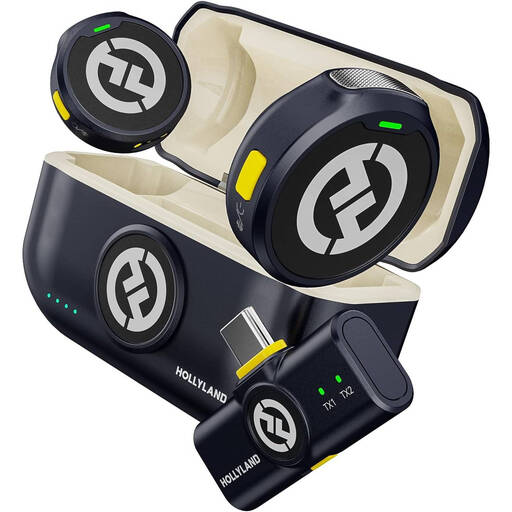
The wireless version could suit a monologue that involves movement; the product title mentions USB-C and noise reduction. Hollyland describes ENC for the LARK M2, but this isn’t an independent guarantee that it will suppress fan noise in your recording.
Check the frequency details for the specific wireless version against the regulations in force for use in Germany.
 No image available
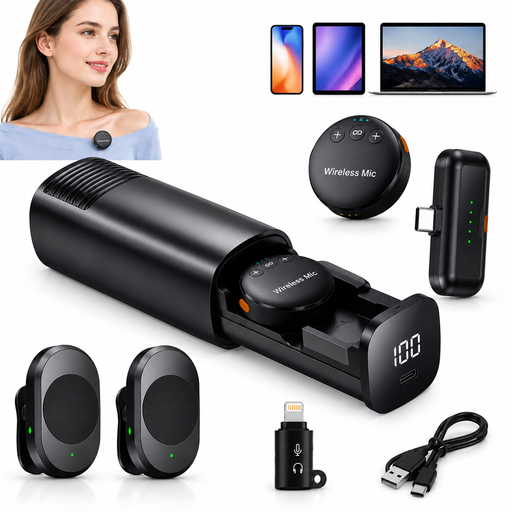
A wireless lavalier set could be a good fit if you’ll be moving around while recording. The product title’s claim of DSP noise reduction isn’t independent evidence of how well it handles fan noise.
The product title specifies two transmitters, 2.4 GHz, latency under 20 ms, a range of up to 40 m, and USB-C and Lightning connections. Check the frequency details for the specific version for use in Germany.
 No image available
The wireless version could work for a monologue that involves movement. The three-level DSP noise reduction mentioned in the title is a product feature, but it isn’t independent evidence of how effective it will be at your recording location.
The product title specifies a range of up to 100 m and a battery life of 20 hours. The TF card required for the TF card backup recording described in the product details is not included. Also check the frequency details for the specific wireless version for use in Germany.
You shouldn’t rely on it to. RØDE describes the WS-LAV as helping with wind noise and plosives at the capsule. To find out whether the fan remains audible in the background, make a recording where you’ll actually be performing.
Test a position where neither the fabric nor the cable rubs against the capsule. Shure notes that rubbing clothing can cause handling noise. If you’re using a directional microphone, also check that the capsule stays aimed at your mouth as you turn your head and body.
You may need a connection adapter, depending on your recording device. For compatible smartphones, RØDE describes a TRS-to-TRRS adapter for the Lavalier GO. When you buy as a consumer from a trader in the EU, you generally have at least a two-year legal guarantee. For qualifying online distance sales, you generally have a 14-day right to cancel from the date of delivery; the type of contract and any exceptions should be taken into account.
According to the Bundesnetzagentur, frequencies covered by a relevant general allocation can be used without registration and free of charge, provided you comply with its technical and operating conditions. This doesn’t automatically apply to every wireless version, so check the frequency details of your specific set against the allocation currently in force. The Bundesnetzagentur published Notice 37/2026 on 15 April 2026.