Language learners recording on their own
If you usually speak alone from a fixed position, you’ll want a manageable cable run and a capsule position you can set up in the same way for every recording.


If you mostly speak from a fixed position, a wired lapel microphone with a connector and power supply confirmed to be compatible is a sensible starting point. A wireless option may be better if a cable restricts your movement. Position the capsule so it doesn’t rub against your clothing, then make a test recording to check that both quiet and loud speech sounds remain clear in your booth.
If you usually speak alone from a fixed position, you’ll want a manageable cable run and a capsule position you can set up in the same way for every recording.
For multiple takes, a consistent connection, a repeatable microphone position and a quick playback check before the exercise can all help.
If you change position while recording, a suitable wireless set may be more practical than a cable. Check the signal path and what’s included with the specific set.
A good fit if: you’re recording from a fixed position on a compatible USB-C device, and the cable reaches where you’ll be speaking. Sennheiser lists a 2-m cable for the XS Lav USB-C.
The trade-off: You won’t need wireless pairing or a transmitter battery, but you’ll need to check that the device and app are compatible and that the cable reaches.
A good fit if: your recording device has a suitable microphone input. RØDE describes the smartLav+ as suitable for compatible TRRS smartphone connections, and the Lavalier GO as requiring a suitable TRS input with plug-in power.
The trade-off: A plug of the right size doesn’t guarantee that the wiring and power supply are compatible. The Lavalier GO on its own isn’t a wireless set.
A good fit if: you move around during your practice or find a cable gets in the way, and the transmitter and receiver work with your recording device.
The trade-off: You’ll also need to check what’s included, the connection and the battery level. DJI’s stated noise cancellation doesn’t prove that every quiet detail of your pronunciation will be preserved.
| Buying priority | What to check before buying | Who is it most important to? |
|---|---|---|
| Speech sounds without clothing noise | Check the clip and cable routing with the clothes you plan to wear; listen to a test recording with both quiet and loud sounds. | If you want to assess articulation, the capsule should sit freely without rubbing against fabric. Around 36% of consumers prioritise a secure, interference-free microphone fit and clearly audible speech details. |
| A compatible device connection | Check the microphone input, TRS or TRRS connection, or USB-C connection, as well as the required power supply; check the external input in your recording app. | If you want to keep using your existing smartphone, computer or another recording device, the signal path needs to work with it. Around 29% of consumers prioritise a working connection to their own device. |
| Background noise in the booth | Record from the position you’ll use, even with ventilation or other noise sources running; compare any available processing both on and off. | If there’s background noise in your booth, what matters is whether your voice stays clear in the actual recording. Around 21% of consumers focus mainly on being able to assess their voice despite this kind of noise. |
| Freedom of movement and set-up | Decide in advance whether you’ll be changing position; for wireless systems, check what’s included, the connection and the power supply. | If you move around during your practice, a cable may get in the way; a wireless set, however, comes with extra components. Around 14% of consumers prioritise freedom of movement without an obstructive cable. |
TRS and TRRS connections can have different requirements. RØDE specifies a suitable TRS microphone input with plug-in power for the Lavalier GO; the smartLav+ is designed for compatible TRRS smartphone connections.
Before buying, check that the microphone’s wiring and power requirements match your recording device.
Depending on your set-up, you may need a compatible adapter or a different microphone.
RØDE describes the Lavalier GO as a wired microphone that can be connected to a compatible Wireless GO transmitter, among other devices.
For wireless recording, check the complete signal path and what’s included. If you’re recording from a fixed position, a compatible wired microphone may be all you need.
For wireless use, you may need a suitable transmitter and other components that work with your set-up.
DJI lists two levels of noise cancellation for the Mic Mini. This feature description doesn’t tell you how quiet speech details will come through during your particular pronunciation exercise.
Record the same sounds in your actual recording position with processing both on and off, then compare the results.
RØDE notes that contact with fabric can cause audible interference.
Clip the capsule where it won’t rub against your clothes and secure the cable. Listen to a short test recording before you start your exercise.
The XS Lav USB-C is an option for recording through a compatible USB-C connection.
The smartLav+ and Lavalier GO are designed for different types of wired connection.
The MOTIV MVL is designed for close-up voice recordings on compatible mobile devices.
The Mic Mini is a wireless option if a cable gets in the way of your practice.
The BY-M1 is a wired option with a long cable.
This selection includes wired 3.5 mm lapel microphones and wireless lapel systems for fixed-position recording or exercises that involve moving around.
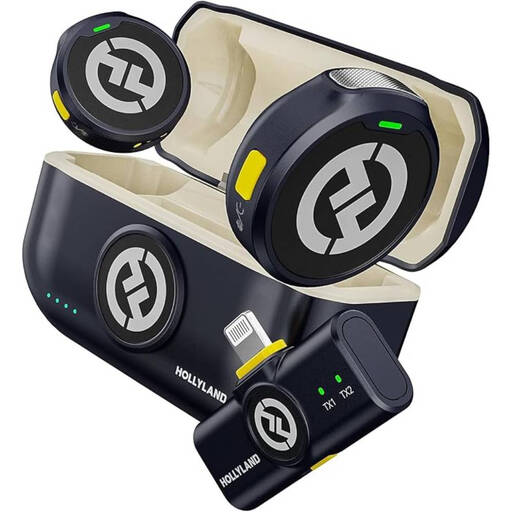 No image available
A wireless option if you want to move around during your practice or find a cable gets in the way.
The product name lists 48 kHz/24-bit, a transmitter weight of 9 g and a transmission range of 300 m. Test it in your recording position to check that both quiet and loud speech details are clear enough for your exercise.
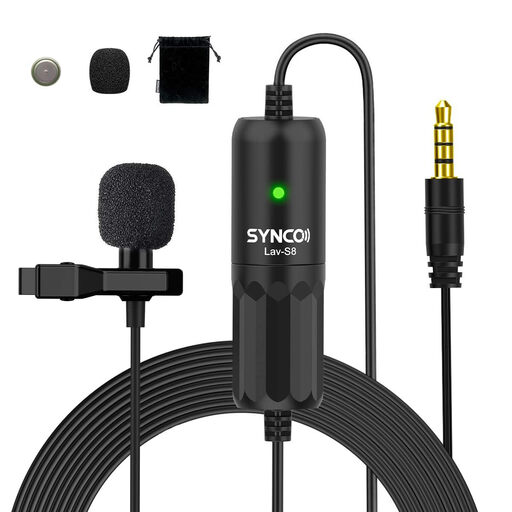 No image available
A wired option for recording from a fixed position, if your recording device has a compatible microphone input.
The product description lists a 3.5 mm connection, a clip and a windscreen. The plug alone doesn’t confirm that the wiring and input are compatible with your device.
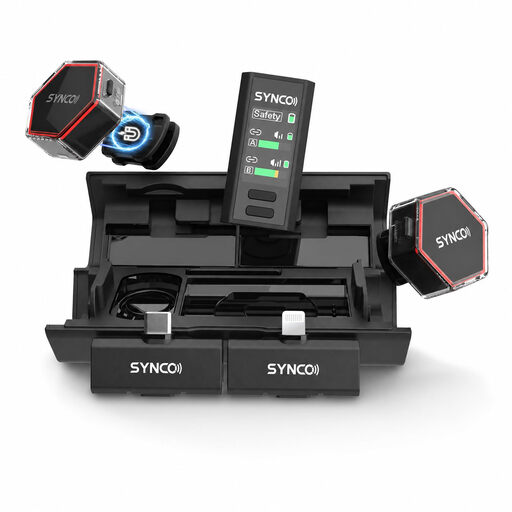 No image available
A wireless option if you want to move around or use your recording device without a microphone cable.
The product description lists receivers for USB-C, Lightning and 3.5 mm camera connections. Check that the receiver is compatible with your specific device.
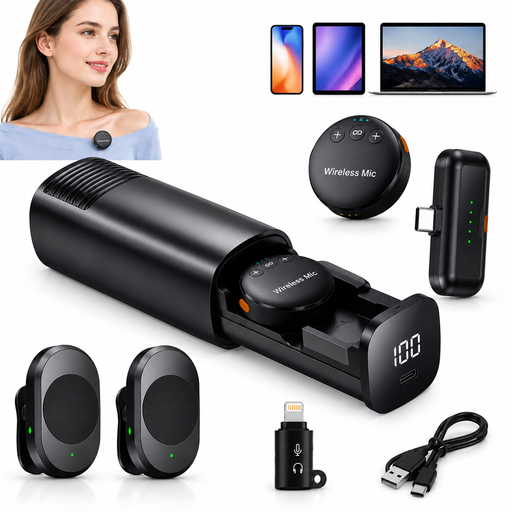 No image available
The two transmitters are an option if you want to record two people separately.
The product description lists USB-C and Lightning connections on the receiver, as well as real-time monitoring. Check that the receiver is compatible with your recording device before choosing this set.
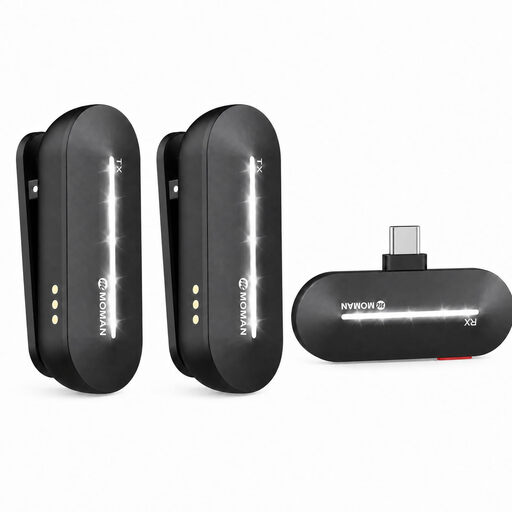 No image available
A wireless option for a compatible USB-C recording device if you want to work without a microphone cable.
The product name lists 2TX+1RX and a range of 150 m. The product description lists a USB-C receiver; check whether your device supports it as an audio input.
Clip the capsule close to your voice without letting it brush against your clothes, secure the cable and listen to a short recording with both quiet and loud sounds. This will help you check that the position and recording work well in your booth.
Not just because of the size of the booth. What matters is how many voices you want to record separately at the same time and what’s included with the specific set. DJI says that one Mic Mini receiver can be paired with two transmitters; this doesn’t mean every version of the set includes two transmitters.
Before buying, check whether your set-up needs an adapter, transmitter or receiver, and whether the BOYA BY-M1 variant you’ve chosen requires an LR44 button cell. According to Your Europe, goods bought new from a trader are covered by a legal guarantee for at least two years. When you buy online from a trader, you generally have 14 days from delivery to withdraw from the purchase; terms and exceptions apply.
You must not record another person’s private spoken words without authorisation: Section 201 of the German Criminal Code (StGB) covers the violation of the confidentiality of spoken words. So make sure you get the person’s agreement before recording. If an identifiable recording is processed as personal data, the processing also needs an applicable legal basis under the GDPR. Consent is one possible legal basis, but not the only one, as explained by the Federal Commissioner for Data Protection and Freedom of Information.
No, it’s not possible to give a general answer for every model and frequency band. In its general allocation for wireless microphones from April 2026, the Federal Network Agency lists permitted frequency bands subject to technical and operational conditions. So check the frequency details for the specific set; the ruling explicitly revokes a general allocation from 2025.