Which brands are worth considering?
The product ranges below differ in features such as connection and recording setup. Check how each one works with your recording device.
RØDE
RØDE describes the smartLav+ as using a TRRS connection for compatible smartphones, while the Lavalier GO is a separate TRS lavalier microphone for suitable microphone inputs or compatible wireless transmitters.
- The manufacturer’s specifications distinguish between the connection types of the two models.
- The Lavalier GO requires Plug-in Power. For the wireless GO setup described, RØDE specifies a TRRS-to-TRS adapter for the smartLav+.
Sennheiser
Sennheiser says the XS Lav USB-C is designed, among other uses, for voice-over recording with mobile devices and computers.
- Sennheiser lists a USB-C connection and a 2 m cable.
- Check whether your specific device and recording software recognise an external microphone.
Shure
Shure describes the MVL as a wired lavalier microphone for compatible mobile devices with a 3.5 mm connection, or with a suitable CTIA-compliant adapter.
- For the MVL, Shure lists features including an omnidirectional pickup pattern, a clip and a windscreen.
- The connection and any adapter required must be suitable for your specific recording device.
DJI
DJI describes the Mic Mini range as a wireless option for recording on the move. The manufacturer says its receivers can pair with up to two transmitters.
- Depending on the version, DJI describes clip or magnetic attachments.
- Check what’s included and the receiver connection for the version you’re buying. Manufacturer specifications don’t replace testing it in your own room.
Deity
According to Deity, the V.Lav is an analogue wired option with a 5 m cable.
- Deity lists a 5 m cable and two LR41 batteries.
- Check the connection on your specific recording device and bear in mind that you’ll need to replace the batteries.
Joybuy products for home-studio recording
The Joybuy models below offer wired analogue or wireless options for recording museum commentary from a fixed position, as well as setups that give you more freedom to move.
 No image available
DJI Mic Mini 2S (2 TX + 1 RX + Charging Case)
For a wireless recording setup with two transmitters. Check the frequency and operating requirements in Germany for the specific version.
The product title lists 2 TX, 1 RX and a charging case.
View at Joybuy
 No image available
SYNCO S8 Lavalier Microphone for Smartphone, PC, Laptop and Camera
A wired analogue option for a fixed recording position. Check that the connection and your recording software are compatible with your specific device.
View at Joybuy
 No image available
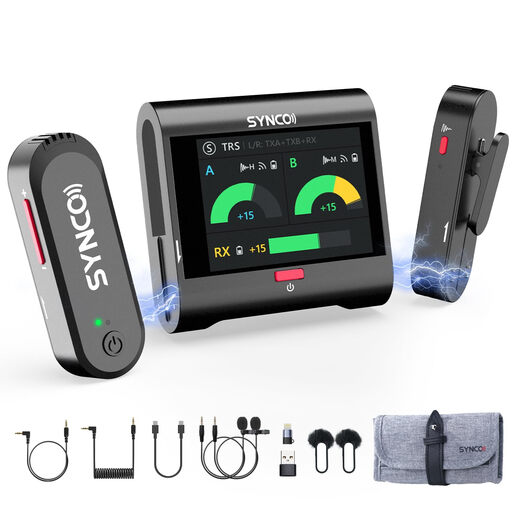
SYNCO G3PRO Wireless Lavalier System, 2.4GHz, Dual Lapel Mics
For recording with more freedom to move or capturing two voices. Before buying, check the receiver connection and the frequency requirements in Germany for the specific version.
The product title lists 2.4GHz and two lavalier microphones.
View at Joybuy
 No image available
Moman M1CT Wireless Lavalier Microphone, USB-C, 1 TX + 1 RX, 150 m Range
For recording a single speaker with a compatible USB-C device. Check the frequency requirements in Germany for the specific version too.
The product title lists 1 TX, 1 RX and a 150 m range.
View at Joybuy
 No image available
Moman MS1X(C) Wireless Lavalier Microphone for USB-C Android Smartphones, 2.4 GHz, 2 TX + 1 RX
For a wireless setup with a compatible USB-C Android smartphone and two transmitters. Check the frequency requirements in Germany for the specific version.
The product title lists 2.4 GHz, 2 TX and 1 RX.
View at Joybuy
Frequently asked questions about lapel microphones
How do I attach a lapel microphone for a recorded commentary?
Attach it close to your voice, making sure it won’t rub against your clothing. As a general guide, RØDE recommends placing it about a handspan, or 20–30 cm, from your mouth. Check the position and levels with a test take using your own speaking voice.
Will a 3.5 mm lapel microphone work with any smartphone or wireless transmitter?
No, the connection alone isn’t enough. RØDE distinguishes between the smartLav+ TRRS connection and the Lavalier GO’s TRS and Plug-in Power setup. For use with a Wireless GO transmitter, RØDE specifies a TRRS-to-TRS adapter for the smartLav+. Shure lists compatible mobile devices or a CTIA-compliant adapter for the MVL.
How should I care for a lavalier microphone?
Follow the instructions for your specific model. Shure warns that most of its lavalier microphones can be damaged by liquid getting inside and advises against cleaning the microphone element itself. These manufacturer instructions don’t necessarily apply to other brands.
Can I use a wireless microphone in Germany without an individual frequency allocation?
This is permitted if the frequency and technical operating conditions of the specific device fall under a relevant current general allocation and you comply with its requirements. Check the wireless set’s frequency band against the guidance from Germany’s Federal Network Agency. Notice 37/2026 replaced an earlier microphone allocation from 2025, so older information should not be reused without checking.
What extra components and entitlements should I consider when buying?
Check whether your setup needs an adapter, receiver, additional transmitter or batteries. If a product is faulty, your statutory rights against the seller are separate from any voluntary guarantee; the terms of your specific purchase apply.


