People practising in a noisy flat
You want your voice to be more clearly heard over fan noise or other background sounds, and you can test the microphone position before you practise.


For a fixed practice spot, a wired lavalier microphone with a compatible input on your recording device is a sensible place to start. RØDE recommends starting with the mic clipped to your chest, around 20–30 cm from your mouth. A wireless set is more practical if you want to move around while speaking. Noise reduction won’t necessarily remove sudden sounds, so make a test recording with and without processing to see how it affects your pronunciation practice.
You want your voice to be more clearly heard over fan noise or other background sounds, and you can test the microphone position before you practise.
Above all, you need a microphone input that’s actually compatible. USB-C, TRRS and TRS are different connection types and aren’t interchangeable.
You want to listen back to individual sounds and can make a short comparison recording with and without noise reduction. However, this alone doesn’t prove that a microphone is suitable for assessing speech sounds.
A good fit if: you usually practise in the same spot and the cable reaches your recording device.
Bear in mind: The connection needs to be compatible; depending on the microphone and device, you may need an adapter.
A good fit if: you want to move around while practising or don’t want to run a cable to your recording device.
Bear in mind: The transmitter, receiver and connection all need to be compatible with your specific device and set. You’ll also need to keep the components charged.
| What you need | What to check before buying | Who should pay particular attention? |
|---|---|---|
| Hearing your voice over household noise | Test the microphone position and make a test recording with the sounds you hear in your actual practice space. RØDE recommends starting at a distance of 20–30 cm from your mouth. | If I want to hear my voice clearly over fan noise, I’d compare different positions and noise reduction settings. Around 33% of consumers would put how clearly they can hear their own voice first. |
| A compatible connection for your device | Check the input on your recording device, whether it’s USB-C, TRS or TRRS, and whether you’ll need an adapter. Sennheiser specifies a USB-C connection for the XS Lav USB-C; RØDE says adapters may be needed to use the Lavalier GO with smartphones. | If I practise on a smartphone or laptop, I want to be sure I can actually connect the microphone to my device. Device compatibility is likely to be the main buying consideration for around 27% of consumers. |
| Listening back to individual sounds | Record and listen back to the same practice sentence under comparable conditions, with and without any available noise reduction. Also listen for rubbing sounds from clothing. | If I want to assess individual sounds, I don’t want to use processing that makes it harder to compare them. Around 27% of consumers would place particular importance on being able to listen back to their pronunciation. |
| Freedom to move | Check whether a cable would get in the way in your practice space. With a wireless set, check the number of transmitters, the receiver connection and exactly what’s included. | If I want to stand up or move around while speaking, a cable is less practical for me. Around 13% of consumers would prioritise freedom of movement. |
A microphone with a TRS connection won’t necessarily work with a smartphone that has a TRRS input. RØDE recommends a TRS-to-TRRS adapter for the Lavalier GO; Shure’s MVL is designed for compatible TRRS mobile devices or use with a suitable CTIA adapter.
First, check which input your recording device has and what adapter setup you’ll need. Then choose your microphone.
The XS Lav USB-C is a wired option for a fixed practice spot, provided you have a compatible USB-C recording device.
The MVL may suit mobile devices with a compatible 3.5 mm TRRS input or a suitable CTIA adapter.
The Lavalier GO is designed for compatible TRS inputs; Wireless Micro is a separate wireless range for smartphones.
The Mic Mini may be worth considering as a wireless option if you want to move around or compare how it handles steady household noise.
The models below include wired lavalier microphones with a 3.5 mm connection, as well as wireless sets for USB-C and Lightning devices. Before choosing, check that the connection and everything included are compatible with your recording device.
 No image available
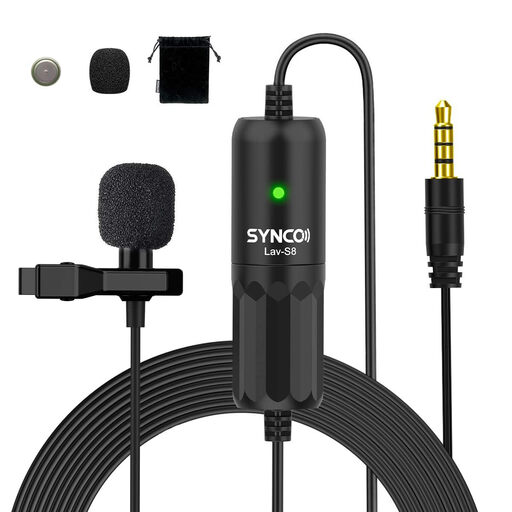
For wired voice recording when your recording device has a compatible 3.5 mm connection.
The product name specifies a 3.5 mm connection; the product description lists an adapter kit and windscreen, and says it can be used with smartphones, PCs and laptops.
 No image available
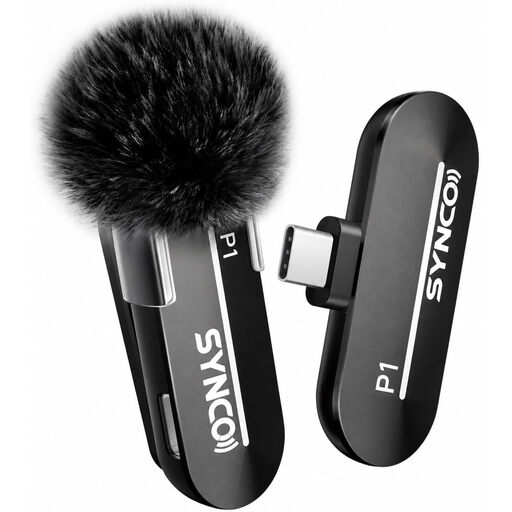
For a wireless setup if your recording device supports the compatible USB-C receiver.
The product description lists switchable noise reduction. For Android devices, it specifies USB-C with OTG support.
 No image available
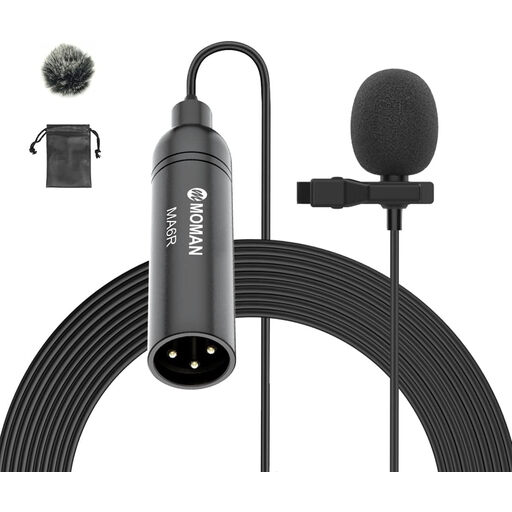
For wireless voice recording if your recording device has a compatible 3.5 mm connection.
The product title specifies 6 m and automatic pairing; the description lists one transmitter and one receiver, as well as an omnidirectional capsule.
 No image available
For wireless voice recording with a USB-C device that supports the receiver.
The product title specifies 2.4 GHz, one transmitter and one receiver. The description lists three noise modes; check that the connection is compatible with your device.
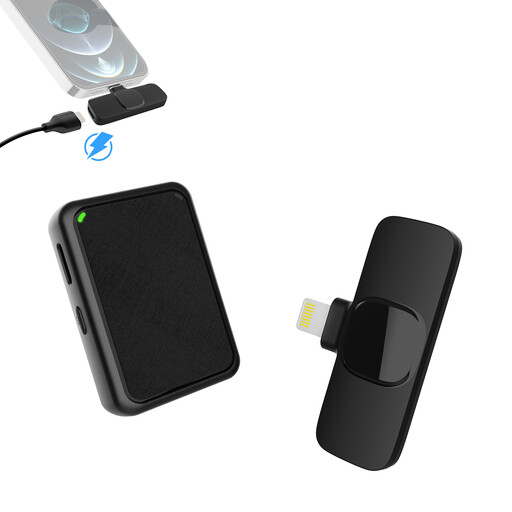 No image available
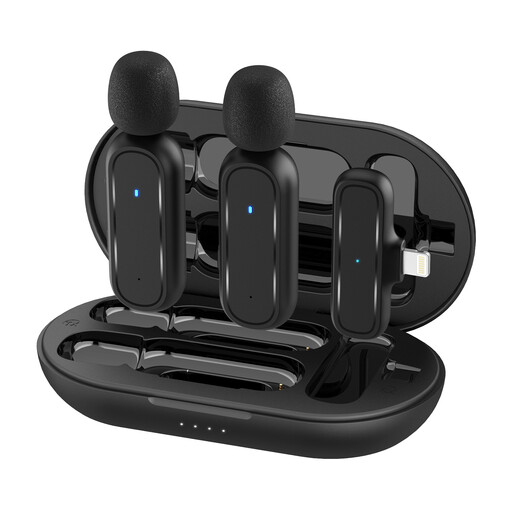
For wireless recording with a compatible iPhone or iPad and a suitable Lightning receiver.
The product title specifies two transmitters, one receiver and a Lightning connection; the description lists three noise modes. Compatible devices listed include iPhone 11/12/13/X/XS and the iPad series.
RØDE recommends starting with the microphone clipped to your chest, around 20–30 cm from your mouth. Make sure your clothes don’t rub against the capsule, then listen back to a short practice sentence. This distance isn’t guaranteed to work for every voice.
Possibly. RØDE recommends a TRS-to-TRRS adapter for the Lavalier GO. If your smartphone doesn’t have a 3.5 mm socket, you may also need a suitable USB-C or Lightning adapter. Check the connections on your specific device.
You can’t assume that every wireless microphone is suitable based on its product type alone. Germany’s Federal Network Agency publishes different general frequency allocations, including rules for short-range devices and wireless microphones. Check the documentation for your specific set, including its EU conformity information and intended frequency use.
Section 201 of the German Criminal Code makes it an offence to record another person’s words spoken in private without authorisation. If you can hear other people talking in the flat, check with them before recording or make sure you don’t capture their speech. The legal position depends on the circumstances of each case.