Solo storytellers who sit down
If you’ll mostly be recording one person sitting down and want to keep things simple, look for a secure clip and a connection that works with your recorder or mobile device.


If the person telling the story will mostly be sitting down, a wired lapel microphone is a simple place to start, provided the plug, input and power requirements are compatible. If you want to record two people at once, or the storyteller needs to move around, a wireless set could be a better option. The key things to check are the number of transmitters, the receiver connection and how you’ll manage charging. Before you record, listen to a test recording and make sure you have permission: Section 201 of the German Criminal Code (StGB) covers the unauthorised recording of another person’s private spoken words.
If you’ll mostly be recording one person sitting down and want to keep things simple, look for a secure clip and a connection that works with your recorder or mobile device.
If the storyteller and a family member regularly speak together, check whether the set actually includes two microphones or transmitters, and how the sound reaches your recording device.
If you switch between a smartphone and a recorder, or the storyteller may stand up, consider cable length, wireless reception and how the microphone connects to each device.
A good fit if: one person will mostly be telling their story in the same spot and you have a suitable microphone input.
Things to weigh up: Make sure the cable length, plug wiring and any power requirements are compatible with your recording device.
A good fit if: one storyteller needs to move around without being connected to the recording device by a cable.
Things to weigh up: A set with one transmitter won’t automatically mic up a second speaker as well. The receiver connection and charge level are also part of your setup.
A good fit if: both the storyteller and the family member asking questions need to wear their own microphone.
Things to weigh up: Check exactly what’s included and plan when to charge each component. Manufacturers’ range figures under open-field conditions aren’t a guarantee for every home studio.
| What matters | What to check when buying | Who should pay particular attention? |
|---|---|---|
| Clear speech | A mounting clip, an unobstructed microphone capsule and a test recording you’ve listened back to; RØDE suggests around 20–30 cm from the mouth as a starting point. | If I want to hear the storyteller clearly, I’ll pay attention to the microphone position and make sure fabric doesn’t rub against the capsule. Around 31% of consumers put clear speech without clothing noise first. |
| A compatible device connection | Check the input, TRS or TRRS wiring, any adapter you may need and the microphone’s power requirements. | If I want to use my existing smartphone or recorder, I’ll check the entire signal path beforehand. Around 25% of consumers prioritise compatibility with their recording device. |
| Two voices in conversation | Check whether the set includes two transmitters and whether the receiver is compatible with your recording device. | If I want to record questions and answers with two people each wearing a mic, the actual contents of the set matter to me. Around 25% of consumers make capturing two separate voices their top buying priority. |
| Movement and conversation length | Check the space available for movement, how long the conversation will last, the cable length or battery level, and the receiver connection for your planned setup. | If the storyteller may stand up or the conversation will be longer, I’ll plan for both movement and power. Around 19% of consumers prioritise freedom of movement and a setup that will work for the length of the conversation. |
TRS and TRRS plugs can require different inputs, even though both use a 3.5 mm connector. The wrong connection may stop your recording from working as intended.
Check the full path from the microphone through the socket and any adapter to the recording app or recorder.
DJI offers the Mic Mini in sets with one or two transmitters. A set with just one transmitter won’t capture a second person using their own transmitting microphone.
Check exactly what’s included if both people in the conversation need to wear a clip-on microphone.
DJI gives the test conditions for its battery-life and range figures. Results from an open, interference-free environment aren’t guaranteed in a home studio.
Charge the components for the planned conversation length and test the set where you intend to record.
RØDE points out that clothing rubbing against the microphone capsule can create audible noise.
Clip the microphone to the clothes you’ll wear during the recording and listen to a short test first.
The Lavalier GO and smartLav+ are designed for different signal paths. The Lavalier GO is made for compatible TRS microphone inputs, while the smartLav+ is designed for compatible TRRS mobile device connections.
Shure describes the MVL as a wired lapel microphone for compatible mobile devices.
For family conversations with the Mic Mini, the main thing to check is whether the set includes one or two transmitters.
Deity describes the wired V.Lav as having an auto-configuring 3.5 mm connection and a 5 m cable.
This selection includes wired lapel microphones and wireless sets for one or two people, with connections for different devices.
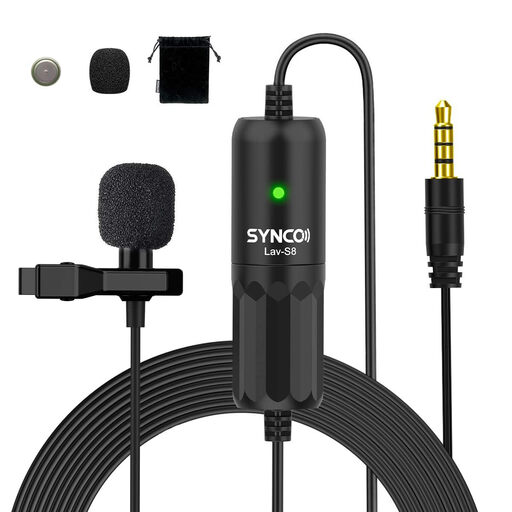 No image available
For close-miked speech recording with a device that has a compatible connection.
The product title lists smartphones, PCs, laptops and cameras as compatible devices. The description mentions a 3.5 mm connection, an adapter kit and a clip; check the signal path for your specific device.
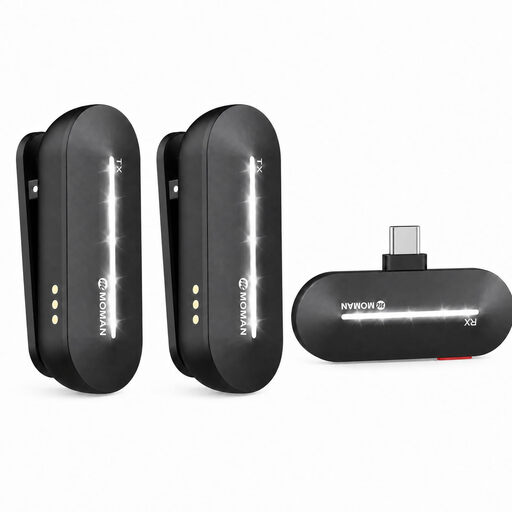 No image available
For recordings where two people each need to wear a microphone and you’re using a compatible USB-C device.
The product title lists two transmitters and one receiver. The description mentions real-time monitoring through the receiver.
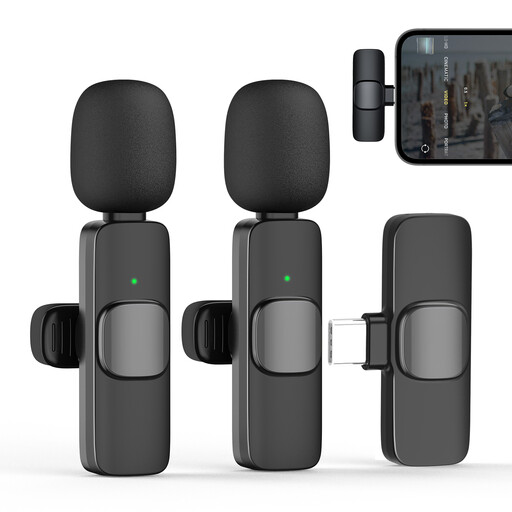 No image available
For recording one storyteller wirelessly with a compatible Type-C device.
The product title lists 2.4 GHz, one transmitter and one receiver. The description mentions automatic pairing and a noise reduction function.
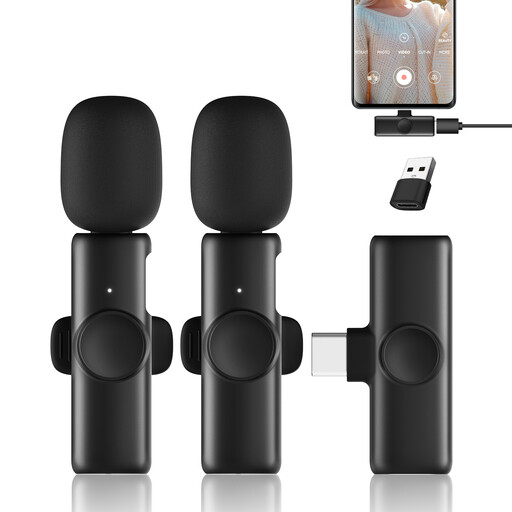 No image available
For two people speaking, using a compatible USB-C Android phone as the recording device.
The product title lists 2.4 GHz, two transmitters and one receiver. The stated device compatibility is limited to USB-C Android phones.
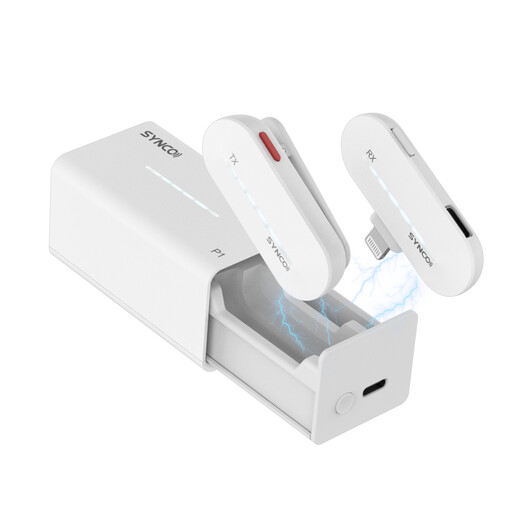 No image available
For wireless lapel microphone recording with an iPhone, provided the system’s connection is compatible with your device.
The product title lists 2.4 GHz and a charging case. The description mentions speech and interview recordings as possible uses.
As a starting point, RØDE recommends clipping it to the chest, around 20–30 cm from the mouth. Keep fabric away from the capsule and listen to a short test recording. The manufacturer’s recommendation won’t be the perfect position for every voice and outfit.
No. TRS and TRRS use different signal paths. Check the microphone input and whether you need a suitable adapter. For example, RØDE recommends a TRS-to-TRRS adapter when connecting its TRS lapel microphone to a compatible TRRS device.
Check whether any adapters you need, a second transmitter and charging accessories are included in the specific set. For consumer contracts concluded online that are generally eligible for cancellation, the German Civil Code (BGB) provides a 14-day right of withdrawal; statutory exceptions and the relevant start of the withdrawal period should be checked separately.
Section 201 of the German Criminal Code (StGB) makes it an offence to record another person’s private spoken words without authorisation. Before recording, check that the speaker agrees and don’t assume you have permission.