
Lieferung heute & morgen

Qualitätsgarantie

Willkommens-Angebote freischalten: KOSTENLOSE Lieferung | Bis zu 80 % RABATT | Kostenlose 30-Tage-JoyPlus-Testphase
App herunterladen
A laptop backpack is a daily companion for many professionals, students, and travellers. However, the selection is vast, and marketing promises can be misleading. The wrong model isn't just an inconvenience; in the worst-case scenario, it can damage your expensive electronics. This guide will show you what to look for to make the right decision and which pitfalls to avoid.
Before we dive into the important features, let's highlight the most common issues that lead to a poor purchase.
To find a durable and functional companion, focus on the following three fundamental characteristics.
The material determines the durability and protection of your contents. Most backpacks are made of synthetic fibres like polyester or nylon. Pay attention to the fabric density, indicated in Denier (D). A value of 600D Polyester is a solid standard for a daypack, while a travel backpack benefits from a higher density like 900D or more. Also crucial are cleanly finished, double-stitched seams and high-quality zippers, as these are the most common weak points.
A fully loaded work backpack can quickly weigh several kilograms. Good carrying comfort is therefore essential to prevent back and shoulder strain. Key features include:
The right organisation is the key to functionality. A dedicated, well-padded backpack with a laptop compartment is a non-negotiable. Measure your laptop precisely and plan for at least 2-3 cm of extra space in width and height. A good business backpack also offers:
Here are some models tailored to specific needs and use cases.
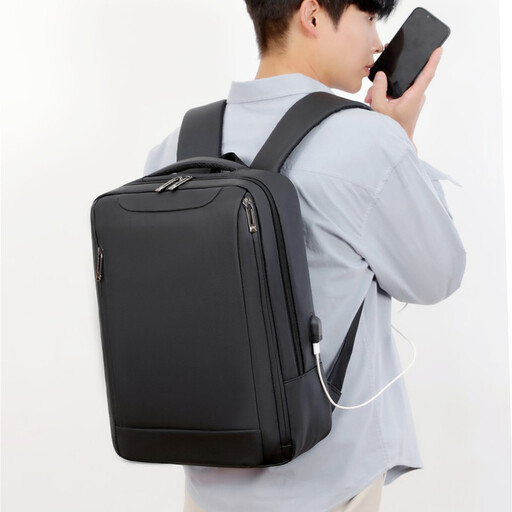
Why This Fits Their Persona: Ideal for the daily commute to the office or university. The slim design looks professional, while the thoughtful compartment layout helps keep your laptop, documents, and personal items separate and organised.
The laptop compartment is clearly specified for 15.6-inch devices and offers sufficient space. The material is declared as water-resistant, which is an honest claim for protection against light rain.
Slim profile that isn't cumbersome on crowded public transport. Multiple compartments for clear organisation.
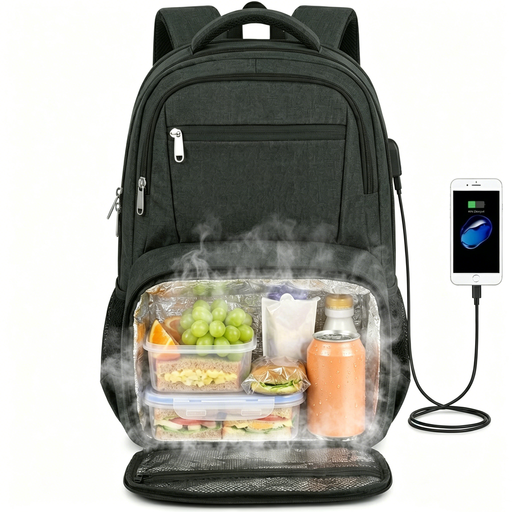
Why This Fits Their Persona: Perfect for long days at the office or on-site appointments. This backpack combines a large laptop compartment with a separate, insulated cooler section for meals and drinks, making it an all-in-one solution.
Instead of vague promises, this backpack offers a clearly defined extra feature: an insulated compartment lined with aluminum foil. The laptop section is designed for devices up to 17.3 inches, which is a precise specification.
Integrated, expandable cooler compartment. TSA-friendly design that opens 180 degrees, and a luggage strap for travel.

Why This Fits Their Persona: This set combines an elegant design with practical functionality for everyday use. It's ideal for users who need a compact backpack for a tablet or a small notebook (up to 13.3 inches) and value a fashionable appearance.
The size specification for tablets (up to 13.3 inches) is precise and avoids false expectations. The function of the USB port is described for what it is: a convenient pass-through for your own power bank.
2-in-1 set with an additional storage pouch. Hidden anti-theft back pocket for valuables.
We have compiled a complete, up-to-date list of products that meet these strict selection criteria.
Measure the length, width, and depth of your laptop. The compartment should be at least 2-3 cm larger in each dimension. This ensures the device slides in and out easily, the zipper is not under strain, and there might even be room for a thin protective sleeve.
Water-resistant means the material has been treated with a coating (often DWR - Durable Water Repellent) that causes water to bead up and roll off. This provides protection against light rain or splashes. Waterproof means the material itself is impermeable and the seams are sealed or welded to prevent water from entering, even in heavy rain. For daily use, a water-resistant backpack is usually sufficient.
A backpack with a USB port can be convenient, as you can charge your smartphone or another device while holding it, with the power bank safely stowed inside the backpack. Technically, however, it is just an extension cable. Its usefulness depends on how often you need to charge on the go and whether you value the convenience of an external charging socket.