
Lieferung heute & morgen

Qualitätsgarantie
App herunterladen
Kategorien
A laptop backpack is an essential carry solution for your digital and analogue work tools. Selecting the right model depends on objective criteria based on your individual needs. Key parameters include material quality, compartment layout, security features, and ergonomic design. This guide analyses the technical specifications relevant for commuters, students, and business travellers.
A backpack's functionality is determined by the interplay of its material, construction, and design. A systematic evaluation of these factors enables an informed purchasing decision.
The durability of the backpack and the protection of its contents are largely determined by the exterior material. Many models in this market segment are made of polyester or nylon. These synthetic fibres are characterised by high tear and abrasion resistance, combined with a low overall weight.
Water resistance is a crucial feature. A water-resistant backpack is typically treated with a special coating or made from a tightly woven fabric that repels light to moderate rainfall. This protects electronic devices like laptops and tablets from moisture damage during daily commutes. For full waterproofing, sealed seams and special zips are required, which are less common in standard models.
Internal organisation is vital for daily use. A well-structured business backpack or a backpack for university and work offers dedicated compartments for specific items.
For users who frequently find themselves in crowded environments like public transport or while travelling, security features are relevant. An anti-theft backpack is distinguished by design elements that deter unauthorised access. These include:
Modern backpacks often offer technical enhancements. A backpack with a USB port features an external socket connected to an internal cable. You can connect your own power bank to this cable to charge mobile devices on the go without having to open the backpack. The power bank itself is not included.
Carrying comfort is crucial for daily use. Ergonomically shaped and padded shoulder straps distribute weight evenly. A breathable back panel made of mesh fabric promotes air circulation and reduces perspiration. An adjustable sternum strap can provide additional stability when carrying heavier loads.
Based on the technical criteria mentioned, we present two models that are suited for different user profiles due to their specific features.
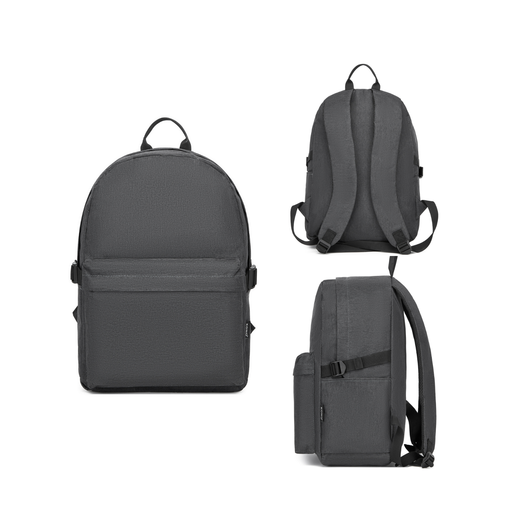
Why we recommend this product: This model focuses on the core functions of a reliable daypack. Its durable polyester construction and thoughtful compartment layout make it a practical solution for the daily commute to university or the office. The low weight and minimalist design support versatile use.
Advantages:
Who It's For: Students and commuters looking for a straightforward, lightweight, and well-organised backpack for daily transport of a laptop, books, and other essentials.
View details for the Kono Casual Backpack
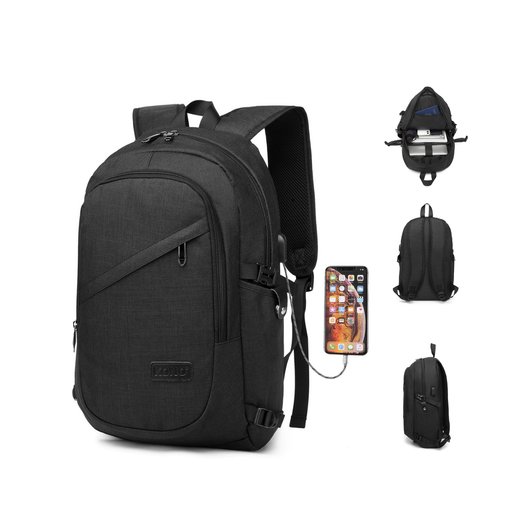
Why we recommend this product: This model specifically addresses the needs of users with advanced security and technology requirements. The combination of a detachable anti-theft lock and an integrated USB charging port offers functionality for business trips and commuting in urban centres. The robust construction from high-density polyester fabric underscores its focus on durability.
Advantages:
Who It's For: Business travellers, commuters, and tech-savvy users who value security, organised compartments, and the ability to charge their devices on the move.
View details for the Kono Anti-Theft Backpack
Choosing a backpack is a highly personal decision. For users who prioritise weight or have specific requirements for packing volume, our category for ultraleichtes gepäck may also feature interesting models. There you will find other solutions tailored to different transport needs.
1. What makes a laptop backpack secure? A secure laptop backpack, often called an anti-theft backpack, uses special design features. These include concealed zips that rest against your back, cut-proof materials, or the ability to secure zips with a lock. These features make it difficult for third parties to gain quick, unnoticed access.
2. How does a backpack with a USB port work? A backpack with a USB port has a built-in USB socket on the outside. Inside the backpack, there is a cable to which a standard power bank (not included) can be connected. This allows you to charge your smartphone or another device externally while the power bank remains safely stowed inside the backpack.
3. What size should a backpack for university be? The ideal size for a backpack for university and work depends on the items you need to carry. A volume between 20 and 30 litres is usually sufficient for a laptop (e.g., 15.6-inch), several books or folders, a water bottle, and small personal items. A well-padded laptop compartment that fits the size of your device is essential.