Authors who write a lot
If you write and regularly revise longer maintenance guides, a comfortable keyboard, clear text display and a suitable workspace should be your priorities. The DGUV provides guidance on using notebooks at work.


For a bicycle maintenance booklet with longer passages and inserted reference photos, choose a laptop that suits your keyboard, display and software needs. You don’t need a dedicated graphics card just because you’re working with photos. If you plan to do intensive photo editing or detailed page layouts, also check the requirements of the specific applications you’ll use and the exact display configuration. Adobe recommends 16 GB of RAM or more for Photoshop, while Affinity recommends 8 GB of RAM for its Windows version. If you often work on the go, a more compact device may mean less screen space; at a fixed desk, a larger screen and external input devices can be useful.
If you write and regularly revise longer maintenance guides, a comfortable keyboard, clear text display and a suitable workspace should be your priorities. The DGUV provides guidance on using notebooks at work.
If you review lots of reference photos or create more detailed page layouts, the requirements of your image and layout applications, as well as the display specifications of the exact model, become more important. Adobe and Affinity publish application-specific requirements, while Lenovo lists different display specifications depending on the configuration.
If you collect notes and photos in different places and work on your booklet later, it’s worth checking that the weight, power supply and ports suit your routine. Apple lists 16 GB of unified memory for the 13-inch MacBook Air; the DGUV also covers the use of mobile devices at work.
Before comparing laptops, decide whether writing, working with images, software and PDF exports, portability or the overall cost matters most for your booklet.
| Priority | What to check before buying | Who this matters most to |
|---|---|---|
| Writing long passages | Check the keyboard layout and screen size of the exact model, and consider your workspace for longer sessions. | If I’m revising lots of pages in German, I want a keyboard and text display suited to long writing sessions. Around 31% of consumers prioritise comfortable writing. |
| Reviewing reference photos | Compare the display specifications of the exact configuration with the requirements of your image-editing software. | If I want to review or edit photos in more detail, the display configuration and my application’s requirements matter. Around 25% of consumers prioritise reviewing or editing images. |
| Software and PDF exports | Check that the applications you plan to use are compatible with the operating system, then export a sample page with photos as a PDF. | If I want my booklet software and PDF export to fit seamlessly into my workflow, I’ll check both in advance. Around 19% of consumers prioritise software and export compatibility. |
| Working on the go | Check that the weight and charging accessories suit the places you work, and make sure you have the ports you need for a camera, storage device or monitor. | If I collect notes and photos in different places, I need a device that’s easy to carry and can later be connected to the equipment at my workspace. Around 13% of consumers prioritise working on the go. |
| Assessing the total cost | Consider the software and peripherals you already have and actually need, as well as the device’s specifications. | If I want to avoid unnecessary software or accessory purchases, I’ll check that the specifications suit the way I create my booklet. Around 12% of consumers focus primarily on the total cost. |
Lenovo lists a display with 45% NTSC for the ThinkPad E14 Gen 7 21SX000RGE, and 100% sRGB for the other configuration, 21SXCTO1WWDE5. These specifications apply to the respective configurations and are not interchangeable.
Especially if you’ll be reviewing reference photos, check the full model number and the display specifications of the laptop on offer.
Requirements depend on the application: Adobe recommends 16 GB of RAM or more for Photoshop, while Affinity recommends 8 GB of RAM for its Windows version. These figures apply to the respective software and are not minimum requirements for every booklet.
First decide whether you’ll simply insert photos or actually edit them, and which layout application you plan to use. Then compare the relevant software requirements with the laptop’s specifications.
LibreOffice offers image compression settings when exporting to PDF, including lossless compression. So you should check the exported document separately.
Export a sample page with images and check it at the intended output size before sharing the whole booklet.
The DPMA explains that usage rights can cover copying, distribution and making a work available to the public, among other things.
Before adding or publishing any image from another source, check that you have permission and understand the conditions for your intended use.
The information below applies to the specified product ranges and configurations, not to every model from each brand.
The ThinkPad E14 is a Windows option for extensive writing. If you’ll be reviewing images, the exact display configuration matters.
The MacBook Air with M5 is a macOS option for writing and reviewing images on the go, provided the applications you plan to use are compatible with macOS.
The Swift Go 14 AI is a compact Windows option for writing and organising images.
According to HP, the OmniBook 5 range includes different sizes and specifications for everyday use and work. If your booklet relies heavily on images, the configuration you choose is key.
The Inspiron 14 2-in-1 is a form-factor option if you’d like the flexibility of a convertible device as well as a traditional keyboard.
This selection features laptops for writing and adding images to a booklet. Models vary in screen size, specifications and form factor.
 No image available
The listed 16-inch screen size is worth considering if you’d like more room to work with text and reference photos.
AMD Ryzen 3 PRO 7335U, 16 GB DDR5, 512 GB SSD, AMD Radeon 660M and Windows 11 Pro Education.
 No image available
The 16-inch format is an option if you’d like more screen space for writing and reviewing reference images.
32 GB DDR5, 512 GB PCIe SSD and Windows 11 Pro.
 No image available
The 2-in-1 design may be useful if you’d like the flexibility of a convertible device as well as a traditional keyboard.
Intel Core Ultra 7 258V, 32 GB RAM, 1 TB SSD, 2.8K OLED touchscreen and Windows 11 Home.
 No image available
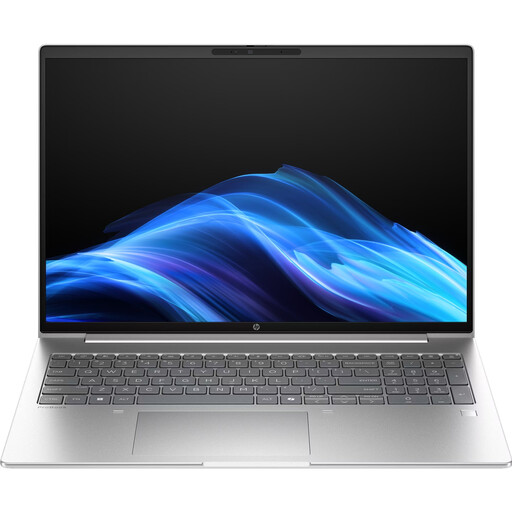
The model specifications list a German QWERTZ keyboard and a 16-inch display, which you can compare with your writing and image workflow.
AMD Ryzen 5 230, 16 GB DDR5 RAM, 512 GB SSD, AMD Radeon 760M Graphics and Windows 11 Pro.
 No image available
The listed German keyboard layout is worth considering if you write longer passages in German.
16-inch, AMD R5 6600H, 16 GB RAM and 512 GB SSD; German keyboard.
No, not just to insert photos. Choose your specifications based on whether you’ll actually edit images and the type of layout you plan to create. Adobe recommends 16 GB of RAM or more for Photoshop; this is a recommendation for that specific application, not a requirement for every booklet.
Export a sample page and check it at the intended output size. LibreOffice offers image settings when exporting to PDF, including lossless compression. You’ll also need to check any specific requirements from your printer.
Set up your workspace appropriately and consider whether external input devices would be useful. For using a notebook as a desktop replacement, the DGUV recommends an external keyboard where possible. This is guidance, not a requirement for every buyer.
When you buy goods as a consumer, you have statutory rights against the retailer; the German Federal Government explains that the period is generally two years. Under changes that came into force in 2026, the period may be extended after a repair if the stated conditions are met. This is separate from any voluntary manufacturer’s warranty.
No. An image being available online does not automatically mean you have permission to use it. Before copying or publishing it, check your rights, the specific licence or any relevant statutory exception. Whether an exception applies depends on how you plan to use the image.