Designers working with large layered files
If you combine photos, illustrations and adjustment layers in larger poster files, look for a setup that suits your files and the programmes you use at the same time.


For layered choir posters, choose a laptop that suits your file sizes and software. It’s also important to know how you’ll assess colours and what print-ready files your printer requires. Adobe recommends 16 GB RAM or more for Photoshop on desktop. For 2D design alone, check the graphics requirements of your software rather than assuming you need a particularly powerful GPU.
If you combine photos, illustrations and adjustment layers in larger poster files, look for a setup that suits your files and the programmes you use at the same time.
If you work with a printer to get colours, fonts and the finished PDF right, display specifications matter just as much as that printer’s file requirements.
If you edit designs at rehearsals or meetings, you’ll need to balance screen space and features against how portable the laptop is.
A good fit if: You often take your designs with you and mainly make edits or work on smaller projects while you’re out and about.
The trade-off: It can be harder to fit your poster, layers and toolbars on a smaller screen at the same time. An external monitor can give you more room at a fixed workstation.
A good fit if: You regularly work on large, layered designs directly on your laptop and need more screen space or memory headroom.
The trade-off: A larger device is less portable. A more powerful GPU alone also won’t tell you how accurately you can assess colours for print.
A good fit if: You do most of your design work at a desk and want to use an additional display that’s suited to your needs.
The trade-off: You’ll need to buy a monitor and suitable connection as well as the laptop. Even an appropriate display won’t replace your printer’s export requirements.
Adobe recommends 16 GB RAM or more for Photoshop on desktop. How much extra headroom you need depends on your files and the programmes you have open at the same time.
| Buying priority | What to look for | Who is this especially important for? |
|---|---|---|
| Working smoothly with layers | Check the RAM and SSD in the exact configuration, along with the requirements of the software you actually use. | When I work with large image files with lots of layers, I want the RAM to suit my projects and the programmes I use at the same time. Around 36% of consumers put smooth editing of multiple layers first. |
| Assessing colours for print | Compare the display specifications for the exact model and check the printer’s colour profile and PDF requirements before exporting. | When I assess colours on my laptop, I want to know how the display matches the print requirements. Around 29% of consumers prioritise colour assessment and print-ready details. |
| Designing on the move | Consider screen size, weight and monitor connections alongside the RAM in your chosen configuration. | When I take designs to rehearsals or meetings, I need enough screen space for my work without the device becoming too cumbersome. Around 21% of consumers prioritise portability. |
| Weighing up the total cost | Prioritise the specifications you need for your software and project files, and factor in potential costs for software, a monitor or accessories. | When I mainly create 2D posters, I don’t want to pay for graphics performance my workflow doesn’t need. Around 14% of consumers put the purchase price and ongoing costs first. |
For 2D work alone, the GPU class isn’t the only thing that matters. Paying for specifications your software doesn’t require could leave you with less budget for storage or a display.
Check your software’s system requirements first, then decide what level of graphics performance your workflow needs.
A more powerful GPU can add cost without being a priority for your particular 2D workflow.
Onlineprinters notes that colours can shift when converting from RGB to CMYK. So an attractive laptop display alone can’t determine how your printed poster will look.
Check your display and colour profile separately, and export your PDF according to the requirements of your chosen printer.
According to Onlineprinters, missing or incorrect bleed can result in white edges or cropped content. The printer also includes embedded fonts in its print file checks.
Get the product-specific print template before you start designing, then check your exported PDF against its requirements.
Errors can mean extra time spent revising and resubmitting your print files.
The specifications below apply to particular product ranges or configurations and won’t necessarily apply to every model from a brand.
The MacBook Air is a compact macOS option for designing on the move.
The ProArt P16 range includes Windows configurations designed for larger workspaces and additional graphics tasks.
The ThinkPad T1g Gen 8 is a performance-focused 16-inch range for workflows that may go beyond poster design.
The OmniBook X Flip is available in 16-inch configurations with touch controls and more room for designing.
This selection from Joybuy focuses mainly on 15.6- and 16-inch laptops with listed details about RAM, storage or the display. For colour-critical posters, check the exact display configuration and your printer’s requirements.
 No image available
The 16-inch format gives you more room for your poster and on-screen controls.
16-inch WUXGA IPS display with 300 cd/m² brightness and stated 45% NTSC colour gamut coverage; 32 GB DDR5 RAM and 1 TB SSD.
Listed weight: 1.71 kg. USB4-C and HDMI are listed.
 No image available
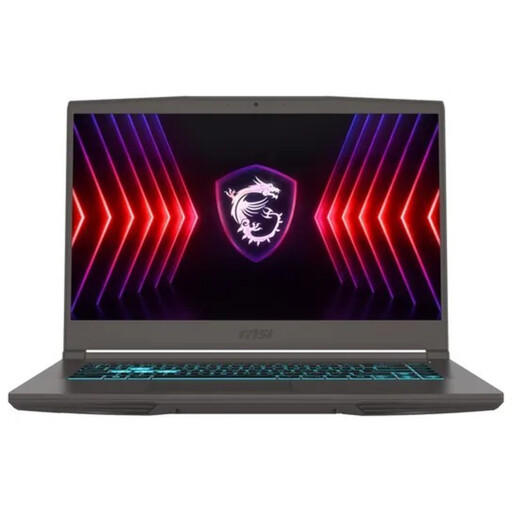
The 15.6-inch format may suit you if you’d prefer a slightly more compact view of your poster than you’d get on a 16-inch laptop.
Full HD IPS-Level display with a matte finish, 16 GB RAM and 512 GB SSD. USB-C with DisplayPort and HDMI are listed.
The product description says that no operating system is pre-installed.
 No image available
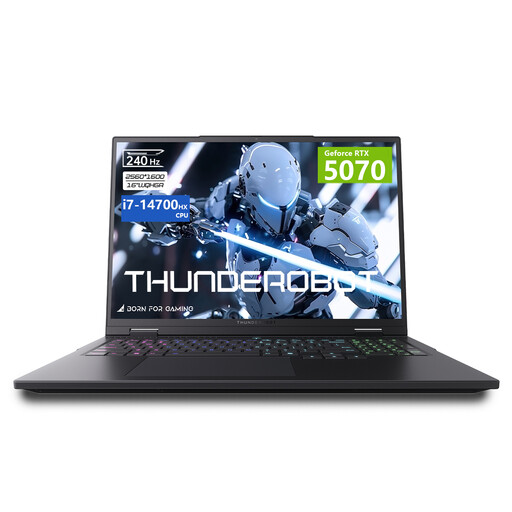
A 16-inch workspace and 32 GB RAM are useful specifications to consider if you work with larger files and several creative programmes at once.
WUXGA IPS display with 400 cd/m² brightness, 32 GB DDR5 RAM and 512 GB PCIe SSD. Thunderbolt 4 and HDMI 2.1 are listed.
Listed weight: 1.7 kg; Windows 11 Pro is specified.
 No image available
The display and RAM specifications may be worth considering if you design directly on your laptop and work with larger files.
Matte 16-inch display with stated 100% DCI-P3 and 500 cd/m² brightness; 32 GB RAM, expandable up to 96 GB according to the title.
The title also lists SSD options up to 8 TB; this is a maximum capacity, not the stated base configuration.
 No image available
This convertible may suit you if you want to use touch and a stylus for your design work.
16-inch UHD+ OLED touchscreen with 120 Hz refresh rate, integrated stylus, 128 GB RAM and 2 TB SSD; Windows 11 Pro is specified.
The description lists a 360° flip design and a weight of 1.9 kg.
Adobe recommends 16 GB RAM or more for Photoshop on desktop and lists 8 GB as the minimum requirement. Whether you’d benefit from more RAM depends mainly on the size of your files and the programmes you use at the same time. Check the requirements for your specific software version too.
Start by checking the requirements of your chosen printer. For the print files described on its website, Onlineprinters specifies a colour profile suited to the product and, unless stated otherwise, 2 mm bleed, a 4 mm safe area and a minimum of 300 dpi. These values don’t automatically apply to every printer.
For consumer purchases in the EU, the Council of the European Union explains that you have a minimum two-year legal guarantee for faulty goods and generally a 14-day right to cancel online purchases, although exceptions may apply. The legal guarantee is separate from any additional manufacturer’s warranty.
The Bundesnetzagentur explains that products covered by relevant EU harmonisation legislation and placed on the EU market must carry the CE marking. A product listing on its own doesn’t prove that an individual laptop complies.