Regular code reviewers at a shared desk
If you review substantial changes at a desk used by different people, look for a clear, easy-to-read display and the flexibility to set up a monitor, keyboard and mouse to suit you.


For regular code reviews at a shared desk, your laptop should work well with the screen and docking setup already in place. If you often move between desks or use local development tools, your priorities may change. Check that the specific model variant supports the display, charging and connections you need with your existing dock – a USB-C port alone doesn’t guarantee compatibility. If you’re working with company code, your IT team’s requirements for devices and accessories take priority.
If you review substantial changes at a desk used by different people, look for a clear, easy-to-read display and the flexibility to set up a monitor, keyboard and mouse to suit you.
If you carry your laptop around and can’t always count on having a monitor, you’ll need to balance the display and connections against weight and charging options.
If you run other tools locally alongside your review work, the memory and system configuration you actually order are what matter.
A good fit if: you often work at a well-equipped shared desk and want to use the monitor or peripherals through the dock already there.
The trade-off: Having ports on your laptop doesn’t remove the need to check that its protocols and charging power are compatible with the specific dock.
A good fit if: you often change desks or want to review code without an external monitor.
The trade-off: Compare the display variant with the space you need to view changes side by side, as well as the laptop’s weight and connections.
A good fit if: you use local development tools or want to choose specific connections and components.
The trade-off: Plan your configuration and any upgrades you need before buying. On Framework Ryzen platforms, the USB-C protocol depends on the expansion card slot, according to Framework.
| Priority | What to look for when buying | Who it matters most to |
|---|---|---|
| Readability and set-up | Check the display size and resolution, and whether an external monitor and separate peripherals are available at your desk. | When I’m reviewing longer diffs, I want to be able to read the text easily and set up my workspace to suit me. Around 27% of consumers put readability first. |
| Docking and connections | Check that the laptop’s video output, support for the displays you need and charging power match the dock you’ll be using. | When I connect at different shared desks, the monitor and power supply need to work with the specific laptop variant. Around 27% of consumers say docking is their top priority. |
| Portability and charging | Compare the weight of the variant you’ve chosen and check whether a power adapter or suitable power supply is available at your desk. | When I often move between desks, I want to be able to carry my laptop and the charging accessories I need. Around 20% of consumers value portability most. |
| Local development tools | Check the memory, storage and upgrade options of the specific configuration against the needs of your workflow. | When I run local tools alongside my review work, the actual specification matters more than the processor name alone. Around 13% of consumers prioritise this. |
| IT approval and security | Check your organisation’s requirements for devices, accessories and software; lock your device when you leave your desk. | When I work with company code, my device needs to meet my organisation’s requirements. IT approval is the top priority for around 13% of consumers. |
Video output and charging depend on the capabilities of the specific port and dock. On Framework Ryzen devices, the protocols supported by the USB-C expansion card can also vary depending on the slot.
Check the exact laptop variant against the dock you’ll be using, including every monitor, charging and peripheral connection you need.
Dell’s specified configuration of the Pro 14 Plus PB14250 is supplied without a power adapter. What’s available at your shared desk could therefore be crucial.
Check what’s included with the configuration you’ve chosen and whether a suitable adapter is available at your desk.
Processor, memory, display, connections and what’s included can vary between models in the same product family.
Before buying, check the full model number, keyboard layout, connections you need and the specification actually on offer.
The documented ThinkPad T14 Gen 6 Intel variant 21QC007TMH is an option if you need specific monitor and docking connections.
The HP EliteBook 8 G1i 14, variant AD3G8ET#ABD, is one example of a compact business laptop.
The Dell Pro 14 Plus PB14250 is available with a range of processor and memory options.
The Framework Laptop 13 is designed for people who want to choose their components and connections.
This selection includes portable laptops and devices with larger displays or specified connection options for code reviews at a shared desk. For each variant, check that its connections, configuration and specification suit your dock and workflow.
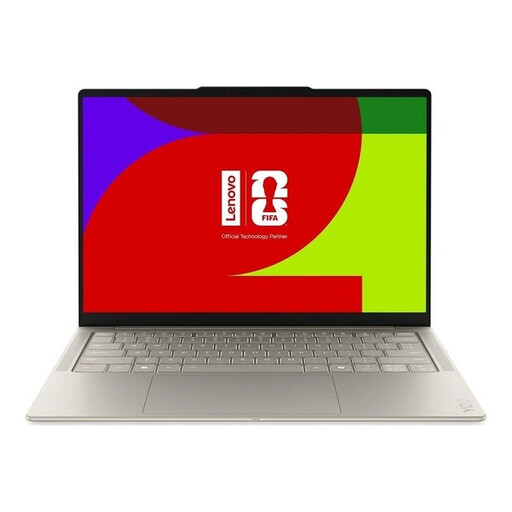 No image available
A portable option if you want to review code directly on your laptop display.
14-inch OLED display with 2880 × 1800 pixels and 120 Hz; 16 GB LPDDR5X; 1 TB SSD; stated weight 1.14 kg; Windows 11 Evo.
 No image available
An option if you want a larger laptop display and specific connections at your desk.
16-inch display with 1920 × 1200 pixels; 16 GB DDR5; 512 GB SSD; USB4, HDMI 2.1 and RJ-45; stated weight 1.80 kg. The memory is described as upgradeable; Windows 11 Pro Education.
 No image available
An option if you review changes on a larger display and run local tools.
16-inch display with 1920 × 1200 pixels; 32 GB DDR5; 1 TB SSD; USB4-C, HDMI 2.1 and RJ-45; stated weight 1.71 kg; Windows 11 Pro.
 No image available
A 2-in-1 option if you use local development tools and want a larger display.
16-inch OLED display with 2880 × 1800 pixels; 64 GB DDR5; 1 TB SSD; USB4, HDMI and DisplayPort; Windows 11 Pro. The described flip design rotates through 360°; stated weight 1.9 kg.
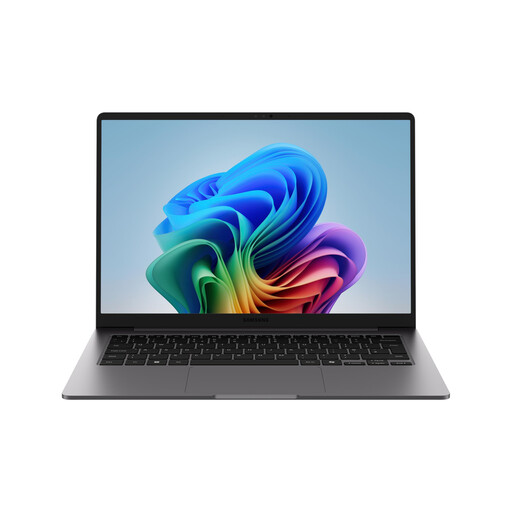 No image available
A more compact option if you review code without an external monitor and use local tools at the same time.
14-inch WUXGA display with 1920 × 1200 pixels; 32 GB LPDDR5X; 512 GB NVMe SSD; Windows 11 Pro and RJ-45.
It depends on the length of the diff, your eyesight and how long you’ll be working. If you regularly spend long periods at a desk, check whether you can use an external monitor that’s easy to adjust, along with separate peripherals. That doesn’t mean every laptop display is unsuitable.
First, check the connections and power supply at the desk and make sure they match the capabilities of your exact laptop variant. Set up the screen and peripherals to suit your work, and lock your device when you leave your desk.
Depending on what’s available at your desk, you may need a compatible dock, external peripherals or a power adapter. For example, Dell’s described Pro 14 Plus PB14250 configuration is supplied without a power adapter, so check what’s included and what’s available on site.
The official information referred to here does not require a particular brand or model number. The German Workplace Ordinance covers the design and operation of workplaces, while the DGUV notes that rules for display screen workstations generally also apply to desk-sharing. The requirements in any particular case depend, among other things, on how the portable device is used.
You can’t determine that from the device purchase alone; check your organisation’s policies before using it. Germany’s Federal Office for Information Security recommends not using personal hardware on a corporate network and installing only software approved by IT on work devices.