For lots of typing and field notes
If you’re typing up longer notes and switching between your source material and a text document, the keyboard layout, screen readability and a reliable saving routine are all important factors.


For longer transcription sessions, the most important factors are a comfortable keyboard, a screen that’s easy to work with and compatibility with your software. High processing power alone shouldn’t determine your choice. If you often move between workspaces, weight and battery life become more important. If you have a desk with a power socket, ports and a larger screen may carry more weight. Also check the library’s rules and how to handle identifiable observational data for your specific project.
If you’re typing up longer notes and switching between your source material and a text document, the keyboard layout, screen readability and a reliable saving routine are all important factors.
If you often carry your laptop and papers with you, compare the weight of the exact configuration and its battery life under conditions that are as close as possible to your transcription work.
If you need to keep using existing files, transcription software or peripherals, check the operating system, file formats and required ports before choosing a laptop.
| What matters | What to check before buying | Who is this important to? |
|---|---|---|
| Comfortable, quiet typing over long periods | Check the keyboard layout and feel of the exact configuration; don’t assume how noisy it is based on the model range alone. | If I’m typing up lots of field notes, I want a keyboard that suits the way I write and can handle longer stretches of typing. Around 29% of consumers put comfortable typing over long periods first. |
| Portability and power | Compare the weight, including the power supply, and battery life when working with documents; check what’s available at the workspace you’ll be using. | If I move between library workspaces, I want to be able to carry my laptop and papers without having to rely on a power socket being available. Around 23% of consumers prioritise portability and working without reliable access to a power socket. |
| Reading the source and transcript at the same time | Consider the screen size you need and how reflective it is; if necessary, check whether you can connect an external monitor. | When I’m typing up notes, I want to see the source and my text side by side without constantly switching between them. Around 18% of consumers prioritise viewing both at once. |
| Keeping notes safe and secure | Plan a practical, separate backup method; if your observations identify individuals, check the requirements for your specific project. The BSI recommends regular backups and keeping copies on external storage. | For important notes, I want to be able to access a separate copy if my device is lost or I delete something by accident. Around 18% of consumers prioritise keeping their notes safe. |
| Continuing to use your software and peripherals | Check the system requirements for your software, file formats and required ports against the exact device configuration. | If I need to keep using specific transcription software or peripherals, I want to know in advance whether the system and ports are compatible. Around 12% of consumers prioritise this compatibility. |
Apple gives separate battery-life figures for video streaming and wireless web browsing. These don’t automatically show how long a device will last during your transcription work.
Compare the conditions behind the battery-life figures and allow for a margin during longer sessions.
Notebookcheck lists a ThinkPad E14 G6 with an Intel Core Ultra 7 155U. However, the Joybuy product listing for the ThinkPad E14 G6 21M3002RGE specifies an AMD Ryzen 7 7735HS, 32 GB RAM and a 1-TB SSD. So the model range alone isn’t enough to determine the specifications.
Compare the full model number and the features that matter to you, rather than just the name “E14 G6”.
Notes can be lost if your device fails, is stolen or you delete something by accident. The BSI recommends saving regularly and keeping an external backup.
Set up a separate backup method and check that you can restore a file from it.
In Germany, the Verbraucherzentrale distinguishes between statutory consumer rights and a voluntary warranty; each has different terms and conditions.
Check the warranty terms separately from your statutory rights against the seller.
The features listed apply to specific product lines and configurations, not to every device from a brand.
ThinkPad laptops may suit you if a German keyboard, matt screen and Windows fit your writing workflow.
The MacBook Air with M5 is a macOS option if you’re looking for a lightweight, fanless device for frequent trips between workspaces.
The HP ProBook 4 G1a 14 AD2M8ET#ABD is a Windows business configuration for working with text and existing peripherals.
The Dell Pro 14 range may suit a Windows workflow, as long as you check the specifications of the particular configuration.
This selection includes laptops and a convertible for longer typing sessions and reading your source material alongside your transcript. Check that the keyboard, software and ports meet your needs for each specific configuration.
 No image available
The 16-inch format is an option if you’d prefer a larger screen for viewing your source material and text while transcribing.
The product name lists an AMD Ryzen 7 250 at 3.3 GHz, 32 GB RAM, a 1-TB SSD, Radeon 780M and Windows 11 Pro.
If a German keyboard layout is important to you, check that it’s included with this exact configuration.
 No image available
If you’d like to use the touchscreen as well as type, the convertible design may be worth considering. Check that the input method on this specific model meets your needs.
The product name lists a 14-inch touchscreen, a 2.8K OLED screen, 32 GB RAM, a 1-TB SSD and Windows 11 Home.
 No image available
The 16-inch screen and the German keyboard layout specified in the product name are worth considering if you write longer texts in German and want to keep your source material and transcript in view.
The product name lists an AMD Ryzen 5 6600H, 16 GB RAM and a 512-GB SSD.
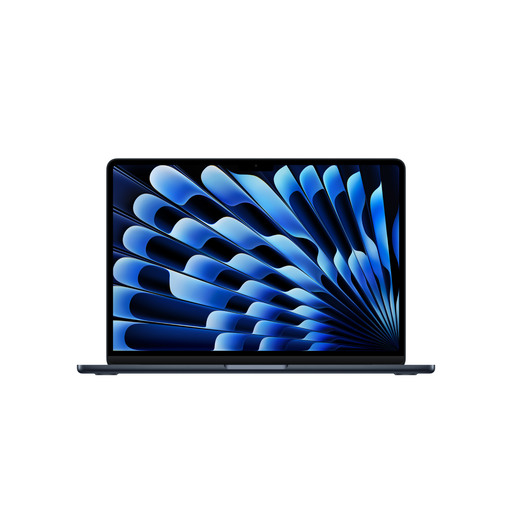 No image available
If macOS works with your transcription software and you’re looking for a 15-inch model with a German QWERTZ layout, this configuration is one option to consider.
The product name lists the M5, a 10-core CPU, a 10-core GPU, 16 GB RAM and a 512-GB SSD.
This product listing doesn’t include a power supply, so factor that into your setup.
 No image available
If you prefer a larger screen for transcribing, the 15.6-inch size listed in the product name gives you a specific point of comparison.
The product name lists FHD, 32 GB RAM, a 1-TB SSD, RTX 2050 and Windows 11 Pro.
Check the keyboard layout and software compatibility for the exact configuration.
Not necessarily. The Hamburg State and University Library describes workspaces where you can plug a laptop in directly at the desk. This won’t necessarily be the case in other libraries or at every desk, so check the facilities before you visit.
Save your work regularly and keep a separate backup as well. The Federal Office for Information Security recommends saving regularly and keeping external backups, as data can be put at risk by problems such as device failure, theft and accidental deletion.
No. A warranty and your statutory consumer rights are different things. The Verbraucherzentrale explains that statutory rights are set out by law, while a warranty is a voluntary service subject to its own terms and conditions.
There’s no single answer to this. If your notes contain personal data, you need an applicable legal basis; appropriate safeguards are also relevant for scientific research. Check which requirements apply to your specific project and whether the software you plan to use is suitable.
You can’t assume that recording is generally permitted. Before making a recording, check the rules of the specific library and find out what arrangements you need to make with the people involved in your project.