What should you look for when buying?
First, decide whether you’ll mainly draw in Krita, render locally in Blender or regularly travel between your room and campus. Then compare the memory, graphics support, display and footprint of the exact configuration.
| What matters |
What to check before buying |
Who should pay particular attention? |
| Performance for 3D scenes |
Check that the Blender version, RAM, VRAM and supported Cycles backend match the full configuration. The Blender Foundation recommends 32 GB RAM and 8 GB VRAM for Windows. |
If I render larger Blender scenes locally, I want to check the memory and compatible GPU backend before buying; around 33% of consumers are likely to make 3D performance their top priority. |
| Workspace and memory for 2D |
Check the RAM in the version on offer and the display resolution. Krita recommends 16 GB RAM; actual requirements depend on the project. |
If I draw individual frames in Krita, I need enough memory and room for the image and timeline; around 27% of consumers are likely to prioritise workspace and memory for 2D work. |
| Space and noise in your room |
Allow room for your laptop, cables and input devices. Check that noise measurements under load apply to the exact model variant, and keep the vents clear. |
At a small desk, I want to leave room for my equipment and consider fan noise under load; around 20% of consumers are likely to prioritise how well a laptop suits their room. |
| Taking it to campus |
Compare the weight, display size and ports of the exact variant. Only compare battery tests carried out under similar conditions, and check whether a power adapter is included. |
If I regularly take my laptop to university, I weigh up its weight, screen and ports, and check how long the battery lasts for my work; around 20% of consumers are likely to make portability their main concern. |
Joybuy laptops for animation
This selection includes laptops for animation at a desk, drawing with a stylus and local Blender work. The right configuration for you depends on your software and project, as well as your needs for portability and noise levels.
 No image available
Lenovo ThinkPad E16 Gen 3 21ST
For 2D work and projects where integrated graphics are enough. For Blender GPU rendering, check the configuration’s VRAM and supported backend.
32 GB RAM, 1 TB SSD, 16-inch WUXGA display and integrated Radeon 780M graphics. The stated weight is 1.71 kg.
View at Joybuy
 No image available
Lenovo ThinkBook 16 Gen 9, Intel Core Ultra 5 325
For animation with an integrated display. If you want to render in Blender using the GPU, also check for compatible backend and memory support.
32 GB RAM, 512 GB SSD, 16-inch WUXGA IPS display and Intel Arc graphics. Listed ports include Thunderbolt 4 and HDMI 2.1; the weight is 1.7 kg.
View at Joybuy
 No image available
MSI Prestige N16 Flip AI+ C1XMT-027Y
For drawing with a stylus and a convertible setup. For local Blender rendering, check the GPU, VRAM and backend for the specific configuration.
128 GB RAM, 2 TB SSD and a 16-inch UHD+ OLED touchscreen with 120 Hz. The listed features include a 360° flip design and an integrated stylus.
View at Joybuy
 No image available
HP OmniBook Ultra Flip 14-fh0670ng
For drawing on the go with a touchscreen and stylus. For Blender GPU rendering, check the graphics support for the specific configuration.
Intel Core Ultra 7 258V, 32 GB RAM, 1 TB SSD and a 14-inch 2.8K OLED touchscreen. The description says a stylus is included; the stated weight is 1.34 kg.
View at Joybuy
 No image available
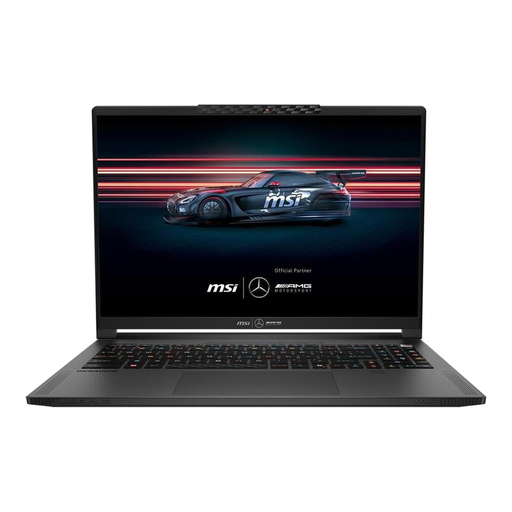
MSI Stealth A16 AI+ Mercedes-AMG Motorsport A3XWGG-052
For local Blender projects where GPU rendering could be part of your workflow. Check your Blender version’s requirements, and remember that spec sheet figures don’t prove a laptop runs quietly.
Ryzen AI 9 370, 32 GB RAM, 2 TB SSD and RTX 5070 with 8 GB GDDR7. Listed features include a 16-inch QHD+ OLED display, a weight of 2.1 kg and a 99 Wh battery. The Blender Foundation recommends 32 GB RAM and 8 GB VRAM for Windows.
View at Joybuy
Frequently asked questions
Do I need a dedicated graphics card for Krita?
No. Krita’s published system requirements don’t make a dedicated graphics card a general requirement. Krita lists 4 GB RAM as the minimum and recommends 16 GB; frames are kept in memory during frame-by-frame animation. Also check that your graphics tablet is compatible and consider the size of your project.
How should I set up a laptop on a small desk?
Place the laptop on a firm, flat surface and keep the vents clear. ASUS explains that fans can run faster during demanding tasks, so leave room for airflow, cables and your input device.
Are a warranty and your statutory rights the same thing?
No. The Consumer Advice Centre distinguishes statutory rights, which apply against the seller when you buy from a retailer, from an additional voluntary guarantee with its own terms and conditions. Check who you’re buying from and what guarantee cover is expressly promised.
Can I cancel an online laptop purchase in Germany?
For a qualifying distance contract, you generally have a 14-day right to cancel from the day the goods are delivered, as explained by Your Europe. Check who the seller is and whether an exception applies; this right to cancel doesn’t apply when buying from a private individual.
What does the CE marking tell me about a laptop?
For a product that requires CE marking, the manufacturer is responsible for assessing conformity, preparing the technical documentation and EU Declaration of Conformity, and affixing the marking, explains the European Commission. The CE mark doesn’t prove that a laptop is suitable for your animation software or will run quietly while rendering.


