Choose a laptop based on the development tools you actually use and the extent of your local testing. The operating system, memory and storage need to suit your workflow. If you also edit images, consider the display and ports too. A second screen or convertible laptop can make work easier, but neither replaces testing on real mobile devices or checking the exact configuration.
Who is this selection for?
Portal developers with a local test environment
You work on both the front end and back end and want to make sure your development and testing tools run on your laptop. Docker Desktop has its own operating system and licensing requirements, and isn’t needed for every portal project. What matters is what the tools you actually use require.
Designers of responsive forms
You compare upload forms and browser views at different viewport widths. Chrome for Developers explains that device mode simulates mobile use, but doesn’t run the code on a real mobile device.
Developers with an image-editing workflow
You also work on submitted images or visual designs. If Photoshop Desktop is part of your workflow, Adobe’s requirements for the version you use will apply; they aren’t automatically necessary for web development alone.
What should you look for when buying?
First, decide which operating system and development tools you need. Then consider whether a single display with an external monitor, two built-in displays, or touch and pen input would genuinely change the way you work.
| What matters |
What to check before buying |
Who is it important to? |
| Local development |
Check the operating system, processor architecture and requirements of the tools you actually use. For Docker Desktop on Windows, the relevant Windows and backend requirements also apply. |
If I use my development environment, browser and possibly a local test environment at the same time, the specific configuration needs to handle them. Around 29% of consumers would make local development their top buying priority. |
| Workspace for layouts |
Compare the display size and monitor ports, and check whether you’ll need an adapter. Also test on a real mobile device for interactions that matter. |
If you want to check a design and browser view at the same time, you need a workspace that suits the way you check layouts. Around 23% of consumers would put this responsive workspace first. |
| Display and storage |
Check the requirements of your image-editing software, as well as the display and SSD specifications of the exact model. For Photoshop Desktop version 27.x and later, Adobe lists 8 GB RAM as the minimum and recommends 16 GB or more. |
If I edit submitted images locally, I want the display and storage to suit my image-editing software, rather than applying requirements for image editing to web development alone. Around 18% of consumers would prioritise image editing. |
| Working on the go |
Compare the screen size, dimensions and charging port. Consider battery-life claims alongside the test method used. |
If you often work away from a fixed desk, you’ll need to weigh portability and power against the screen space you need. Around 12% of consumers would make portability their top priority. |
| Configuration and ongoing costs |
Check the full model number, memory, SSD and what’s included in the box. Also check whether any required adapters or software licences come with additional requirements. |
If I want to avoid paying for features I won’t use and factor in accessories or software, I compare the full configurations. Around 18% of consumers would weigh up cost and upgrade options first. |
Avoiding common buying mistakes
-
Confusing a simulated mobile view with a real-device test
Chrome for Developers describes device mode as a simulation. It doesn’t run the code on a mobile device, so it can’t confirm that a form will behave the same way on the devices that actually matter.
Use the simulation for initial layout checks, then test important upload and interaction flows on real mobile devices too.
-
Assuming every model in a range has the same features
Memory, display, pen and power adapter can vary between configurations. A similar model name alone doesn’t tell you what’s included in a particular listing.
Before buying, compare the full model number, specifications and what’s included in the box.
Depending on the configuration, a monitor adapter or separate power adapter, as well as additional software licences, could affect your set-up.
-
Treating Photoshop requirements as essential for portal development
Adobe’s requirements are for Photoshop Desktop and the version in question. They don’t automatically apply to a project where you’re only working on code and browser views.
Start by basing your hardware choice on the programmes you actually plan to use.
-
Confusing a manufacturer’s warranty with your statutory rights
If you buy as a consumer from a trader in the EU, you have statutory rights against the seller. These are separate from any additional manufacturer’s warranty. Your Europe, the European Union’s information website, explains the difference.
Keep your proof of purchase and delivery, and check who the seller and warranty provider are.
Relevant brands at a glance
Lenovo
The ThinkPad E14 Gen 7 is an example of a traditional 14-inch business laptop.
- For the Intel variant 21SX000RGE, Lenovo Germany lists 16 GB RAM, a 512 GB SSD and a matte display with a resolution of 1920 × 1200 pixels.
- The specific listing was marked as out of stock. Its specifications and availability don’t necessarily apply to other E14 variants.
Apple
The MacBook Air M5 is suited to macOS workflows and offers a choice of a more compact or larger display.
- Apple lists 13- and 15-inch versions, as well as Thunderbolt 4 and USB-C.
- Before buying, check that any tools designed exclusively for Windows are compatible with your planned workflow. Apple’s battery-life figures vary depending on the test method.
ASUS
The Zenbook DUO UX8407 is an option if you often need to see your design and browser windows at the same time.
- ASUS lists two 14-inch displays for the UX8407 range.
- Extra screen space doesn’t replace testing on a real mobile device. What matters is whether you’ll actually use both displays in your workflow.
HP
The OmniBook Ultra Flip is a convertible option for workflows involving touch or pen input.
- For the German variant 14-fh0797ng, HP lists a pen in the box, 32 GB RAM and a 14-inch touchscreen.
- The specific HP listing was out of stock. Specifications and what’s included may vary between other Ultra Flip variants.
Dell
The Pro 14 Plus PB14250 is a configurable Windows business option for a set-up with an external display.
- Dell’s German configuration page lists, among other options, versions with 16 GB and 32 GB RAM.
- The selection shown on that page didn’t include a power adapter. Check the display, storage and what’s included with the configuration you choose.
Joybuy product selection
This selection includes traditional laptops for development work and external displays, as well as convertibles with touch or pen input for designs and image work.
 No image available
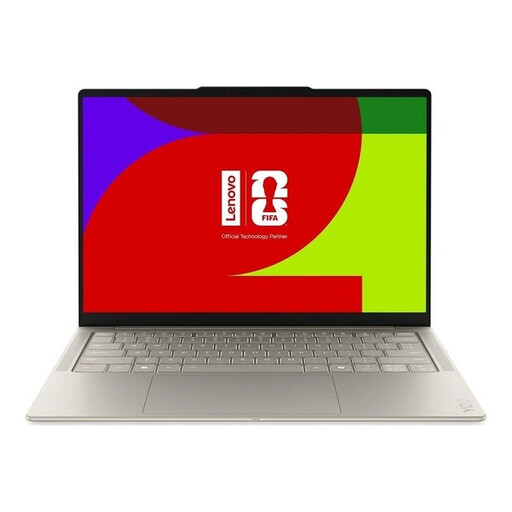
Lenovo Yoga Slim 7i Aura Edition 14-inch
For working with code, browsers and project files on the go, using a single display.
14-inch OLED display with 2.8K resolution, Intel Core Ultra 7 355, 16 GB RAM and a 1 TB SSD. USB-C charging is listed; it weighs 1.14 kg.
View at Joybuy
 No image available
Lenovo ThinkBook 16 Gen 9
For development tools and project files on a larger display, with the option to connect an external monitor.
16-inch WUXGA IPS display, Intel Core Ultra 5 325, 32 GB DDR5 and a 512 GB PCIe SSD. Ports include HDMI 2.1 and Thunderbolt 4; the operating system is Windows 11 Pro.
View at Joybuy
 No image available
MSI Prestige N16 Flip AI+ C1XMT-027Y
For designs you want to review directly on the touchscreen or annotate with the pen.
16-inch OLED touchscreen with a 360° hinge and integrated MSI Nano Pen. The configuration lists 128 GB RAM, a 2 TB SSD and Windows 11 Pro; it weighs 1.9 kg.
View at Joybuy
No image available
MSI Prestige N16 Flip AI+ C1XMT-029Y
For a workflow that combines touch or pen input with local storage for project files.
16-inch 2-in-1 laptop with an OLED touchscreen, 360° flip design and integrated MSI Nano Pen. This variant lists 32 GB RAM, a 1 TB SSD and Windows 11 Pro; it weighs 1.9 kg.
View at Joybuy
 No image available
HP OmniBook Ultra Flip 14-fh0670ng
For designing on the go with a touchscreen and included pen, as well as running local applications and working with image files.
14-inch 2-in-1 touchscreen with a 2.8K OLED display, Intel Core Ultra 7 258V, 32 GB RAM and a 1 TB SSD. Two Thunderbolt 4 ports, a USB-C to HDMI adapter and a pen are listed; it weighs 1.34 kg.
View at Joybuy
Frequently asked questions
Is the browser’s mobile view enough to test the submission form?
No, not as your only final test. Chrome DevTools simulates viewports, CPU and network conditions, among other things, but doesn’t run the page on a real mobile device. Also test important upload and interaction flows on the devices that actually matter.
Do I definitely need Docker or Photoshop for this project?
No. Whether you need either programme depends on your development or image-editing workflow. If you use Photoshop Desktop version 27.x or later, Adobe lists 8 GB RAM as the minimum and recommends 16 GB or more. For Docker Desktop, check the requirements for the operating system version you’re using.
What should I check when connecting an external monitor?
Compare the ports on the specific laptop with the input on your monitor, and check whether you’ll need an adapter or power supply. Apple lists Thunderbolt 4 and USB-C for the MacBook Air M5; the Dell Pro 14 Plus configuration shown didn’t include a power adapter.
Could local development software require an additional licence?
Yes, depending on the tool and how you use it. Docker offers free use in some situations, but requires a paid subscription for professional use in larger organisations, among other cases. Check the licence terms for your organisation; Docker isn’t a general requirement for this project.
Does the submission portal need to comply with data protection rules?
If the operator collects personal data and the GDPR applies, the processing needs an appropriate legal basis. When data is collected directly, there are generally information requirements under Article 13 of the GDPR. Germany’s Federal Commissioner for Data Protection and Freedom of Information explains these requirements. They are conditions for designing and running the portal, not proof that a particular laptop complies with the law.


