
Lieferung heute & morgen

Qualitätsgarantie

Willkommens-Angebote freischalten: KOSTENLOSE Lieferung | Bis zu 80 % RABATT | Kostenlose 30-Tage-JoyPlus-Testphase
App herunterladen
A dead laptop battery during an important presentation or on a long train ride is more than just an annoyance—it can bring your entire workflow to a halt. A powerful laptop power bank seems like the obvious solution. However, the market is flooded with products featuring confusing technical specs and exaggerated marketing claims. Many buyers invest in a device that ends up being too weak, charges too slowly, or, in the worst-case scenario, gets confiscated at airport security.
As your Joybuy Product Recommendation Officer, I'm here to help you navigate these pitfalls. We'll focus on the objective criteria that truly matter and expose three common marketing traps that lead to costly mistakes:
To make an informed decision, you should focus on three core technical parameters. These determine whether a portable charger will meet your needs or end up unused in a drawer.
The milliamp-hour (mAh) rating is only half the story. The actual amount of energy a power bank can store is measured in watt-hours (Wh). This metric is essential for objectively comparing the charging capacity for different devices like laptops.
Furthermore, the Wh rating is critical for air travel. Most airlines only permit power banks up to a limit of 100 Wh in carry-on luggage. An airline-approved power bank must adhere to this value. A 25000mAh power bank often falls within the 90-99 Wh range, making it a common choice for travellers.
Rule of thumb:Watt-hours (Wh) = (Milliamp-hours (mAh) × Voltage (V)) / 1000
A laptop requires significantly more charging power than a smartphone. Look for an output of at least 45 watts, ideally between 65W and 100W, to ensure a stable and fast charge.
Even more important is the supported charging protocol. The de facto standard for laptops is Power Delivery (PD) via USB-C. A 100W USB-C charger can only unleash its full potential if the laptop also supports this standard. Modern chargers, known as GaN chargers, use Gallium Nitride technology. They are more compact, more efficient, and generate less heat than traditional silicon chargers.
Professionals, students, and digital nomads rarely use just one device. A good multi-device fast charger should therefore have multiple outputs, ideally a combination of high-power USB-C ports (for a laptop, tablet, or modern smartphone) and a USB-A port for older devices or accessories. A power bank for MacBook should offer at least one USB-C port with 65W or more.
Instead of making a one-size-fits-all recommendation, we have selected products that are perfectly suited for specific use cases.
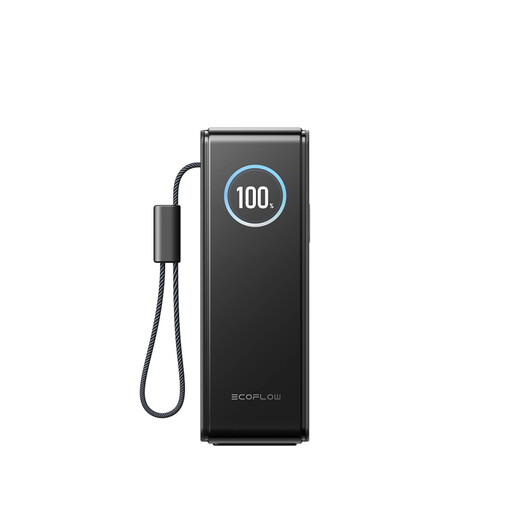
Why it's a match: Ideal for frequent travellers and tech-savvy users who need to charge multiple high-performance devices like a MacBook Pro, a tablet, and a smartphone simultaneously and without compromise. Its high capacity and power make it a reliable companion for business trips or a mobile office.
The capacity is clearly stated as 90 Wh, making it airline-approved. With 170W total output and 100W USB-C ports, it bypasses the trap of insufficient power for laptops. The integrated cables solve the compatibility and accessory problem.
High total output of 170W. Two integrated 100W USB-C cables for maximum convenience. Four ports for charging multiple devices at once.
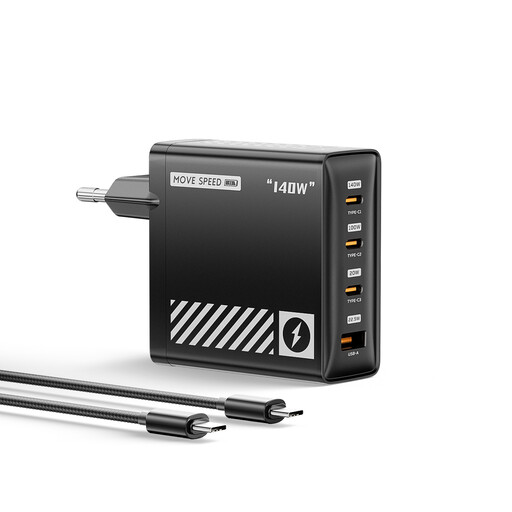
Why it's a match: Perfect for the desk in your office or home office. This wall charger replaces up to four individual adapters and charges everything from a high-end laptop to your headphones. It's not a power bank, but a central, highly efficient charging station.
This device focuses on pure charging power and protocol compatibility. It supports the latest PD 3.1 standard, ensuring a true fast charge for compatible devices like the 16-inch MacBook Pro and debunking the myth of "universal fast charging."
Up to 140W of power from a single port. Compact design thanks to GaN technology. Four ports for maximum flexibility when charging multiple devices.
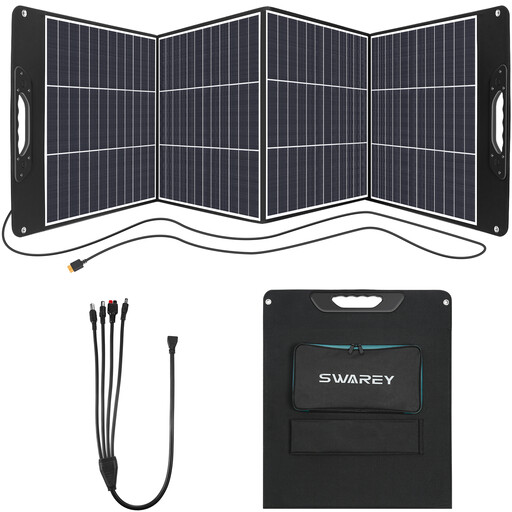
Why it's a match: For campers, van-life enthusiasts, and anyone needing an off-grid power supply. This panel not only charges power banks or power stations but can also directly power laptops or other devices via its PD port using solar energy.
This product bypasses the capacity trap entirely by generating energy instead of just storing it. It's a portable solar panel that provides an unlimited energy source as long as the sun is shining. Its broad adapter compatibility solves connection issues.
High conversion efficiency of 23%. Direct USB-C PD output for charging devices. Foldable, portable, and includes adjustable kickstands for optimal alignment.
We have compiled a complete, up-to-date list of products that fully meet these strict selection criteria and UK safety regulations.
Milliamp-hours (mAh) measure electric charge, while watt-hours (Wh) indicate the actual amount of energy. Wh is the more reliable value for comparing capacity because it takes voltage into account. For a laptop, a power bank with a high Wh rating (e.g., 70-99 Wh) is necessary to provide one or more full charges.
No. Most airlines limit the capacity of lithium-ion batteries in carry-on luggage to 100 Wh. Power banks over 100 Wh often require special approval, and devices over 160 Wh are typically prohibited. Check the Wh rating before purchasing to ensure you are buying an airline-approved power bank, and always check your airline's specific regulations.
GaN stands for Gallium Nitride, a semiconductor material that is replacing silicon in modern chargers. A GaN charger is significantly smaller, lighter, and more energy-efficient than a traditional charger of the same power. It generates less waste heat, which increases the device's lifespan and safety. For a powerful multi-device fast charger, GaN technology is a significant advantage.