
Lieferung heute & morgen

Qualitätsgarantie
App herunterladen
Kategorien
The increasing power demands of modern laptops, particularly models like the MacBook Pro, and portable consoles like the Steam Deck, require portable charging solutions with high power output. A standard power bank is often insufficient to charge these devices efficiently, or at all, while in use. A 140W Laptop Power Bank addresses this need by using the USB-C Power Delivery (PD) 3.1 standard to deliver charging performance comparable to that of original power adapters.
Selecting the right external battery for power-hungry devices is based on an analysis of technical specifications. The following parameters are relevant for making an informed decision.
The rated power of 140 watts is the key factor. It's important to distinguish between the maximum total output and the per-port output. To fast-charge a laptop, a single USB-C port that can deliver 140W via the PD 3.1 protocol is required. Models that split this power across multiple ports may not achieve the necessary speed for a single device. Check the specifications for support of the “Extended Power Range” (EPR) standard.
Capacity is often stated in milliampere-hours (mAh), but for comparing laptop power banks, the specification in watt-hours (Wh) is more accurate. It is calculated from the nominal voltage of the battery cells and the capacity in ampere-hours. A capacity of around 99 Wh (often marketed as a 25000mAh power bank or higher) strikes a good balance. This value corresponds to the upper limit allowed in carry-on luggage by most airlines without special approval and can fully charge a typical laptop once.
A modern laptop power bank should have at least two USB-C ports to ensure flexibility. Pay attention to how the power is distributed when multiple devices are connected simultaneously. Some models offer smart power distribution, which can, for example, supply two laptops with 65W each at the same time. An additional USB-A port can be useful for charging accessories.
High charging outputs generate heat. An aluminum alloy casing offers significantly better heat dissipation than one made of plastic. This not only protects the internal components and the battery from overheating but also ensures more stable and safer charging performance over extended periods.
Based on the technical criteria above, we have curated a selection of products that cover different use cases.
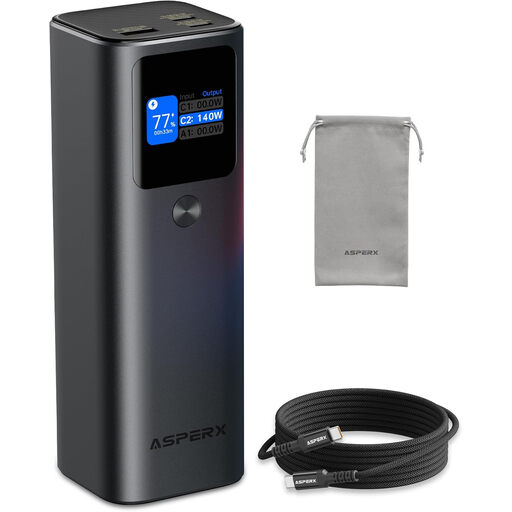
Why We Recommend This Product This model combines a high capacity of 99.36 Wh with a maximum single-port output of 140W via PD 3.1. The aluminum alloy casing aids heat dissipation under heavy load. The large TFT color display provides detailed real-time information on charging power, remaining capacity, and remaining charging time.
Pros:
Who It's For: Users who need a primary charging solution for high-end laptops like the MacBook Pro and value a robust build and detailed performance monitoring. Ideal for professionals and digital nomads.
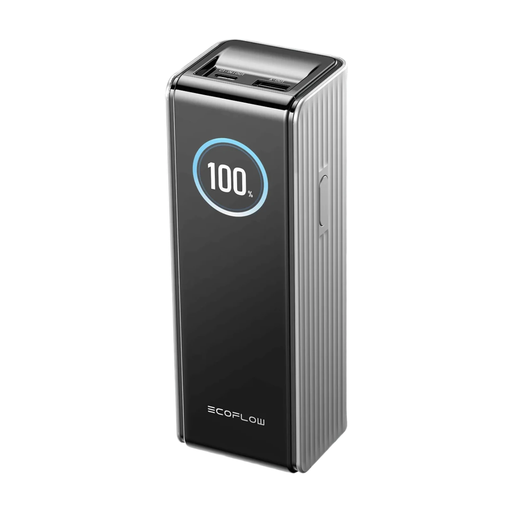
Why We Recommend This Product The EcoFlow power bank stands out with a very high total output of 170W and two USB-C ports, each capable of delivering up to 140W. This offers exceptional flexibility for charging two powerful devices simultaneously, such as a laptop and a power bank for Steam Deck.
Pros:
Who It's For: Users who regularly need to charge multiple power-hungry devices in parallel. The high total output and dual high-performance ports make it a great choice for power users, gamers, and small teams sharing a charging source.
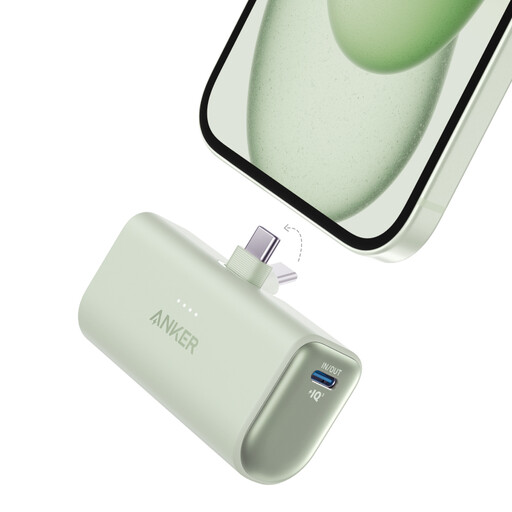
Why We Recommend This Product This model is not a direct 140W laptop power bank but rather a compact companion for specific use cases. With 22.5W of power and an integrated, foldable USB-C connector, it's an extremely portable solution for smartphones and smaller accessories.
Pros:
Who It's For: Users looking for a lightweight emergency power bank for their smartphone or who prefer a small, cable-free charging solution on the go. It is not a primary power source for a laptop, but it is an excellent secondary power bank.
The models presented here cover specific use cases. If you are looking for other charging solutions or compatible accessories like high-performance cables, you can find a wider selection in our Batterieanschlüsse category.
Yes. A power bank with a 140W output via USB-C PD 3.1 is specifically designed to charge modern high-performance laptops like the 16-inch MacBook Pro at maximum speed. The charging time is comparable to that of the original Apple 140W power adapter.
PD 3.1 (Power Delivery 3.1) is a USB-C charging standard that increases the maximum charging power from the previous 100W to up to 240W. The "Extended Power Range" (EPR) feature within this standard enables power levels above 100W, which is essential for fast-charging power-hungry devices like high-performance laptops.
A capacity of 25000mAh (approx. 90-99 Wh) is an excellent standard for a laptop power bank. It typically provides enough energy to charge an average laptop (e.g., a MacBook Air or a 13-inch ultrabook) about 1 to 1.5 times. For a larger 16-inch model, the capacity is enough for a charge of about 70-100%. At the same time, this keeps the power bank under the 100 Wh limit for air travel.