When exploring public datasets at home, your choice should first depend on whether you process the data entirely in memory or use selective loading or out-of-core processing. For local work with pandas, available RAM is important, as is confirmed upgradeability where relevant. Next, consider the display, monitor connections and whether your specific software is compatible with the operating system and GPU backend. A dedicated GPU is not a blanket requirement for general data exploration, but a CUDA-dependent project does need a suitable GPU.
Which priorities suit different users?
Local data exploration
If you work with public datasets in Python, allow for enough RAM to hold both the data and any intermediate steps. pandas notes that some operations need additional copies in memory. If you’re considering an upgradeable model, check the exact configuration. (pandas; Lenovo)
Working with spreadsheets at home
If you want to use code, spreadsheets and visualisations side by side on your laptop, compare its screen area with your existing monitor and check the ports on the specific model. (Lenovo; Acer; Dell)
Analysis tied to specific software
If your analysis tools require a particular operating system or GPU backend, compatibility should help guide your choice. PyTorch documents the MPS backend for macOS; NVIDIA specifies a CUDA-capable GPU as a requirement for CUDA. (PyTorch; NVIDIA)
What should you look for when buying?
First, find out how your software processes data and whether it requires particular hardware. Then compare the RAM and potential for upgrades, as well as the display and ports, with your workspace.
| Buying priority |
What to check before buying |
Who should pay particular attention |
| Memory |
Data size and types, RAM usage during operations, and confirmed memory slots and upgradeability for the exact model. |
If I work with datasets locally in pandas, I need space for both data and intermediate steps. Around 36% of consumers rank RAM as their top buying priority. |
| Workspace and ports |
Display size and resolution, as well as the video outputs required by your existing monitor. |
If you mainly want to view code, spreadsheets and charts side by side on your laptop, pay particular attention to its built-in workspace. Around 29% of consumers put screen space first for a home office. |
| Handling large files |
Available SSD space for source data and temporary files, and the option to process data in chunks or from storage. |
If a file won’t comfortably fit into RAM, I want to be able to use a suitable workflow. Around 21% of consumers prioritise handling large files. |
| Software compatibility |
Requirements for the specific programmes, including operating system and, where applicable, CUDA or MPS; choose the GPU only after checking these. |
If a project requires a particular operating system or GPU backend, my laptop needs to be compatible. Around 14% of consumers consider software or backend compatibility their main priority. |
Common buying pitfalls
-
Assuming file size tells you how much RAM you need
File size alone doesn’t show how much memory an operation will use: pandas may create additional copies for intermediate steps.
Check the data types, your previous RAM usage and the operations you plan to run. For larger datasets, selective loading or a suitable out-of-memory workflow may be worth considering.
-
Assuming similar model names mean identical specifications
A manufacturer’s specifications for a product range don’t automatically apply to every variant. RAM, SSD, graphics and included accessories can depend on the exact model.
Compare the full model number with the details of the configuration on offer. Also check the ports and whether the required charger or power supply is included.
-
Assuming you need CUDA hardware for general data exploration
CUDA requires a suitable GPU and compatible software. For macOS, PyTorch describes MPS as a different backend; this doesn’t mean a GPU is generally required for data exploration.
Check the requirements of your specific programmes and projects before choosing an operating system or graphics hardware.
Key brands to consider
Lenovo
The documented ThinkPad E14 Gen 6 AMD range may suit local data work if you’re looking for the option to upgrade later.
- Lenovo lists two DDR5 SODIMM and two M.2 slots for the range.
- Specifications vary by configuration; the slots alone don’t indicate how well it will handle a particular dataset.
Acer
The TravelMate P2 16 AI NX.BX7EG.002 is a documented option if you’d like a larger built-in display for your home workspace.
- Acer lists a 16-inch WUXGA display with a resolution of 1920 × 1200 pixels, 16 GB RAM and a 512 GB SSD for this variant.
- Acer notes that this specific variant doesn’t include a charger. Other TravelMate models may differ.
Apple
The 13-inch MacBook Air with M5 could be a compact macOS option, provided the analysis tools you need run on it.
- Apple lists 16 GB of unified memory and 512 GB of storage for the Store configuration considered here. PyTorch documents MPS as a backend for macOS.
- Apple notes that this configuration doesn’t include a power adapter. A workflow that specifically requires CUDA isn’t the same as one using the MPS backend.
Dell
The Dell 16 DC16250 offers configurable options for a workspace where you want to choose the right RAM and SSD.
- Dell’s German configuration page lists options including 16 or 32 GB RAM.
- Specifications depend on the configuration you choose, so check the exact details of the product on offer.
Joybuy products for working with datasets
This selection includes laptops for local data work and home office use – from configurations with plenty of memory and SSD space to models with a larger display or graphics geared towards performance.
 No image available
Lenovo ThinkBook 16 G9 AHP 21UT
The listed combination of RAM and SSD is worth considering if you need to account for local data and intermediate steps.
AMD Ryzen 5 220 at 3.2 GHz; Windows 11 Pro; Radeon 740M; 32 GB RAM; 1 TB NVMe SSD; 16 inches.
View at Joybuy
 No image available
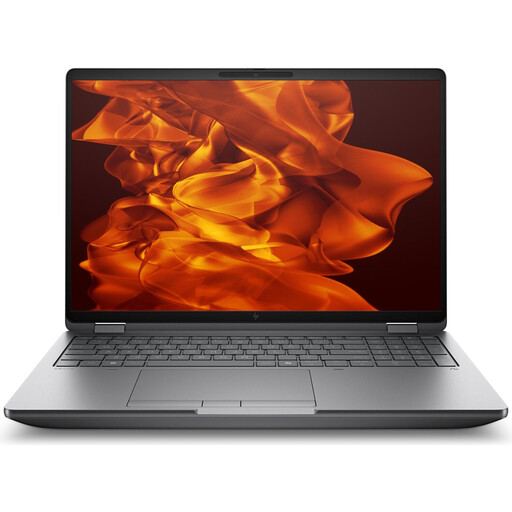
HP ZBook Fury 16 G1i Mobile Workstation
This configuration may suit you if you want to factor in the listed graphics hardware and generous memory. Check that it meets the requirements of your software.
Intel Core Ultra 9 285HX; NVIDIA RTX PRO 4000 Blackwell; 64 GB RAM; 2 TB NVMe SSD; 16 inches; 3840 × 2400 pixels.
View at Joybuy
 No image available
Lenovo ThinkBook 16 Gen 9, Intel Core Ultra 5 325
A configuration with 32 GB RAM and a 16-inch display may suit a home workspace where local data and a larger built-in screen are priorities.
32 GB DDR5 RAM; 512 GB PCIe SSD; Windows 11 Pro; 16 inches.
View at Joybuy
 No image available
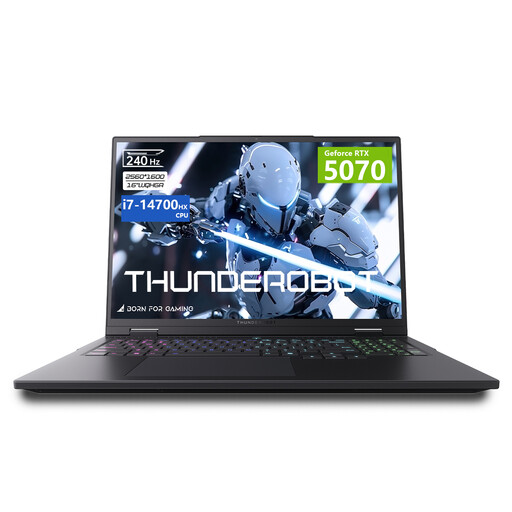
THUNDEROBOT Radiant 16 Gaming Laptop, RTX 5070
If you’re considering a configuration with the listed graphics, check that it meets the requirements of your specific analysis programmes before choosing it.
Intel Core i7-14700HX; RTX 5070; 32 GB RAM; 1 TB SSD; 16 inches; 240 Hz.
View at Joybuy
 No image available
MSI Prestige N16 Flip AI+ C1XMT-029Y
The 2-in-1 design may suit a workspace where flexibility is important alongside local data work.
16 inches; 32 GB DDR5 RAM; 1 TB SSD; Windows 11 Pro.
View at Joybuy
Frequently asked questions
Do I need a dedicated GPU for every public CSV file?
No, not as a general rule. It depends on whether you’re mainly exploring data with tools such as pandas or whether your specific project needs local CUDA computing. NVIDIA specifies a CUDA-capable GPU as a requirement for CUDA; this doesn’t mean a GPU is generally required for data exploration.
What can I do if a file doesn’t fit comfortably into memory?
Check whether you can load only the columns you need or process the data in chunks. DuckDB also documents processing larger datasets than the available RAM for suitable queries; remember to allow for the SSD space you’ll need.
What should I check for my home office monitor and charger?
Check the ports on the exact laptop model against your monitor and confirm what’s included with the power supply. Lenovo lists HDMI and USB-C with DisplayPort for the ThinkPad E14 Gen 6 AMD range. Acer notes that the TravelMate P2 16 AI NX.BX7EG.002 doesn’t include a charger, and Apple says the same for the MacBook Air configuration considered here.
What are my rights if a new laptop I buy in Germany is faulty?
When you buy as a consumer, you have statutory rights against the seller if the product is faulty; these are separate from any voluntary manufacturer’s warranty. For claims relating to defects in movable goods, the standard limitation period under § 438 BGB is two years from delivery. The details depend on the purchase contract and circumstances. (Consumer Advice Centre; Federal Ministry of Justice and Federal Office of Justice)
Can I cancel an online laptop purchase?
For qualifying distance contracts with consumers, you generally have a statutory right to cancel. § 355 BGB sets a 14-day period; check when it starts and whether any exceptions apply to your specific contract. The right to cancel is separate from claims relating to a faulty device. (Federal Ministry of Justice and Federal Office of Justice; Consumer Advice Centre)


