What should you look for when buying?
Start by thinking about how you read and write. Then check the connections, portability, features and privacy arrangements against your workspace.
| Consideration |
What to check when buying |
Who is it important to? |
| Readability and comfort |
Check the screen size, resolution and finish against the lighting at your desk. For longer sessions, the DGUV recommends an external keyboard and mouse, and an external monitor where possible. |
If I spend a long time reading sources and editing entries, I want text to be easy to read and typing to feel comfortable; around 33% of consumers prioritise this reading comfort. |
| Connections at your workspace |
Check that the monitor connection or video output via USB-C works with your existing monitor or dock. Make sure you can connect peripherals and charge the laptop at the same time. |
If you want to use the existing monitors and input devices at a shared desk, you’ll need compatible ports; around 25% of consumers prioritise connecting to their existing peripherals. |
| Portability and power |
Compare the weight and dimensions of the specific configuration. Read the conditions behind the battery-life figure and consider where you’ll be able to charge the laptop. |
If I often need to put my laptop away or work without a fixed power socket, I weigh portability against screen size; around 17% of consumers prioritise portability and power. |
| Features you need |
Choose an operating system and identify the applications you need. Check that the configuration has the right ports and any accessories you may need. |
I want the right features for working through reading lists, without paying for functions I won’t use; around 17% of consumers say the features they need are their main concern. |
| Privacy at a shared desk |
If a device is shared, set up separate password-protected user accounts and lock your session when you leave, as recommended by Germany’s Federal Office for Information Security (BSI). |
If other people might be able to access the same laptop, I want to protect my list and other data; around 8% of consumers prioritise privacy at a shared workspace. |
Joybuy products
Here you’ll find models with larger built-in screens, as well as more compact laptops for working through reading lists and connecting to devices at your workspace.
 No image available
Acer TravelMate TMP216-41-TCO, 16-inch
The 16-inch display gives you a larger built-in workspace for your list and reading materials.
16-inch WUXGA IPS display; AMD Ryzen 3 PRO 7335U; 16 GB DDR5; 512 GB SSD; Windows 11 Pro Education; HDMI 2.1, USB4, USB-A and RJ-45; German keyboard layout; 1.80 kg.
View at Joybuy
 No image available
Lenovo ThinkPad E16 Gen 3 21ST, 16-inch
The built-in 16-inch display could suit you if you want to view your list and sources on your laptop; check that the ports work with your workspace peripherals.
Anti-glare 16-inch WUXGA IPS display; AMD Ryzen 7 250 at 3.3 GHz; 32 GB RAM; 1 TB SSD; Windows 11 Pro; HDMI 2.1 and USB4-C; German keyboard layout; 1.71 kg.
View at Joybuy
 No image available
HP OmniBook Ultra Flip 14-fh0670ng, 14-inch
This 14-inch device is a more compact option if you often need to put your laptop away, and it has ports for an external monitor.
14-inch OLED touchscreen; Intel Core Ultra 7 258V; 32 GB RAM; 1 TB SSD; Windows 11 Home; two Thunderbolt 4 ports; USB-C to HDMI adapter included; 1.34 kg; 2-in-1 design.
View at Joybuy
 No image available
Apple 13-inch MacBook Air with M5, 2026, Silver
The compact design makes it easy to put away regularly; check first that macOS is compatible with your applications.
13.6-inch Retina display; M5 with 10-core CPU and 10-core GPU; 16 GB; 1 TB SSD; German QWERTZ keyboard; two Thunderbolt 4 ports; supports up to two external displays; 1.23 kg. According to the product description, a power adapter is not included and must be bought separately.
View at Joybuy
 No image available
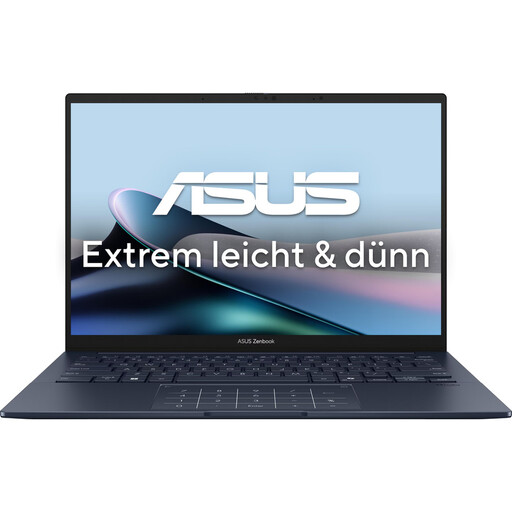
ASUS Zenbook 14 UX3405CA-QD1303W, 14-inch
The 14-inch display gives you a more compact built-in workspace; for a shared desk, check that the ports are compatible with your existing accessories.
WUXGA OLED touchscreen; Intel Core Ultra 7 255H; Intel Arc; 16 GB RAM; 1 TB SSD; Windows 11; HDMI 2.1, two Thunderbolt 4 ports and USB-A; German keyboard layout; 1.22 kg.
View at Joybuy
Frequently asked questions
Do I need extra equipment for longer sessions on a laptop?
For longer work sessions, the DGUV recommends an external keyboard and mouse, and an external monitor where possible. This is an ergonomic recommendation, not a general requirement for every personal purchase.
How should I set up a laptop used by several people?
If several people use the same device, Germany’s Federal Office for Information Security recommends setting up separate, password-protected user accounts. You should also lock the device whenever you leave the shared workspace, even if you’ll only be away briefly.
Are laptops sold in Germany required to charge via USB-C?
The relevant requirements have applied since 28 April 2026 to laptops covered by EU rules on a common charging solution. Whether a device is in scope depends, among other things, on whether it belongs to a covered category, has a rechargeable battery and can be charged by cable. The European Commission sets out these conditions for the rules to apply.
What are my rights if a laptop is faulty or I want to return one bought online?
For consumer purchases in Germany, statutory rights for faulty goods are separate from a voluntary guarantee. Section 438 of the German Civil Code (BGB) generally sets a two-year limitation period for ordinary goods, starting from delivery. For online consumer contracts, you generally have a 14-day right to cancel after receiving the goods; you must notify the seller that you are cancelling. Check any exceptions and the specific terms of your contract separately. Germany’s consumer advice centre explains the difference between statutory rights and guarantees, as well as the right to cancel.


