If you often use your manuscript and research side by side on the built-in display, a larger screen is a sensible starting point. Just check that both views remain readable at your preferred font size. If you often write on the go, a more compact device may suit you better, while the keyboard and your working position matter during longer sessions. A split editor is a feature of your writing software or window layout, not a special laptop hardware feature.
Who writes with a split editor?
Writers who keep sources beside their manuscript
If you want to refer to earlier chapters, notes or historical sources as you write, check whether your display makes a split view easy to read. Literature & Latte explains that Scrivener lets you split the editor horizontally or vertically.
Frequent writers at a fixed desk
For long writing and editing sessions, the feel of the keyboard and a comfortable working position are important things to check. For longer periods of work, the DGUV recommends using an external keyboard and mouse, as well as an external monitor, where possible.
Authors who write on the go
If you often change where you write, you’ll need to weigh the space for two views against portability and battery life. The key is finding a size that works with your writing software and the places where you usually work.
What should you look for when buying?
Larger Windows laptop for your desk
A good fit if: You often want your manuscript and sources visible at the same time on the built-in display.
The trade-off: More screen space needs to suit your portability needs; external input devices can be useful for longer sessions.
MacBook Air for changing writing locations
A good fit if: You want to use macOS and your writing software, and are weighing up the 13- and 15-inch versions.
The trade-off: Check the window width in your app, along with the keyboard layout, ports and exact configuration. Apple’s claim of up to 18 hours of battery life is a manufacturer estimate.
Compact laptop with an external monitor
A good fit if: You carry your device around often but need more room for your manuscript and sources at your regular workspace.
The trade-off: A monitor and input devices need extra space; also check that the laptop’s ports suit your setup.
When choosing a laptop for writing a historical novel in a split view, it’s worth checking your actual workflow first, then finding a device size that suits it.
| Consideration |
What to check when buying |
Who it matters most to |
| Room for the editor and sources |
Open your manuscript and a typical source at the same time; check readability at your preferred font size, as well as screen size, resolution and finish. |
If I want to read earlier chapters and historical sources at the same time, both views need to be easy for me to use. Around 31% of consumers put screen space first. |
| Keyboard for long sessions |
Check the keyboard layout and key arrangement; if you work at a fixed desk for long periods, make room for external input devices and check you have the right ports. |
If I do a lot of typing and editing, I need a keyboard I’m comfortable using for extended periods. Around 25% of consumers prioritise typing comfort. |
| Software and manuscript backups |
Test the specific writing app and split mode on the operating system you plan to use; set up a separate backup that you can restore. |
If I want my manuscript project to remain usable and recoverable over time, I check app compatibility and backups together. Around 25% of consumers put project continuity first. |
| Portability and battery life |
Compare the dimensions and weight of the exact version; don’t assume the manufacturer’s battery-life estimate will match your own writing and research routine. |
If I often write on the go, I need a device that’s easy to carry and suits the way I work without a fixed desk. Around 19% of consumers prioritise portability. |
Common buying misconceptions
-
Assuming a split view is a special laptop hardware feature
Whether you can display a manuscript and source side by side depends on the software you use and the operating system’s window layout. A large screen alone doesn’t guarantee that a particular app offers the mode you want.
Before settling on a device size, test your writing app with your manuscript and a typical source in your preferred layout.
-
Focusing only on screen size
Both views need to remain readable at your preferred font size. For longer periods of work, the DGUV recommends using external input devices and an external monitor where possible.
Check the window width you can actually use, and plan your whole fixed workspace.
Depending on your workspace, you may also need an external monitor or input devices.
-
Assuming automatic backups on the same drive are independent backups
According to Literature & Latte, Scrivener’s automatic backups are initially stored on the computer by default. If the device fails, the copies stored on it could be affected too.
Make an additional copy in a separate location and occasionally check that you can open the project from it.
You may need an external storage device or a separate backup service.
-
Assuming you’ll get the same specification and software costs when switching platforms
Laptop configurations can vary within the same model range. Scrivener licences from the provider each cover one platform.
Compare the full model number, keyboard layout, RAM, SSD and operating system. Before switching between macOS and Windows, also check whether you’ll need another Scrivener licence.
Brands to consider
Lenovo
The ThinkPad E16 Gen 3 21ST001TGE is one example of a larger Windows laptop with a German keyboard.
- For this exact configuration, Lenovo lists a matte WUXGA display, 16 GB RAM and a 512 GB SSD.
- These specifications don’t automatically apply to other E16 versions. Check the full model number and specification.
Apple
The MacBook Air M5 is available in 13- and 15-inch versions, which you can compare for different levels of portability.
- For the configurations shown, Apple lists at least 16 GB of unified memory and up to 18 hours of battery life.
- This is a manufacturer estimate, not a measurement based on writing a novel. Check the size, storage and ports of the exact version.
Huawei
According to Huawei, the MateBook 14 and MateBook D 16 ranges offer different screen formats for research and writing.
- Huawei lists a resolution of 2880 × 1920 pixels for the MateBook 14 and 1920 × 1200 pixels for the MateBook D 16.
- The model overview covers different generations. These figures don’t prove that every version has the same specification or is currently available.
Acer
The Swift 16 AI SF16-71T is a specific 16-inch model reviewed by PC-WELT as part of a general laptop comparison.
- Among other things, PC-WELT highlighted this model’s keyboard.
- This editorial review refers to the specific model and doesn’t establish that every SF16-71T configuration is suitable for writing a novel.
Joybuy products: larger Windows laptops
These product options feature larger Windows laptops for writing; check the exact specification of each version before buying.
 No image available
Lenovo ThinkBook 16 G9 AHP 21UT
An option if you want to work on your manuscript and research on a larger built-in display.
16-inch IPS display with 1920 × 1200 pixels and an anti-glare finish; AMD Ryzen 5 220, Windows 11 Pro, 32 GB RAM and 1 TB NVMe SSD. The description lists a backlit German keyboard with a numeric keypad and a weight of 1,7 kg.
Joybuy
 No image available
Lenovo ThinkPad E16 Gen 3 21ST
An option if you want to use two views on a larger built-in Windows display.
16-inch WUXGA IPS display with 1920 × 1200 pixels and an anti-glare finish; AMD Ryzen 7 250, Windows 11 Pro, 32 GB RAM and 1 TB NVMe SSD. The description lists a backlit German keyboard with a numeric keypad and a weight of 1,71 kg.
Joybuy
 No image available
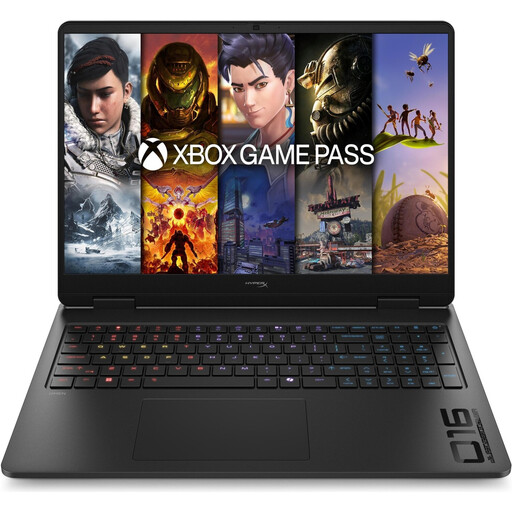
HP OMEN 16-ap1071ng
An option if you want a large display for your manuscript and research, and the higher listed weight suits your writing setup.
16-inch IPS display; AMD Ryzen 7 8745HX, GeForce RTX 5060, 16 GB RAM, 1 TB SSD and Windows 11 Home. The listed weight is 2,48 kg, which is worth bearing in mind if you carry it around often.
Joybuy
 No image available
Lenovo ThinkBook 16 Gen 9
An option if you want a larger display for side-by-side views and a permanent writing setup.
16-inch WUXGA IPS display in a 16:10 format; Intel Core Ultra 5 325, Windows 11 Pro, 32 GB RAM and 512 GB SSD. The listed specifications also include a weight of 1,7 kg, HDMI 2.1 and Thunderbolt 4.
Joybuy
 No image available
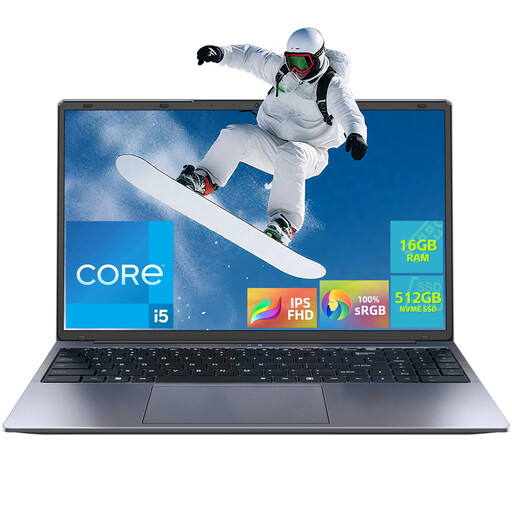
16-inch laptop with FHD display and Intel Core i5-8210Y
An option if you want to compare a 16-inch Windows device for writing applications and split-view use.
The product title lists an FHD display, Intel Core i5-8210Y, 16 GB RAM, a 512 GB SSD and Windows 11 Pro. The description also mentions an anti-glare display and an RJ45 port.
Joybuy
Frequently asked questions
Do I need a special laptop or Scrivener to use two views?
No, you don’t necessarily need a special laptop. Literature & Latte explains that Scrivener’s editor can be split horizontally or vertically; Windows lets you snap windows into place, and many Mac apps support Split View. What matters is whether your specific app offers the layout you want and both views remain readable on your display.
How can I back up a longer novel project?
As well as saving regularly, keep a separate backup and check that you can reopen the project from it. According to Literature & Latte, Scrivener’s automatic backups are initially stored on the same computer by default; the Federal Office for Information Security recommends backing up data to an external location regularly.
Can I take my Scrivener licence with me when switching between Windows and macOS?
No, a Scrivener licence from the provider covers just one platform. Check this before changing operating systems so you know whether you’ll need another licence.
What are my rights when buying a new laptop online in Germany?
When you buy online as a consumer, you generally have the right to cancel the purchase, usually within 14 days of receiving the goods. The Verbraucherzentrale explains this in an article published in August 2026. Separately, if the goods are faulty, you have statutory rights against the seller; the Verbraucherzentrale states that these generally apply for two years from delivery or receipt of newly purchased goods. A voluntary manufacturer’s guarantee is separate from these rights.


