Designers working with lots of references
If you want to keep sketches, photos and project requirements open alongside your design, a clear workspace and plenty of RAM are important things to consider.


Choose a laptop based first on the software you use to design your stage sets, then on the workspace you need for keeping references open alongside your work. For 2D layouts, RAM, the display and SSD are the main considerations. If you regularly work with 3D modelling or rendering, you’ll also need to meet the graphics and memory requirements of the specific application. So compare the exact configuration, not just the name of the product range.
If you want to keep sketches, photos and project requirements open alongside your design, a clear workspace and plenty of RAM are important things to consider.
If you assess colours and fine details on your laptop, check the display specifications for the exact configuration rather than assuming every model in a range uses the same panel.
For 3D models and rendering, the specifications should match the 3D software you actually use and the size of your projects.
First decide whether you’ll mainly work on 2D layouts or regularly create 3D scenes. Then check the workspace, memory and ports. For Photoshop, Adobe recommends a screen resolution of at least 1920 × 1080 pixels and 16 GB of RAM or more. Blender recommends 32 GB of RAM and 8 GB of VRAM. For AutoCAD 2026 on Windows, Autodesk recommends 32 GB of RAM. These recommendations apply to the software named and are not universal requirements for stage design.
| Criterion | What to check before buying | Who should pay particular attention? |
|---|---|---|
| Working across several applications | Compare the RAM, SSD configuration and available storage with the requirements of your design software. Adobe recommends a fast internal drive and 100 GB of free storage for Photoshop. | If I keep sketches, photos and project requirements open at the same time, I want to switch between applications without constantly having to close files. Around 36% of consumers put multitasking first. |
| Visible workspace | Choose a display size and resolution that let you read as much content as you need at once. If you plan to use an external monitor, check that the ports match its inputs. | If I want to see my design and references at the same time, I look for a workspace where I can arrange the windows effectively. Around 29% of consumers prioritise this visible workspace. |
| Colours and details | Check the colour gamut and display specifications for the exact version. The model name alone doesn’t tell you which panel is fitted. | If I’m assessing colours and fine details, I want to know the display specifications of the exact configuration. Around 21% of consumers put colour and detail accuracy first. |
| 3D and rendering | Compare the GPU, graphics memory and RAM with the requirements of the specific software, project size and rendering method. | If I create or render 3D stage models, I base my choice on the 3D software I actually use. Around 14% of consumers prioritise 3D performance. |
Workstations are designed for specific, demanding workflows. Image editing and complex 3D work have different requirements, so specialist specifications aren’t automatically necessary for 2D layouts alone.
Start by identifying the software you use and the size of your typical projects, then compare a suitable configuration with its requirements.
Laptops with similar model names can differ in RAM, SSD, GPU and display. A review unit therefore won’t necessarily reflect the specifications of a separately listed configuration.
Check the full model number and the specific details of the RAM, GPU, display and what’s included.
The ProArt P16 range is an option for creators who need a large display and a wide choice of ports.
The MacBook Pro is a macOS option, provided your design software and the peripherals you need are compatible with the exact configuration.
ThinkPad P workstations are worth considering for demanding 3D or CAD workflows.
Pro Max workstations offer configurable Windows options for buyers who specifically need professional graphics.
ZBook models are mobile workstation options for specialist design software.
This selection includes laptops for 2D design work with several references open, as well as configurations whose graphics specifications can be compared with the requirements of 3D projects.
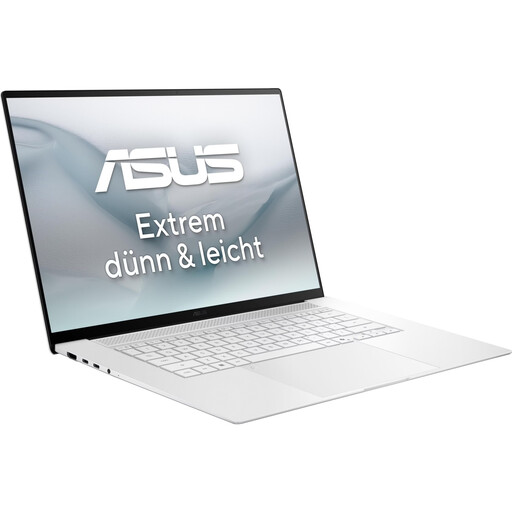 No image available
For 2D design work with several references open, compare the listed RAM and SSD configuration with the requirements of your applications.
Product details: Ryzen AI 9 465, 32 GB RAM, 1 TB SSD, Windows 11. The product name indicates that the power adapter is not included.
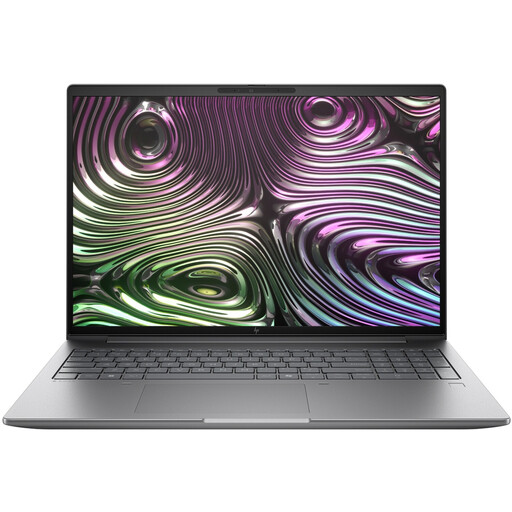 No image available
For designs with several references open, you can compare this configuration’s listed memory with the requirements of your software.
Product details: Ultra 7 255H, 32 GB RAM, 1 TB SSD.
 No image available
For 2D layouts and working with several references at once, compare the listed memory configuration with the requirements of your design software.
Product details: 32 GB DDR5, 512 GB PCIe SSD, Windows 11 Pro.
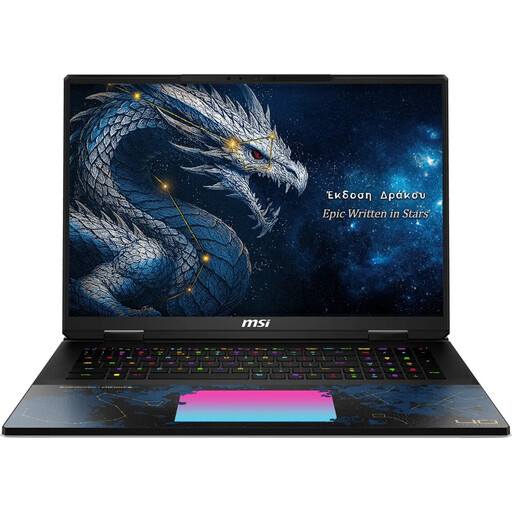 No image available
For larger 3D projects, the listed graphics card gives you a specific point of comparison. The requirements of your software and rendering method still matter most.
Product details: 18-inch, Intel Core Ultra 9 290HX Plus, NVIDIA GeForce RTX 5090 with 24 GB, 96 GB DDR5, 4 TB SSD, UHD+ 240 Hz Mini LED, Windows 11 Home.
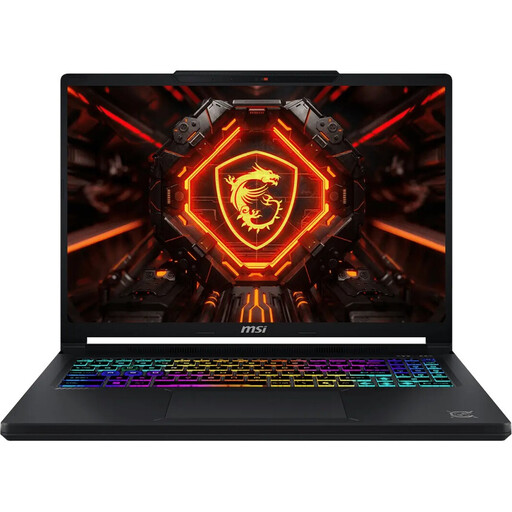 No image available
If your 3D software requires dedicated graphics, compare the listed GPU and graphics memory with its requirements.
Product details: 16-inch, Intel Core Ultra 9 275HX, NVIDIA GeForce RTX 5070 with 12 GB, 16 GB DDR5, 1 TB SSD, QHD+ 165 Hz OLED, Windows 11 Home.
No. The number of references you have open doesn’t determine that on its own. First check the RAM requirements of your image-editing or layout software. 3D models and some rendering methods have additional GPU requirements.
Check that the video output on the exact laptop version matches the input on your monitor, and whether you’ll need a suitable cable or adapter. Apple and ASUS list the relevant ports for the models named here; you can’t assume that other versions have the same ports.
Make sure you have enough free storage for your applications and project files, and keep your graphics drivers up to date in line with the guidance from the software you use. Adobe recommends keeping free storage available for Photoshop, while Blender and Autodesk advise using the latest manufacturer drivers.