Start by deciding whether you’ll be carrying your laptop around frequently or need to keep track of long lists and several windows at once. A compact notebook is easier to take with you, while a larger one gives you more screen space. Also check how noisy it is and how long the battery lasts for the way you’ll actually use it, and whether your learning software and files will work without Wi-Fi.
Which notebook is right for you?
Students who move around frequently
If you regularly carry your notebook to the library, its weight and size matter, as does a battery life that suits the length of your study session. PC-WELT and Notebookcheck both treat portability as an important factor when choosing a device.
Students working with long vocabulary lists
If you have lots of entries or two windows open, a larger screen can make it easier to keep track of everything. The screen size and finish should suit your workspace and preferred text size.
Students in quiet study spaces
If fan noise distracts you while you study, check information about the specific model rather than relying on the brand name alone. Notebookcheck describes the MacBook Air 13 M5 as fanless.
What should you look for when buying?
First, check whether your learning software and files work offline. Then weigh up how often you’ll carry your notebook against the screen space you need, and check noise levels and battery life for the type of study session you have in mind.
| What to consider |
What to look for when buying |
Who should pay particular attention |
| Portability and battery life |
Compare the weight and size of the specific configuration; only use battery test results if the test scenario matches the length and type of your study session. |
If I’ll be carrying my notebook around often and plan to study for longer sessions, I look at its weight and relevant battery tests. Around 33% of consumers put portability and battery life first. |
| Reading long lists |
Try viewing a list at your preferred text size; check the screen size, resolution and potential reflections on the specific version. |
If I need to view lots of entries or several windows at once, a clear, easy-to-read display matters more to me than the smallest possible case. Around 25% of consumers put the readability of long lists first. |
| Noise in your study space |
Look for information about the fan design or reliable noise measurements for the specific model, rather than assuming the same features apply across an entire product range. |
If noise distracts me in a quiet study space, I check how the specific model operates. Around 25% of consumers prioritise quiet operation. |
| Offline access and software |
Test your learning app, file format and offline mode in advance using sample files. For Chromebooks, make files available offline in good time and check when support for updates ends for the specific model. |
If I need to open my learning app and vocabulary lists without Wi-Fi, I check both in advance. Around 17% of consumers put software compatibility and offline access first. |
Common buying mistakes
-
Assuming the manufacturer’s maximum battery life is guaranteed study time
Apple quotes up to 18 hours of video streaming for the MacBook Air M5 under the stated conditions. This figure doesn’t tell you how long the battery will last with your learning software and screen brightness settings.
Only compare battery life figures for similar usage scenarios, and allow some extra time for your study session.
-
Assuming a Chromebook can be used offline without limitations
Google says that some files can be made available offline, but certain apps won’t work without an internet connection.
Before your library study session, test your specific list and learning app offline, and make sure any files you need are available.
-
Assuming a review applies to every version in a product range
HP offers the OmniBook 3 in different sizes, so a tested device won’t necessarily represent every screen and specification option.
Compare the full model name, screen version and what’s included with the specific offer.
A version of the HP OmniBook 3 16 reviewed by BILD-Kaufberater didn’t include a power adapter. Check whether the specific device comes with the adapter you need or whether you’ll have to buy one separately.
Brands to consider
Lenovo
The ThinkPad E14 Gen 7 is an example of a compact Windows notebook. For configuration 21SX000RGE, Lenovo specifies a matt 14-inch screen and a German keyboard.
- The stated screen and keyboard features are documented for this specific configuration.
- They don’t tell you how noisy the fan will be or how long the battery will actually last while you study.
Apple
The MacBook Air 13 M5 is a compact macOS option if fan noise is a factor in your choice.
- Notebookcheck describes the model as fanless.
- Notebookcheck notes that it has a glossy screen. Apple’s claim of up to 18 hours is based on its own test conditions; also check software compatibility and the ports you need.
Acer
The Chromebook Plus 514 is a ChromeOS option for browser-based study. Acer offers 14-inch versions of the range in Germany.
- Google explains how files prepared in advance can be used offline and synced once you’re connected again.
- Google says some apps won’t work offline. Check the specific device version and when it will stop receiving updates.
ASUS
The Vivobook 16 M1605 is an example of a notebook range with a 16-inch screen, offering more display space.
- The larger screen size may be a factor to consider if you work with extensive lists.
- A 16-inch device takes up more room when you’re carrying it and on your desk. Check the screen and storage options for the specific model.
HP
HP offers the OmniBook 3 in both 14- and 16-inch ranges to suit different device sizes.
- The range includes both more compact and larger formats.
- The manufacturer’s claims about suitability won’t necessarily apply to every configuration. Check the specifications and what’s included with the specific model.
Joybuy products to compare
These Joybuy models range from compact 13- and 14-inch devices to a 16-inch notebook. Compare a smaller device that’s easier to carry with a larger screen for viewing vocabulary lists.
 No image available
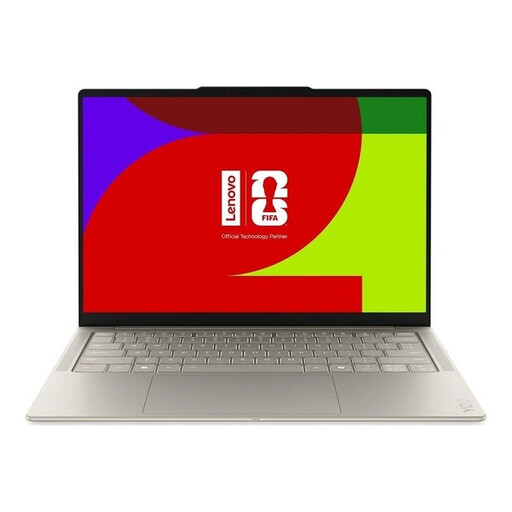
Lenovo Yoga Slim 7i Aura Edition, 14 inches
The 14-inch format and stated weight of 1.14 kg make this a practical choice if you’ll be carrying it around often.
OLED screen with 2880 × 1800 pixels; Intel Core Ultra 7 355, 16 GB RAM, 1 TB SSD and Windows 11 Evo.
Joybuy
 No image available
HP OmniBook Ultra Flip 14-fh0670ng
The 14-inch touchscreen and stated weight of 1.34 kg make this a practical choice for a mobile study space.
2-in-1 laptop with 2880 × 1800-pixel OLED touchscreen, Intel Core Ultra 7 258V, 32 GB RAM, 1 TB SSD and Windows 11 Home.
Joybuy
 No image available
Apple MacBook Air 13 (M5, 2026), 16 GB, 512 GB SSD
The 13-inch format and stated weight of 1.23 kg make this a good fit if you’ll be carrying it around often. Notebookcheck describes the MacBook Air 13 M5 as fanless.
13.6-inch screen with 2560 × 1664 pixels, 10-core CPU, 8-core GPU and German QWERTZ keyboard. Apple quotes up to 18 hours of video streaming under the stated conditions; the power adapter isn’t included.
Joybuy
 No image available
Apple MacBook Neo, A18 Pro, 8 GB, 256 GB SSD
The stated 13-inch format and weight of 1.23 kg make this a practical choice if you’ll be carrying it around often.
With a German QWERTZ keyboard and no Touch ID. The product description quotes up to 16 hours of video streaming under the stated conditions; a USB-C power adapter isn’t included.
Joybuy
 No image available
Lenovo ThinkBook 16 G9 AHP 21UT
The 16-inch screen gives you more room to view extensive lists; the stated weight is 1.7 kg.
Matt IPS screen with 1920 × 1200 pixels and 400 cd/m², AMD Ryzen 5 220, 32 GB RAM, 1 TB NVMe SSD and Windows 11 Pro.
Joybuy
Frequently asked questions
Can I edit vocabulary lists on a Chromebook without Wi-Fi?
Some Google Drive files, including Docs and Sheets, can be made available offline, and changes will sync when you reconnect. Google points out that some apps won’t work offline. Test your specific list and learning app before your library study session.
What should I look for in a used or older Chromebook?
Check when automatic updates will end for the specific model. Google explains that some Chromebooks need extended updates enabled for their final years of support; you can’t work out the deadline from the product range name alone.
What labels and details should I check on a wireless notebook?
For the specific device, check that its labels and manufacturer information are clear and verifiable. The German Federal Network Agency lists correct CE marking, product identification and accurate manufacturer details among the points it checks when monitoring the market. The CE mark alone tells you nothing about battery life or whether a device is suitable for studying.
How should I dispose of an old laptop?
Don’t put electrical equipment in your household waste. The German Environment Agency recommends suitable return options, such as a recycling centre or returning it to a retailer.


