Start by checking the architecture of your course VMs and which hypervisor you need to use. Then plan your RAM and SSD capacity around the host, your applications and the guest VMs you’ll run at the same time. Oracle VirtualBox does not support x86 guests on Arm hosts, so a Mac with an Apple chip is only suitable if your required guests and tools work with Arm. Screen size and documented upgrade options may also be deciding factors if you mainly work at a desk or regularly take your laptop with you.
Which laptop is right for you?
Students running several lab VMs
If you run several virtual machines alongside your study applications, you’ll need to allow for their combined memory and storage requirements. Oracle explains that RAM assigned to a VM is not available to the host and other applications at the same time.
Students using course images supplied by their institution
If you’re given VM images or specific installation instructions, check the guest architecture, host system and hypervisor before you buy. Oracle notes that VirtualBox does not support x86 guests on Arm hosts.
Students with a small desk
If you use the same laptop in your room and at university, its screen, ports and portability need to work in both study spaces. The right combination depends on whether you work directly on the laptop or also use an external monitor.
What should you look for when buying?
First, check that your course images and hypervisor will work with the host. Then weigh up RAM, SSD capacity and the laptop’s form factor based on how many VMs you plan to run at once and where you’ll be studying.
Compact x86 Windows laptop
A good fit if: Your course uses x86 guests and you regularly take your laptop between your room and university.
The trade-off: A 14-inch screen takes up less space than a 16-inch model, but gives you less screen area to work with.
Larger or upgradeable x86 laptop
A good fit if: You mainly work at a desk with several guests, or want the option to add more RAM or SSD capacity later.
The trade-off: Weigh the extra screen space and documented upgrade options against the space it takes up and how often you’ll need to carry it.
MacBook Air with an Apple chip
A good fit if: Your studies require macOS and the specific guest VMs are available as Arm versions supported by your hypervisor.
The trade-off: Oracle VirtualBox does not support x86 guest operating systems on Arm hosts. More RAM won’t change this compatibility limitation.
| What to consider |
What to check before buying |
Who it matters most to |
| RAM for VMs running at the same time |
Allow for the memory used by guest VMs running simultaneously, the host and other applications. Check the RAM in the exact model and whether upgrades are documented. |
If you plan to run several lab VMs at once, the available memory needs to cover both the guests and the host. Around 28 % of consumers prioritise the RAM requirements of concurrent VMs. |
| Compatibility with course images |
Find out the guest operating system, architecture and required hypervisor. For Client Hyper-V, also check the Windows edition and SLAT; Microsoft specifies Windows Pro or higher and a suitable processor. |
If a course requires a particular image or hypervisor, your laptop needs to meet those requirements. Around 22 % of consumers prioritise this compatibility. |
| SSD capacity for guests and snapshots |
Allow space for virtual disks and planned snapshots, as well as your operating system and study materials. Check the SSD capacity and whether it can be upgraded. |
If you want to store several guests and snapshots, you’ll need enough room for them alongside your other files. Around 22 % of consumers put VM files and snapshots first. |
| Working in your room and on the go |
Compare the screen size, ports for a potential external monitor, desk space required and weight of the exact model. |
If your laptop needs to fit on a small desk and travel with you to university regularly, the balance between usable screen space and portability is key. Around 17 % of consumers prioritise this. |
| Upgrade options and guest licences |
Check documented RAM and SSD upgrades, and look into the licence terms for each planned guest operating system separately from those for the hypervisor. |
If your course requirements might change, upgrade options and the rights to use guest operating systems matter. Around 11 % of consumers consider these factors first. |
Common buying and planning mistakes
-
Comparing processors alone and overlooking RAM requirements
RAM assigned to a VM is not available to the host and other applications at the same time. If you’re running several guests simultaneously, the overall memory capacity may matter more than the processor name alone.
Work out which guests you’ll need to run at the same time and how much memory to assign to each. Then compare the RAM in the complete model variant and check whether an upgrade is documented for that exact device.
If the memory can’t be upgraded to meet your needs later, you may need to pay for a RAM upgrade or replace the device.
-
Assuming Arm and x86 laptops are equivalent just because they have the same amount of RAM
Having enough RAM won’t resolve an architecture incompatibility. Oracle VirtualBox does not support x86 guests on Arm hosts.
Before you buy, find out the architecture of your course images and check that it’s compatible with the host system and hypervisor.
-
Assuming the same base model means the specifications are identical
The Dell Pro 14 Premium PA14250 configuration described here differs from the Joybuy listing: Dell specifies a 2.8K touchscreen and no power adapter included for the 32 GB model reviewed, while the Joybuy listing specifies an FHD+ display.
Check the full model variant, display, RAM and what’s included in the box, rather than assuming products are identical based on the base model name alone.
Depending on the variant you choose, you may need to buy an additional power adapter or take a different display specification into account.
-
Assuming a free hypervisor means the guest operating system is free too
Oracle VirtualBox does not include the guest operating system or any licence required for it. Your host system licence does not automatically cover the rights to use every guest operating system.
Check course and university licences for each guest operating system you plan to use, separately from your laptop purchase.
Key brands at a glance
Lenovo
The ThinkPad E14 Gen 7 is a compact x86 option. Lenovo Germany lists the 21SX003SGE configuration with 32 GB RAM, a 1 TB SSD and Windows 11 Pro.
- The specifications listed apply to a specific German model variant.
- The manufacturer’s specifications do not provide independent test results for VM performance, battery life under VM workloads or noise levels in a room.
HP
The ProBook 4 G1a 14 is another compact Windows option. HP lists the AD2M8ET#ABD variant with 24 GB RAM, a 512 GB SSD and Windows 11 Pro.
- For this variant, HP lists HDMI, USB-A, two USB-C ports and an included power adapter.
- Check that 24 GB RAM is enough for the number and specifications of the guests you plan to run at once. Manufacturer specifications are no substitute for testing under a VM workload.
Dell
The Pro 14 Premium PA14250 range includes configurable Windows Pro models. Dell Germany lists, among others, a variant with a Core Ultra 7 268V and 32 GB RAM.
- The Dell configuration reviewed is listed with a 2.8K touchscreen and 32 GB RAM.
- The Joybuy listing reviewed specifies an FHD+ display. Don’t assume the listings are for the same product without confirming the full model variant.
Framework
The Framework Laptop 13 with AMD Ryzen AI 300 is aimed at buyers who value documented RAM and SSD upgrade options.
- Framework specifies up to 96 GB DDR5 and a replaceable M.2 SSD for this generation. This doesn’t mean every configuration comes with those specifications.
- In a 2025 review of the Framework Laptop 13, PC-WELT highlighted repairability as a strength and the purchase price and battery life as drawbacks. The review findings may not apply to every later variant.
Apple
The MacBook Air with M5 may suit a macOS workflow using supported Arm guests. For the 13-inch model reviewed, Apple lists 16 GB unified memory, with options for 24 or 32 GB.
- You can compare the memory options with the requirements of your planned VMs.
- Oracle VirtualBox does not support x86 guests on Arm hosts. First check whether your specific course images are available as Arm versions and supported by your chosen hypervisor.
Joybuy laptops for virtual machines
The Joybuy laptops below cater for different needs: larger screens for desk-based work, more compact devices for taking with you, and a range of RAM and SSD specifications. Check that each configuration is compatible with your course images and the number of VMs you plan to run at the same time.
 No image available
Acer TravelMate TMP216-41-TCO
The 16-inch screen and listed ports may suit a permanent workspace in your room. Plan the RAM you need based on how many VMs you’ll run at once.
16-inch WUXGA display, AMD Ryzen 3 PRO 7335U, 16 GB DDR5, 512 GB SSD and Windows 11 Pro Education. The product description states that the RAM is upgradeable.
View at Joybuy
 No image available
Lenovo ThinkPad E16 Gen 3 21ST
The listed specifications may suit you if you plan to run several guests and store VM files. Check that they meet the actual requirements of your course.
AMD Ryzen 7 250, 32 GB RAM, 1 TB SSD, 16-inch WUXGA display and Windows 11 Pro. The product description states that the RAM can be upgraded to 64 GB; the listed weight is 1.71 kg.
View at Joybuy
 No image available
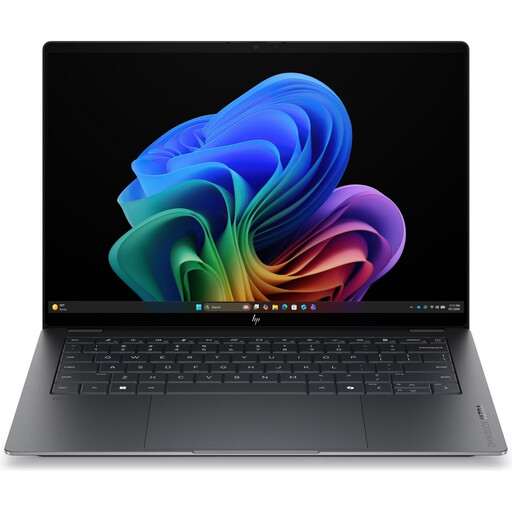
HP OmniBook Ultra 14-kd0072ngx
The 14-inch format and listed weight of 1.27 kg may suit you if you regularly travel between your room and university. Check whether Windows 11 Home meets your course requirements.
Intel Core Ultra 7 356H, 16 GB RAM, 1 TB SSD, 14-inch 3K OLED display and Windows 11 Home. If your course specifically requires Client Hyper-V, Microsoft lists Windows Pro or higher as a requirement.
View at Joybuy
 No image available
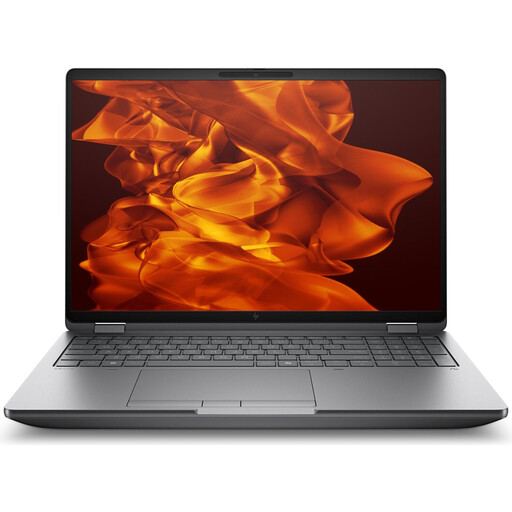
HP ZBook Fury 16 G1i Mobile Workstation
The listed RAM and SSD capacity may suit you if you plan to run several guests and store VM files. Check that the configuration meets your specific course requirements.
Intel Core Ultra 9 285HX, 64 GB RAM, 2 TB SSD, RTX PRO 4000 Blackwell and Windows 11 Pro. The 16-inch display is listed at 3840 × 2400 pixels; the stated weight is 2.43 kg.
View at Joybuy
 No image available
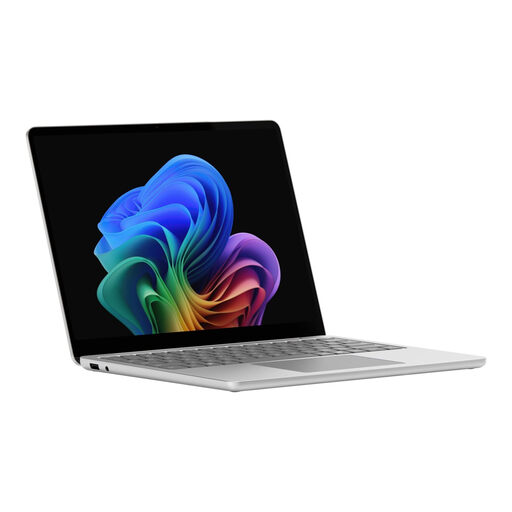
Microsoft Surface Laptop 8 Core Ultra 5
The 13-inch format may suit you if you need to carry your laptop between study spaces. Check that the memory is sufficient for all the guests you plan to run at the same time.
24 GB RAM, 1 TB SSD, 13-inch touchscreen and Windows 11 Pro. The product description states that it has a slim design.
View at Joybuy
Frequently asked questions
Do I always need Windows 11 Pro for virtual machines?
No, not necessarily. If you specifically need Microsoft Client Hyper-V, Microsoft lists Windows Pro or higher and a processor with SLAT as requirements. If you’re using another hypervisor, check its host requirements.
Can I run an x86 course image in VirtualBox on a MacBook with an Apple chip?
Not as an x86 guest using Oracle VirtualBox on an Arm host. Oracle supports Arm-based guest operating systems there, but not x86 guests. Check the specific image and course requirements to see whether another approved option is available.
Does my laptop’s Windows licence cover a Windows VM?
You can’t tell from the laptop specifications alone. Oracle VirtualBox does not include a licence for the guest operating system. Microsoft’s guide to Windows 11 licensing for virtual desktops relates to commercial licensing programmes. Check the terms for your specific use case and whether a university licence is available.
What should I check before setting up a VM?
First, confirm which guest image and hypervisor you’re required to use. Allow for the memory you’ll assign and enough free SSD space, especially if you’ll be using snapshots. If hardware virtualisation is disabled in the UEFI, follow the device manufacturer’s instructions before enabling it.
What rights do I have when shopping online in Germany?
Consumers generally have a right to cancel a distance contract; the Verbraucherzentrale states that the period is usually 14 days from receipt of the goods. For faults in ordinary goods, statutory claims generally expire two years after delivery, as set out in § 438 BGB. These statutory rights are separate from any voluntary manufacturer’s guarantee.


