
Lieferung heute & morgen

Qualitätsgarantie

Willkommens-Angebote freischalten: KOSTENLOSE Lieferung | Bis zu 80 % RABATT | Kostenlose 30-Tage-JoyPlus-Testphase
App herunterladen
A larder fridge, also known as an all-refrigerator, is the perfect solution for anyone who needs pure refrigeration space. Whether as a supplement to a separate chest freezer, for the pantry, the office, or as a spacious drinks fridge, these appliances maximise storage for fresh food and beverages.
This article serves as your guide. We'll explain the crucial criteria for selecting the right model and showcase a range of appliances with different features, enabling you to make a well-informed decision.
The right model for you depends on your individual needs. The following three criteria are essential for most use cases.
Capacity, measured in litres, is the primary indicator of a fridge's size. For a one to two-person household, an appliance around 100 litres may be sufficient. Larger households or offices that store a lot of drinks will benefit from a large refrigerator with 200 litres or more. Look for adjustable shelves and door compartments to customise the interior to your needs. A reversible door is another practical feature, allowing for flexible placement in your room by letting you choose whether the door opens to the left or right.
An energy-efficientrefrigerator not only protects the environment but also your wallet. The EU energy label, which ranges from A (very efficient) to G (less efficient), provides information on the annual electricity consumption in kilowatt-hours (kWh).
At the same time, the operating noise level, measured in decibels (dB), is a key factor, especially if the freestanding refrigerator is placed in an open-plan kitchen or an office. A quiet refrigerator with a rating below 40 dB is generally considered unobtrusive. Models around 35 dB are almost acoustically imperceptible.
Ice build-up on the back wall can impair cooling performance and increase energy consumption. An auto-defrost function prevents this by automatically draining and evaporating any condensation that forms. This saves you from manual defrosting and ensures consistently high efficiency. Even more advanced is "Total No Frost" technology, which prevents ice formation throughout the entire cooling compartment via controlled air circulation.
Based on the criteria mentioned, we have compiled a selection of models that cover various requirements for size, efficiency, and features.
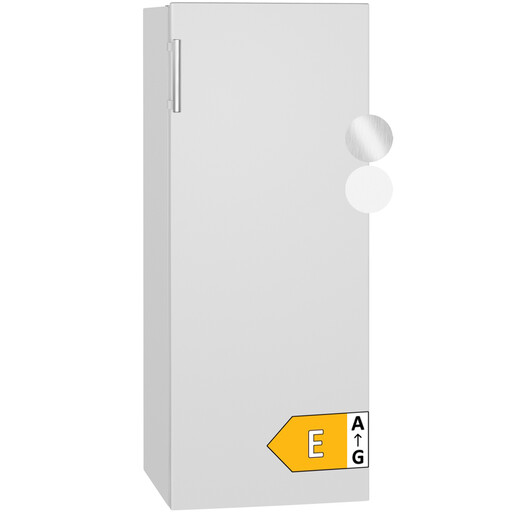
Why it stands out: The Bomann VS 7316.1 offers a very generous capacity of 242 litres. Its interior is highly flexible thanks to height-adjustable glass shelves and practical door compartments, making it an excellent choice for storing weekly groceries or a large stock of beverages.
Highlights:
Best for: This model is suitable for families, shared apartments, or small businesses that need a large refrigerator with ample storage and a flexible interior layout.
View Product: Bomann VS 7316.1
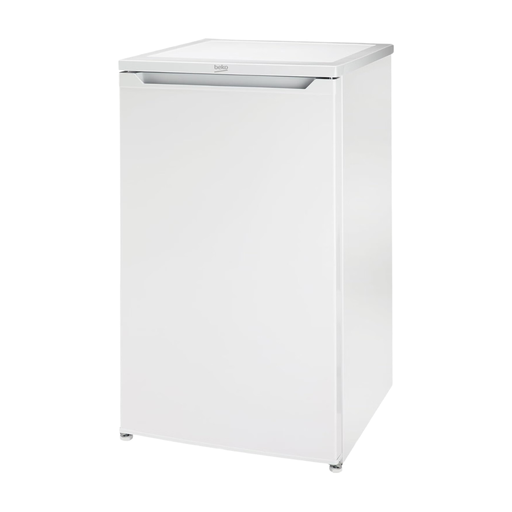
Why it stands out: With an operating noise level of just 38 dB, the Beko TS190040N is an exceptionally quiet refrigerator. Its compact dimensions make it the ideal solution for small kitchens, offices, or as a secondary appliance in living areas where low noise is crucial.
Highlights:
Best for: Ideal for individuals, couples, or as a supplementary fridge in noise-sensitive environments like offices or open-plan living spaces.
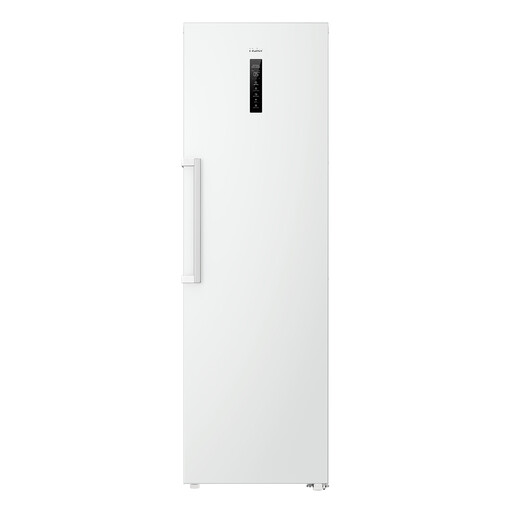
Why it stands out: This model from Haier sets the standard for energy efficiency. With an Energy Efficiency Class A rating and a consumption of only approx. 56 kWh per year, it is extremely economical to run. The Total No Frost technology completely prevents ice build-up, and at 36 dB, it is also exceptionally quiet.
Highlights:
Best for: For discerning users who place the highest value on low running costs, state-of-the-art technology, a large capacity, and very quiet operation.
View Product: Haier H4R306WAH1
If the models presented don't perfectly match your requirements, or if you'd like to compare more appliances with different dimensions and features, you can find additional alternatives in our wider selection.
Discover Our Full Range of Freestanding White Cabinets
A larder fridge is a refrigerator without a freezer compartment. The entire interior is designed exclusively for cooling in the positive temperature range (typically 0°C to +8°C). This maximises the available space for fresh food and drinks compared to a fridge-freezer of the same size.
Yes, an auto-defrost function is still useful. Although less ice forms than in a freezer, a layer of ice can still build up on the back wall of the cooling compartment. This layer acts as insulation, forcing the compressor to run for longer, which increases energy consumption. The automatic function ensures consistently high efficiency and saves you manual effort.
Noise perception is subjective, but there are general guidelines. A quiet refrigerator for living spaces should not exceed 40 dB. Models rated at 38 dB or less are considered very quiet and are barely audible even in open-plan kitchens or studio apartments. For comparison, a normal conversation is about 60 dB, while a whisper is around 30 dB.