
Lieferung heute & morgen

Qualitätsgarantie

Willkommens-Angebote freischalten: KOSTENLOSE Lieferung | Bis zu 80 % RABATT | Kostenlose 30-Tage-JoyPlus-Testphase
App herunterladen
A large cat tree is more than just a piece of furniture; it's a vertical playground, a safe retreat, and an essential component for the well-being of indoor cats. Choosing the right model is crucial, especially in households with multiple cats or large breeds like Maine Coons. However, the market is overwhelming, and many products don't live up to their promises. This guide will help you navigate the common pitfalls and make an informed decision.
As a Joybuy Product Recommendation Officer, my job is to filter market information and provide you with objective, practical advice so you can make a durable and safe choice for your pets.
Many buyers are drawn in by attractive product images, but overlook critical design flaws. These three mistakes often lead to disappointment and unnecessary expenses:
To avoid a bad purchase, you should check three technical features before making a decision. These define the durability and safety of a large cat tree.
A stable cat tree's success hinges on its base. Look for a heavy, wide base plate. A double-layered or reinforced base plate lowers the centre of gravity and significantly increases stability. For models over 1.50 m tall, an additional anti-tip kit for securing it to the wall is an important safety feature, especially in homes with very active or heavy cats. The overall construction should be designed to remain steady even during vigorous jumps.
The scratching posts are the core component of any cat climbing tree. Their main function is for claw maintenance and stretching muscles.
A tall cat tree should meet various needs: climbing, observing, sleeping, and playing. Check the dimensions of the individual elements:
Based on the criteria above, we have identified several models that are well-suited for the specific needs of cat owners.
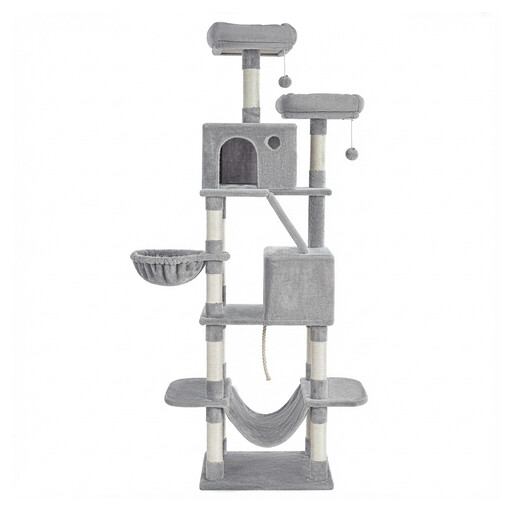
Why This Fits Their Persona: With a height of 206 cm and a specified total static load capacity of up to 75 kg, this model is specifically designed to meet the demands of large, heavy cats like Maine Coons or Norwegian Forest Cats.
The large, reinforced base plate and the included anti-tip kit actively counteract the risk of wobbling and tipping. The 13 sisal posts provide ample scratching opportunities.
The combination of XXL height, high load capacity, and an additional scratching ramp makes it a comprehensive solution for demanding cats.
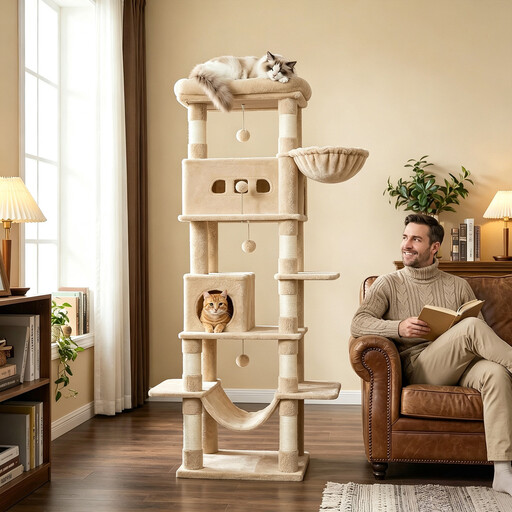
Why This Fits Their Persona: In a multi-cat household, having enough separate retreats is crucial to prevent conflicts. This model offers multiple private rest areas with two condos, a hammock, and a basket.
Instead of just one small perch, this cat tree offers a multitude of options. The layout across six levels staggers usage and gives each cat its own space.
The thoughtful spatial layout with multiple condos and perches is specifically designed to meet the needs of up to 5-6 cats and promote harmonious coexistence.
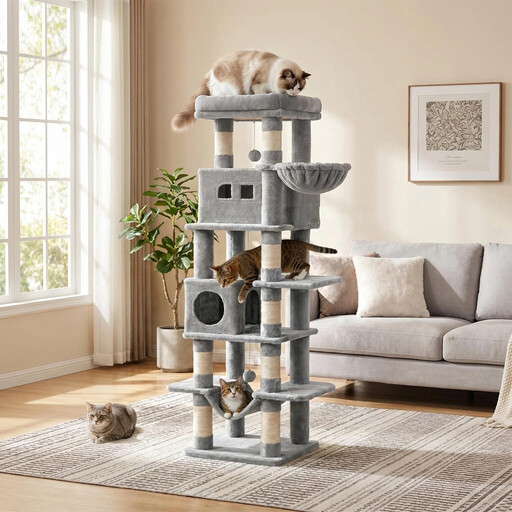
Why This Fits Their Persona: For owners seeking a comprehensive feature set in a stable, but not overly bulky package. At 170 cm tall, it offers ample climbing space without dominating the room.
This model features a widened, double-reinforced base and an anti-tip kit. The 8 sisal-wrapped posts are strategically distributed across five levels to encourage positive scratching behaviour.
A great balance of size, stability, and variety of features (two condos, hammock, basket). The removable cushions also make cleaning easier.
We have compiled a complete, up-to-date list of products that fully meet these strict selection criteria and UK safety regulations.
1. How can you make a tall cat tree more stable? The most effective method is to use the included anti-tip kit to anchor the cat tree to a wall. Always place the cat tree on a level, solid surface. Placing a heavy, non-slip mat under the base plate can also contribute to stability. Regularly check all screw connections and tighten them as needed.
2. What is a good height for an indoor cat's tree? A tall cat tree is particularly valuable for indoor-only cats as it creates vertical space for climbing and observing. A height of 150 cm to over 200 cm is ideal. Cats love to survey their surroundings from an elevated vantage point. A floor-to-ceiling cat tree, which is tension-mounted between the floor and ceiling, offers maximum stability and climbing opportunities.
3. How long does a high-quality cat tree last? The lifespan heavily depends on the material quality and the intensity of use. A model with thick posts and robust sisal can last for several years with average use by one or two cats. Wear-and-tear parts like sisal posts or toys can often be purchased and replaced individually on many models, extending the life of the entire cat tree.