
Lieferung heute & morgen

Qualitätsgarantie

Willkommens-Angebote freischalten: KOSTENLOSE Lieferung | Bis zu 80 % RABATT | Kostenlose 30-Tage-JoyPlus-Testphase
App herunterladen
For many cats—especially indoor-only cats, large breeds, or multi-cat households—a large cat tree is more than just furniture. It's a vertical playground, a secure haven, and an essential tool for claw maintenance. However, the market is vast, and not every large cat tree delivers on its promise. An unstable cat climbing tree can quickly become a hazard, and low-quality materials often lead to frustration for both pet and owner within just a few months.
As your Joybuy Product Recommendation Officer, I'll help you spot the common pitfalls and make an informed decision. We'll focus on the facts that truly matter, ensuring your investment pays off for years to come.
Many cat owners invest in an impressive cat scratching tree, only to find it can't stand up to the rigours of daily use. Watch out for these three common flaws to avoid a poor purchase:
To avoid these issues, you should check three crucial technical features before buying. These define whether a stable cat tree is truly suited for demanding use.
Stability is paramount, especially for a cat tree for multiple cats or very active pets.
The longevity of your cat tree depends directly on the quality of the materials used.
A good XXL cat tree is not just tall, but also thoughtfully designed.
Here are some models that represent a considered choice based on objective features for different needs and households.
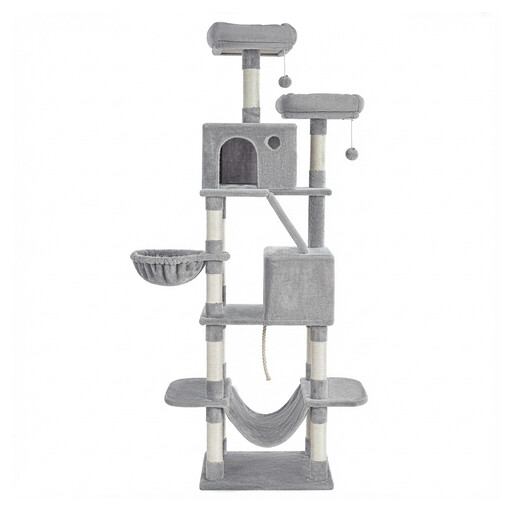
Why This Fits Their Persona: At over 2 metres tall and with numerous levels, condos, and perches, this model offers enough space and variety to minimise conflicts in a multi-cat household. Each cat can find its own favourite spot.
The large, reinforced base plate and the option for wall mounting (anti-tip kit included) directly address the problem of instability. The 13 sisal posts and the additional scratching ramp provide ample scratching surfaces, preventing premature wear.
Huge vertical play area across multiple levels. High static load capacity of up to 75 kg according to the manufacturer, ideal for several cats at once.
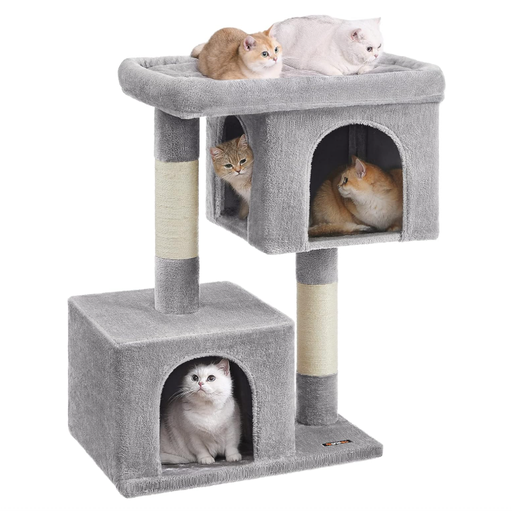
Why This Fits Their Persona: This model is explicitly designed for large, heavy cats up to 20 kg. The extra-large top perch (68 x 48 cm) and thick posts provide the necessary space and stability that large breeds require.
It solves the problem of impractical designs with its generously sized perches and condos. The thick posts (11 cm diameter) and the included anti-tip kit ensure the stability that is essential for the weight of large cats.
Reinforced construction for heavy weights. Very large top platform with a padded rim for comfort and security.
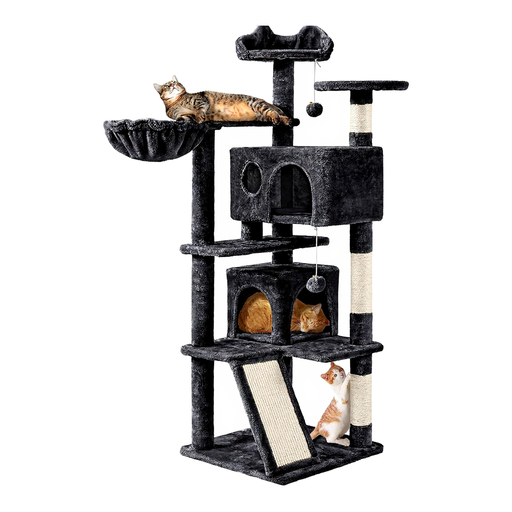
Why This Fits Their Persona: For owners looking for a fully-equipped climbing tree that doesn't dominate the room. At 145 cm high with a square base, it fits well in corners. The black colour (a grey cat tree or black is often an alternative) offers a modern look.
Despite its moderate height, an anti-tip kit for wall mounting is included, ensuring stability. The construction from FSC-certified particle board and sturdy sisal posts counteracts the problem of a short lifespan.
A great balance of features and footprint. With two condos and three platforms, it offers many retreat and viewing options on a compact base.
We have compiled a complete, up-to-date list of products that fully meet these strict selection criteria and safety regulations.
1. How do I properly secure a tall cat tree? The most important step is to use the included anti-tip kit. This is usually a strap or bracket used to screw the top part of the cat tree to the wall. Always place the tree on a level, solid surface. Additionally, check all screw connections regularly during the first few weeks and retighten them if necessary.
2. How do I get my cat used to the new cat tree? Make the tree interesting from the very beginning. Place treats or your cat's favourite toy on the different levels. You can also rub some catnip on the sisal posts to specifically direct their scratching instinct there. Be patient; some cats need a little time to get used to new furniture.
3. How long does a good, large cat tree last? The lifespan heavily depends on the material quality and the intensity of use. A high-quality, stable cat tree with thick sisal posts can last for several years. On many models, wearable parts like the sisal posts or toys can be replaced individually, which significantly extends the lifespan. With cheaper models featuring thin sisal, a replacement may be necessary after just one year.