
Lieferung heute & morgen

Qualitätsgarantie

Willkommens-Angebote freischalten: KOSTENLOSE Lieferung | Bis zu 80 % RABATT | Kostenlose 30-Tage-JoyPlus-Testphase
App herunterladen
A large cat tree is more than just a piece of furniture for cats; it's a vertical playground, a secure retreat, and a crucial tool for protecting your own furniture from sharp claws. Choosing the right model is especially important for owners of large cat breeds, like Maine Coons or Norwegian Forest Cats, as well as for multi-cat households. However, the market is flooded with products that look impressive at first glance but quickly turn out to be a bad purchase.
Many cat owners invest in a seemingly imposing cat tree, only to find after a few months that it wobbles, the sisal is worn out, or the perches are too small for their full-grown cat. To save you from such disappointment, we'll highlight the most common pitfalls and show you which objective criteria really matter when making your choice.
To avoid a bad purchase, you should base your decision on verifiable technical features. A durable and safe climbing tree for your cat depends on these three factors.
Stability is paramount. A sturdy cat tree is characterized by the following features:
The durability of a cat tree is directly determined by the materials used.
A good XXL cat tree offers more than just height. It should meet the needs of your cat(s).
Instead of making a one-size-fits-all recommendation, we have identified models tailored to specific needs and living situations.
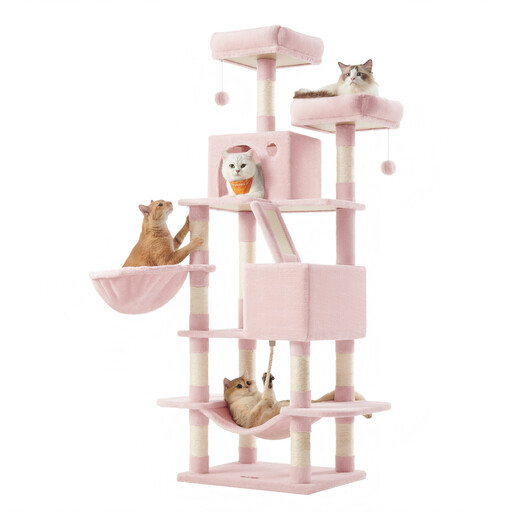
Why This Fits Their Persona: Ideal for owners of multiple cats or large breeds who need a robust, all-in-one solution with plenty of lounging, playing, and scratching options. The 168 cm height and multiple levels provide ample space.
This model tackles the stability issue with a reinforced base plate and a high static load capacity of up to 65 kg, according to the manufacturer. Its 13 sisal posts offer plenty of scratching surface to prevent rapid wear and tear.
Offers exceptional variety with 2 condos, 2 platforms, a basket, and a hammock. The high load capacity makes it a safe choice for multiple playful cats.
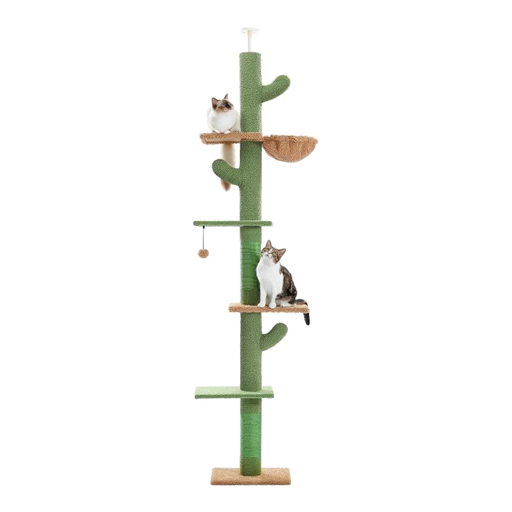
Why This Fits Their Persona: Perfect for renters or cat owners seeking ultimate stability without wall mounting. The tension system makes the cat tree extremely sturdy, ideal for very active or heavy cats.
This floor-to-ceiling cat tree fundamentally solves the instability problem by wedging itself securely between the floor and ceiling. The main post, with a 9 cm diameter, provides additional sturdiness.
The height-adjustable design (229-275 cm) flexibly adapts to different ceiling heights. Its space-saving vertical design is also suitable for smaller rooms.
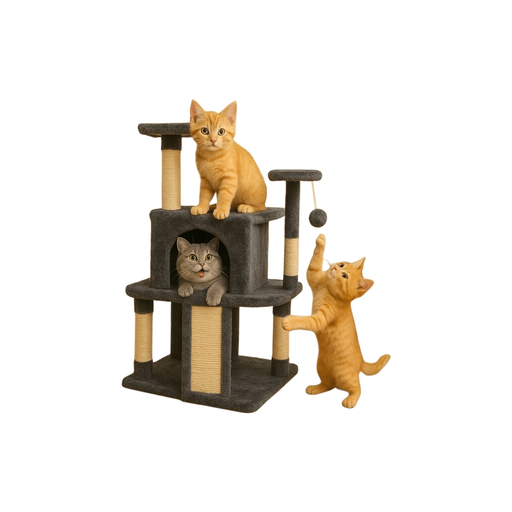
Why This Fits Their Persona: A great choice for owners of small to medium-sized cats (up to 5 kg, per the manufacturer) living in an apartment with limited space. The vertical design utilizes room height without taking up much floor space.
This model avoids the "over-promising" trap by being clearly positioned for cats under 5 kg. It sidesteps the pitfall of being unsuitable for large breeds by focusing on a compact yet functional structure for a specific audience.
Combines scratching posts, a semi-enclosed condo, and play balls on a small footprint (43x43 cm). It offers a good range of features for the space it occupies.
Besides cat trees, there are many other ways to satisfy your cat's instinct to play and scratch. We've curated a selection of products that can be great additions.
Place the cat tree in a spot where your cat likes to hang out, such as near a window or in the living room. Make the tree more appealing by placing treats or toys on the different levels. You can also rub some catnip on the sisal posts to encourage scratching. Be patient; some cats need time to get used to new furniture.
The lifespan heavily depends on the material quality and the intensity of use. A sturdy model with thick posts and high-quality, tightly wound sisal can last for several years with one or two cats. On many models, wearable parts like sisal posts or hammocks can be purchased and replaced individually, significantly extending the entire cat tree's lifespan.
For regular cleaning, simply vacuum the cat tree with an upholstery attachment to remove hair and dust. Minor stains on the plush fabric can be treated with a damp cloth and a mild soap solution. Avoid harsh cleaning agents, as their smell can deter cats. Also, regularly check all screw connections and tighten them as needed to ensure stability.