
Lieferung heute & morgen

Qualitätsgarantie

Willkommens-Angebote freischalten: KOSTENLOSE Lieferung | Bis zu 80 % RABATT | Kostenlose 30-Tage-JoyPlus-Testphase
App herunterladen
For indoor cats, a large cat tree is more than just a piece of furniture—it's a vertical kingdom for climbing, observing, sharpening claws, and retreating. Yet, the purchase is often fraught with disappointment. Many models that look promising online turn out to be unstable structures or wear out after just a few months. As your Joybuy Product Recommendation Officer, I'll help you avoid the typical pitfalls and make a durable, safe choice for your cat(s).
The three most common mistakes when buying a large cat tree are:
cat tower will be avoided by cats and poses a safety risk. Manufacturers often cut corners on the size and weight of the base plate, which is critical for models over 1.50 m tall.To avoid a bad purchase, you should focus on technical details that are often only mentioned in passing in product descriptions. These parameters are decisive for safety and functionality.
A sturdy cat tree is absolutely essential. Stability depends on three factors:
XXL cat tree used by multiple pets at once.High-quality cat furniture is characterized by durable materials.
The ideal features depend on the preferences and number of your cats.
cat tree for multiple cats needs various retreat spots at different heights to avoid conflicts. Multiple dens, hammocks, and lounging platforms are ideal here.cat tree with a den and hammock offers sheltered sleeping spots, which are particularly appreciated by shyer pets.Here are some models that are suitable for specific user profiles based on objective features.
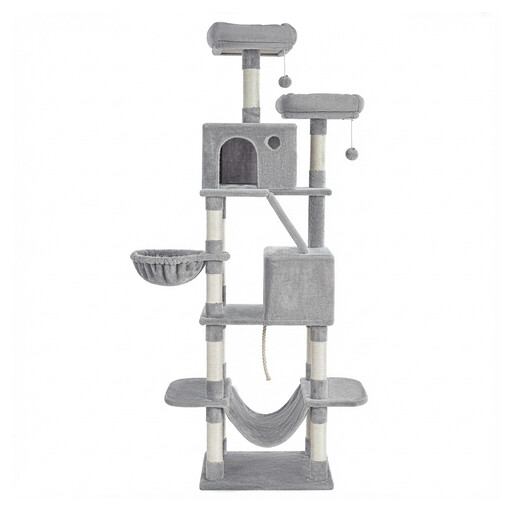
Why this model is a great fit: At 206 cm tall, with two dens, two loungers, a hammock, and 13 scratching posts, this tower offers enough space and activities for multiple cats at once, preventing territorial disputes. The static load capacity of up to 75 kg is designed for shared use.
The reinforced base plate and the included anti-tip kit directly counteract the instability trap at this extreme height.
Maximum vertical play area and a high density of scratching, playing, and resting zones in a compact footprint.
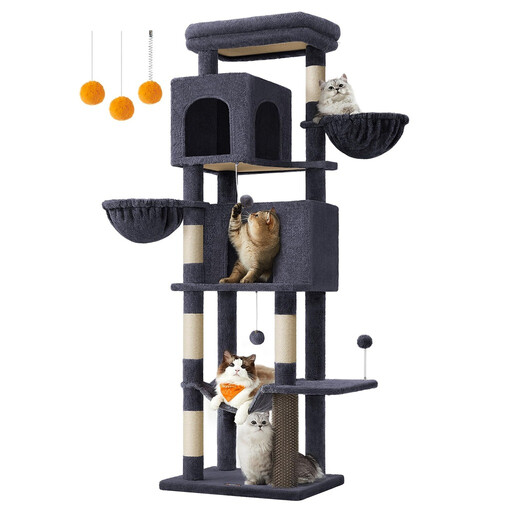
Why this model is a great fit: The 175 cm height and the arrangement of the levels encourage natural climbing behaviour. The spacious top platform and sturdy loungers are also suitable for larger and heavier cat breeds that need more space.
The construction from robust particle boards and the included anti-tip kit ensure stability even during wild jumps and climbing manoeuvres.
A balanced mix of vertical climbing opportunities, robust scratching posts, and comfortable resting zones.
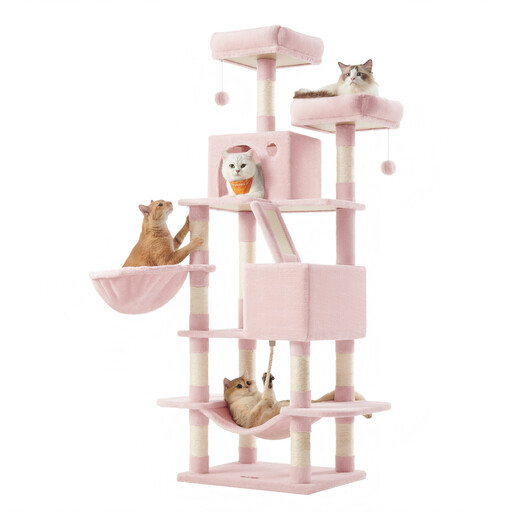
Why this model is a great fit: For owners who want to combine functionality with an appealing design. The pastel pink colour adds a stylish accent to your living space without compromising on features. At 168 cm, it's large but not overpowering.
Despite the playful design, stability is ensured by a reinforced base and 13 sisal posts. This avoids the "style over substance" trap.
Combines comprehensive features, including two dens and a hammock, with a unique aesthetic that stands out from standard models.
After climbing and playing, a restful sleeping spot is just as important. If you're also looking for the perfect resting place for your cat, you can find more options here.
After climbing and playing, a restful sleeping spot is just as important. Discover our selection of comfortable and washable cat beds.
Always place the cat tree on a level, solid surface, and ideally against a wall. Be sure to use the included anti-tip kit (a strap or bracket) to anchor the tower to the wall. Regularly check that all screws are still tight, especially in the first few weeks after assembly.
The lifespan heavily depends on the quality and intensity of use. A replacement is necessary when the stability is compromised or the sisal posts are so worn out that the cat can no longer use them. On many models, individual posts or elements can be replaced, which can make a complete new purchase unnecessary.
Place the new cat climbing tree in a spot where the family often gathers. Make it more interesting with treats, toys, or a little catnip on the posts. Gently place your cat on the lower levels and let them explore the rest at their own pace. Patience is key here.