
Lieferung heute & morgen

Qualitätsgarantie

Willkommens-Angebote freischalten: KOSTENLOSE Lieferung | Bis zu 80 % RABATT | Kostenlose 30-Tage-JoyPlus-Testphase
App herunterladen
A large cat tree is more than just a piece of furniture; it's a vertical playground, a secure haven, and an essential tool for your cat's claw care. However, the selection can be overwhelming, and a poor purchase not only leads to frustration but can also pose a safety risk. Many models overpromise and underdeliver. As your Joybuy Product Recommendation Officer, I'm here to help you identify the most common pitfalls and make an informed decision.
The three most common problems when choosing a large cat tree are:
To avoid these issues, you should check three core parameters before buying. These determine the longevity, safety, and acceptance of the tree by your cat.
A stable cat tree is the absolute foundation. Look for the following features:
The quality of the materials used determines how long the cat climbing tree will serve its purpose.
The overall height alone isn't the full story. The dimensions of the individual elements must be suitable for the size of your cat.
Here are some models that are tailored to different needs and households, taking the above criteria into account.
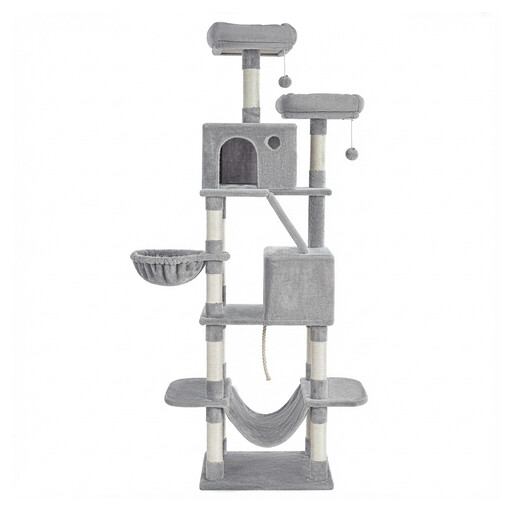
Why this model is a great fit: With a height of 206 cm, two condos, two perches, a hammock, and 13 scratching posts, this tower offers enough space and activities to minimise conflicts in a multi-cat household. Each cat can claim its own territory.
The reinforced base plate and a high static load capacity of 75 kg counteract the instability that is often a problem when used by multiple cats. The included anti-tip kit provides additional security.
Maximum vertical play area and a high number of scratching and lounging options to meet the needs of multiple cats simultaneously.
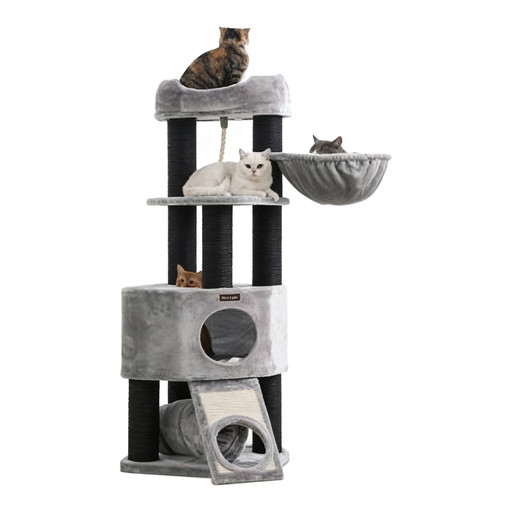
Why this model is a great fit: This model was specifically designed for large and powerful cats. The extra-thick 11.3 cm diameter sisal posts and the double-layered base plate provide exceptional stability, even when a large cat leaps onto the tower with full force.
The extra-thick posts and reinforced base directly address the biggest concern for owners of large cats: instability. The construction is designed for heavy weight and intense use.
Exceptional stability thanks to the combination of thick posts, a double base plate, and a mandatory wall anchor.
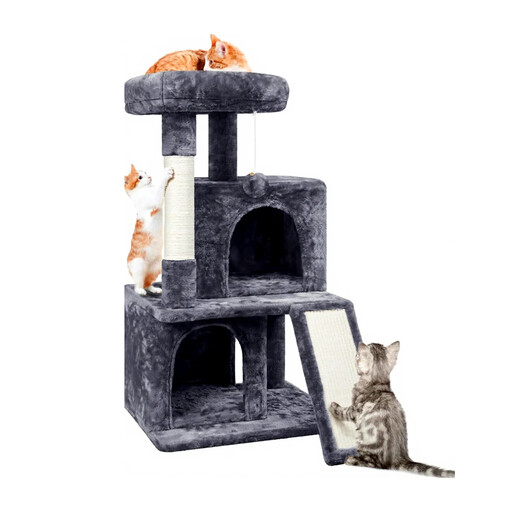
Why this model is a great fit: At 91 cm tall, this cat tree offers a great balance of vertical space and a compact footprint. It's suitable for apartments where there's no room for a giant tower, yet it still provides a condo, a lookout platform, and scratching posts.
Despite its moderate height, the problem of instability is addressed with a wide base plate and an included anti-tip kit. This prevents even a smaller tree from being wobbly and unsafe.
A great balance between functional variety and a space-saving design, enabling species-appropriate enrichment even in smaller living spaces.
We've compiled a complete, up-to-date list of products that meet these strict selection criteria and rigorous safety standards.
Patience is key. Place the cat tree in a central location where the family often gathers, such as the living room. Make the tree more appealing by placing treats or your cat's favourite toy on the different levels. Rubbing the sisal posts with catnip can also help draw attention to the designated scratching areas.
For models over 150 cm in height, a wall anchor is highly recommended. It is a crucial safety feature to prevent tipping, especially if you have very active, heavy, or multiple cats. Most high-quality, large cat trees come with a corresponding anti-tip kit. Installation is straightforward and significantly increases safety.
Look for clear signs of wear and tear. If the sisal posts are so worn down that the cat is scratching the material underneath, they have lost their function. Also, regularly check the stability of all platforms, condos, and connections. As soon as parts become wobbly, loose, or broken, the cat tree should be repaired or replaced for safety reasons. Its lifespan heavily depends on the quality of the model and the intensity of use.