
Lieferung heute & morgen

Qualitätsgarantie

Willkommens-Angebote freischalten: KOSTENLOSE Lieferung | Bis zu 80 % RABATT | Kostenlose 30-Tage-JoyPlus-Testphase
App herunterladen
For an indoor cat, a large cat tree is more than just a piece of furniture—it's a vertical playground, a secure retreat, and an essential tool for claw maintenance. A sturdy and well-proportioned cat tower is indispensable, especially for owners of large cat breeds like Maine Coons or for multi-cat households. However, the market is flooded with models that look impressive at first glance but quickly turn out to be a bad buy. As your Joybuy Product Recommendation Officer, I'll help you recognise the typical pitfalls and make an informed decision.
Many cat owners invest in an imposing cat tree, only to find that it wobbles, the material gives way, or the cat simply ignores it after just a few months. These problems can often be traced back to three fundamental design flaws.
To avoid purchase regret, you should focus your attention on a few crucial technical features. These determine whether a cat tree is truly suitable for large cats or multiple pets.
Stability is paramount. To call a cat tree stable requires more than just an impressive height. Pay attention to the following points:
A cat tree is an item that sees daily use. Its longevity is directly dependent on the quality of the materials used.
Choosing the right model depends heavily on your living situation and the needs of your cat(s). Here are some recommendations tailored to specific profiles.
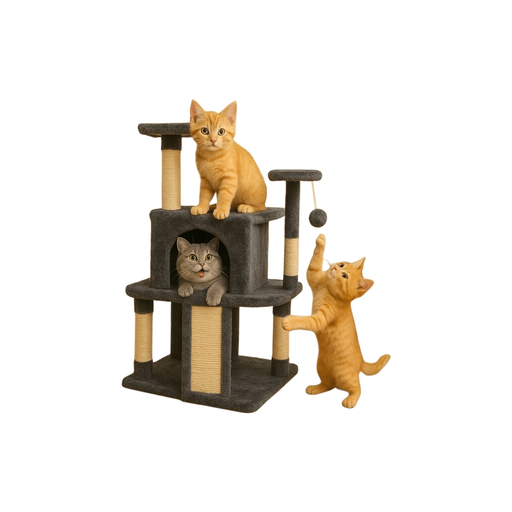
Why This Fits Their Persona: Ideal for apartments where space needs to be maximised. This model uses its height to offer multiple levels, a condo, and scratching options on a compact 43x43 cm footprint.
Instead of aiming for maximum height, this model focuses on a smart, vertical structure. It avoids the instability trap by providing an appropriate base for its moderate 102 cm height and is designed for cats up to 5 kg.
Combines a scratching post, scratching board, condo, and a toy ball in a small footprint. The semi-enclosed condo offers a secure retreat.
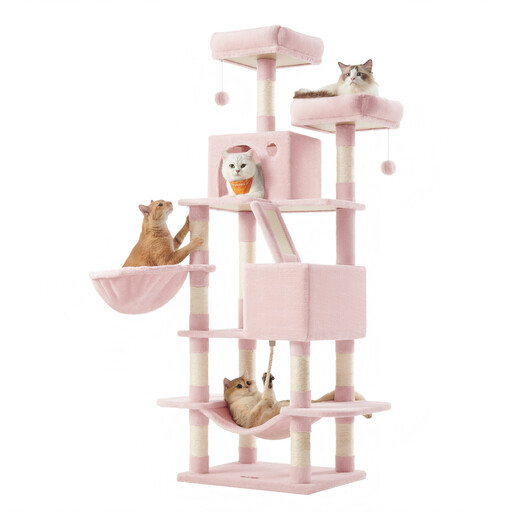
Why This Fits Their Persona: Designed to minimise conflicts over the best spots. With two condos, two platforms, a hammock, and a basket, this cat tower provides enough separate lounging and observation areas for multiple cats at once.
Addresses the problem of impractical dimensions by offering a variety of lounging options. The high static load capacity of up to 65 kg (according to the manufacturer) and the reinforced base provide the necessary stability.
13 posts wrapped in natural sisal offer ample scratching opportunities. The diverse features, including condos, a basket, and a hammock, cater to different preferences.
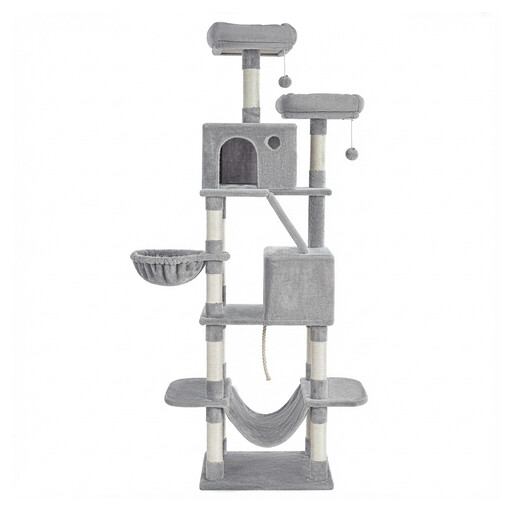
Why This Fits Their Persona: With its 206 cm height and robust construction, this XXL cat tree is specifically designed for the demands of large, heavy, and active cats. It provides the necessary vertical space for climbing and observing.
It counters the instability trap with a large, reinforced base plate and a high static load capacity of up to 75 kg (according to the manufacturer). The mandatory anti-tip kit ensures maximum safety.
Impressive height of over 2 metres for demanding climbers. An additional scratching ramp makes climbing easier and provides another surface for claw care.
We've compiled a complete, up-to-date list of products that fully meet these strict selection criteria and safety standards.
1. How do you securely install a large cat tree? The safest method is to use the included anti-tip kit. This usually consists of a sturdy nylon strap with an eyelet, which is attached to the top part of the cat tree and anchored to the wall with a screw and wall plug. Always place the cat tree on a level, solid surface and regularly tighten all screws during and after assembly.
2. What is the ideal height for a large cat's tree? The absolute height is less crucial than the combination of stability and usable space. A 150 cm high but extremely stable tree with large lounging areas is often better for a Maine Coon than a 200 cm high, wobbly model with tiny platforms. Cats love to survey their surroundings from a high vantage point, so a height of at least 140 cm is recommended for a cat climbing tree, provided that stability is guaranteed.
3. How long does a high-quality cat tree last? The lifespan depends heavily on the intensity of use and the quality of the materials. On a high-quality model, the main wear-and-tear parts are usually the sisal posts. With daily use by one or more cats, these can be worn out after 2 to 4 years. Many manufacturers offer replacement posts. The core structure, made of robust boards and stable connections, should last for many years with proper care.