
Lieferung heute & morgen

Qualitätsgarantie

Willkommens-Angebote freischalten: KOSTENLOSE Lieferung | Bis zu 80 % RABATT | Kostenlose 30-Tage-JoyPlus-Testphase
App herunterladen
A large ceramic planter can transform a room, providing the perfect showcase for a statement houseplant. However, finding the right model is often more challenging than it seems. Many products that look great at first glance turn out to be impractical or lack durability. This guide will help you identify the crucial features and avoid making a poor purchase.
Before you make a decision, you should be aware of the common problems that often only become apparent after the purchase.
To ensure your new planter is both functional and long-lasting, you should check three central aspects.
The general term "ceramic" encompasses various materials. For a large and robust indoor planter, stoneware is often an excellent choice. Unlike more porous earthenware, stoneware is fired at very high temperatures. The result is a denser, more resilient, and impermeable material. A stoneware plant pot is therefore an investment in longevity.
A planter with a hole is essential for most houseplants to allow excess water to drain away. If you opt for a model without a hole because you intend to use it purely as a decorative cover pot, plan from the outset to use a suitable, smaller plastic inner pot. This will contain the soil and provide the necessary drainage.
A designer planter in the living room should complement your decor. Current designs often feature clean lines and unique finishes. A large white and gold planter or a speckled ceramic pot can create targeted accents without being overbearing. Ensure the pot's proportions match the size of the plant and the room. A pot that is too small can make a large plant look unstable, while an oversized pot can overwhelm the space.
Here are some recommendations tailored to different needs and interior styles.
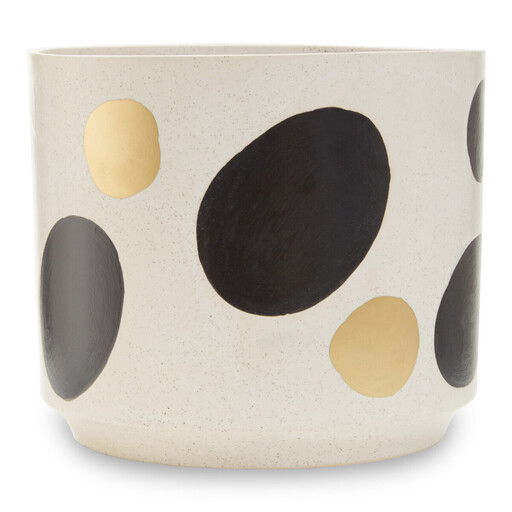
Why it's a great fit: Ideal for those looking for a statement piece. The size is suitable for prominent houseplants in the living room or hallway, and the speckled white and gold design adds a modern, luxurious accent.
According to the manufacturer, this planter is made from durable stoneware and features an integrated drainage hole, which directly eliminates the risk of waterlogging.
The combination of functional drainage and a sophisticated, handcrafted design makes separate inner pots and cover pots unnecessary.
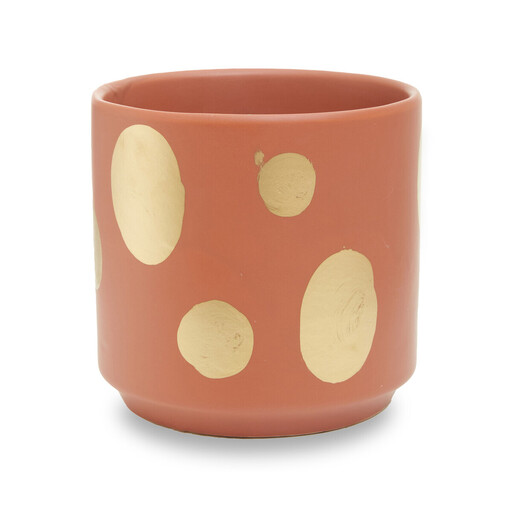
Why it's a great fit: For anyone seeking the same high-quality design in a more compact format for smaller plants, succulents, or herbs on a windowsill.
This smaller version is also crafted from robust stoneware and equipped with a drainage hole, offering the same functional benefits as the larger model.
It allows for a cohesive design scheme, as large and small plants can be placed in pots of the same design.
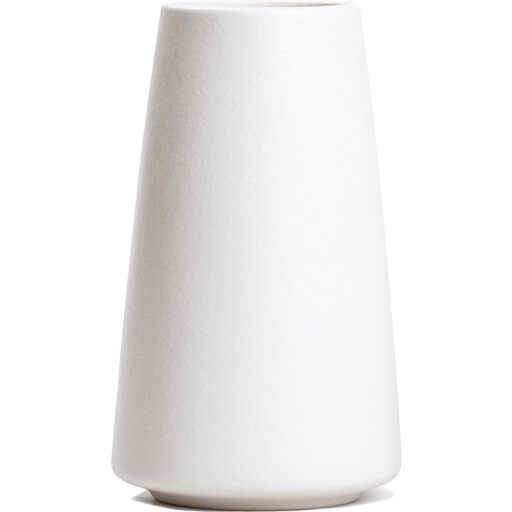
Why it's a great fit: Perfect for users who don't keep soil-based plants but want to display single stems, dried flowers, or hydroculture plants in a simple, modern vessel.
Since this vessel is designed as a vase, the absence of a drainage hole is a feature, not a flaw. According to the manufacturer, it is made of waterproof porcelain, making it ideal for holding water.
The matte, uniform surface and minimalist shape fit seamlessly into purist and modern interior styles where a classic flowerpot might look out of place.
We've curated a complete, up-to-date list of products that meet these strict selection criteria and quality standards.
Pay attention to the weight and material density; a heavier pot is often an indicator of high-quality, densely fired material like stoneware. Check the glaze for a uniform, crack-free surface. A clear sign of a well-thought-out design is also the presence of a drainage hole with a matching saucer.
Use it purely as a decorative cover pot (cachepot). Plant your plant in a simple plastic pot with drainage holes and place it inside the ceramic planter. A small layer of expanded clay pebbles or gravel at the bottom of the cover pot can help catch excess water and protect the roots from direct contact with it.
A common rule of thumb is that the diameter of the new pot should be about 2 to 5 centimetres (1-2 inches) larger than the current root ball. This gives the plant enough room to grow without sitting in too much moist soil, which could in turn promote root rot.