
Lieferung heute & morgen

Qualitätsgarantie

Willkommens-Angebote freischalten: KOSTENLOSE Lieferung | Bis zu 80 % RABATT | Kostenlose 30-Tage-JoyPlus-Testphase
App herunterladen
A large ceramic serving bowl should do more than look attractive. It needs to offer plenty of capacity, handle warm food safely and be easy to clean. Whether you are hosting a family meal, a barbecue or serving pasta for several people, the differences between products often become clear only in everyday use—not from product images alone.
A specification such as 3.2 l usually refers to the maximum capacity when filled to the rim. With soups, salads or pasta, however, you need to leave some room for mixing and carrying. A 3.2 l ceramic serving bowl is therefore often suitable for shared side dishes or several portions without being filled right to the top.
The shape also affects how the bowl can be used. A wide, shallow bowl makes serving salad and pasta easier. A deeper shape contains liquids more effectively and is better suited to soups, stews or bakes.
An ovenproof ceramic bowl should not be confused with a bowl suitable for hobs or naked flames. Many ceramic and stoneware products are approved for use in the oven and microwave, but are expressly not suitable for gas burners, ceramic hobs, induction hobs or direct flames.
Handling sudden temperature changes is particularly important. Do not place a cold bowl straight into an already very hot oven. Likewise, do not put a hot bowl on a cold stone worktop or into cold water. Such temperature changes can cause cracks.
A dishwasher-safe serving bowl is convenient for everyday use, but abrasive detergents or harsh sponges can damage the glaze. Decorative finishes, raised patterns and metallic details often come with different care instructions.
Before buying, check that the product description clearly states:
For a large salad bowl or a bowl designed for sharing, 2.5 to 3.5 l is a practical capacity for many households. Families and hosts should also check the diameter. A 32 cm model needs considerably more storage space than a 22 cm bowl.
Also consider the weight. A large stoneware bowl can weigh around 2 kg before it is filled. Wide rims or side handles can make carrying easier, but they also affect how much room it takes up in a kitchen cupboard.
Stoneware generally has thicker walls and is often used for robust serving dishes and bakeware. Glazed ceramic is less likely to absorb liquids and odours, provided the surface is sealed and undamaged. Porcelain is often lighter and has a more delicate appearance, but it can still break if knocked.
The material name alone is not what matters. Always check the manufacturer’s specific information about:
For example, the Le Creuset Serving Bowl is stated to be lead-free and cadmium-free, and to comply with EU regulations for ceramic materials intended for food contact. Statements like these should always be taken from the relevant product listing.
If you want a serving bowl for pasta purely for use at the table, you will need different features from someone who wants to bake bakes or mix dough in it. For food preparation, temperature resistance, sufficient depth and a stable base are important. For serving, the rim design, weight and appearance of the glaze matter more.
A microwave-safe serving bowl is particularly useful for reheating food. However, manufacturers may restrict its use to reheating and advise against heating it when empty or using long, high-power cycles. The product’s individual instructions always take priority.
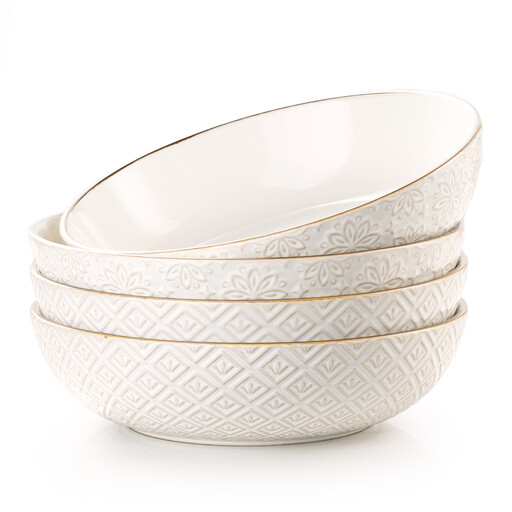
Why this product suits this profile: This set of four ceramic bowls is designed for everyday use and is suitable for pasta, salad, soup and other main dishes. Each bowl measures 8.5 inches in diameter and is stackable.
The product details specify the set size and dimensions, as well as suitability for the microwave, oven and dishwasher. This makes it easier to assess how it can be used before buying.
Four bowls, a stackable design and confirmed suitability for use with several kitchen appliances.
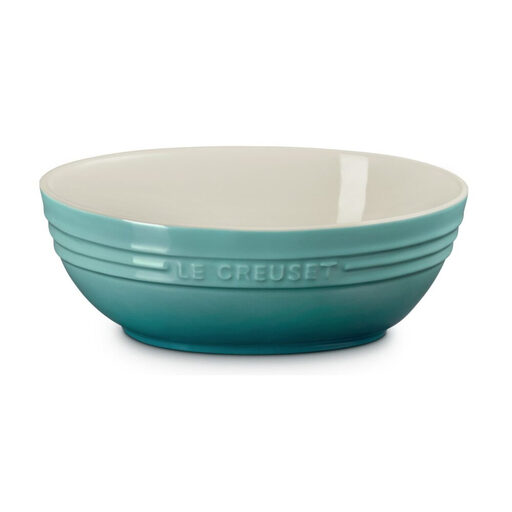
Why this product suits this profile: This 32 cm premium stoneware bowl has a 3.2 l capacity and is designed for salad, pasta, fruit and shared meals. Its coloured glaze makes it an attractive addition to a set table.
The specifications clearly distinguish between oven use and direct heat: the bowl is approved for the oven, microwave, freezer and dishwasher, but not for hobs or naked flames.
3.2 l capacity, 32 cm diameter, a temperature range of -23 °C to 260 °C and confirmed suitability for several uses.
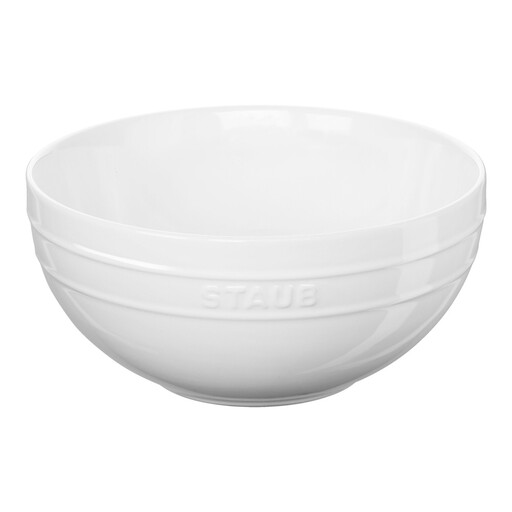
Why this product suits this profile: According to the product details, this bowl has a capacity of 3.2 l, measures 24 cm in height or width and can be used for mixing, baking, roasting, grilling and serving.
The product description specifies heat resistance up to 300 °C, as well as approval for use in the oven, on the grill, in the microwave, freezer and dishwasher. Direct heat is not permitted.
Stackable design, 3.2 l capacity and a temperature range of -20 °C to 300 °C according to the product details.
We have put together a complete, regularly updated list of products that fully meet these strict selection criteria and the safety regulations applicable in the EU.
For several people, around 2.5 to 3.5 l is practical. If you are hosting six or more guests, a larger model may be worthwhile. The key is to leave enough room for mixing as well as the food itself.
This depends on the individual product. A clearly designated ovenproof ceramic bowl can usually be used in the oven, but not automatically on the hob or under the grill. Check the temperature range and any guidance on thermal shock before use.
Yes, this capacity can be suitable for several portions of pasta, salad, fruit or side dishes. The actual amount depends on the bowl’s shape, fill level and the space needed for mixing. For smaller households, a 1.2 l bowl may be more practical, while hosts can benefit from the larger option.