
Lieferung heute & morgen

Qualitätsgarantie

Willkommens-Angebote freischalten: KOSTENLOSE Lieferung | Bis zu 80 % RABATT | Kostenlose 30-Tage-JoyPlus-Testphase
App herunterladen
A large decorative vase can help define a room, showcase flowers and branches, or make a statement as a standalone home accessory. In practice, however, unclear dimensions, unsuitable materials and an unstable base can easily lead to the wrong purchase. So if you’re looking for a large vase for your living room, a floor-standing vase or a decorative planter, there’s more to consider than appearance alone.
A vase that’s 30 or 40 cm tall can look bigger in a product photo than it really is. You’ll also need to check its width, depth and opening diameter. A slim glass vase takes up little space, but may not be stable enough for a large bunch of branches. A wide ceramic vase, on the other hand, could take up too much room on a small sideboard.
Before you buy, measure the space where you plan to put the vase, and leave a little room around it so it’s clear of walls, furniture edges and walkways.
Glass, ceramic, dolomite, stoneware and metal all differ in weight, care requirements and risk of breakage. A shiny finish isn’t necessarily easy to maintain. Harsh cleaning products can damage textured or metallic finishes. With handmade glass products, small air bubbles or slight variations in colour are possible and don’t necessarily mean there’s a fault.
So look for specific details such as material, cleaning instructions, capacity and intended use.
Not every decorative vase is automatically watertight. That’s usually not an issue if you’re looking for a vase for pampas grass or dried flowers. For fresh flowers, however, the product information should explicitly state that you can add water. A planter for houseplants also needs suitable internal dimensions and, ideally, a drainage hole or a suitable outer pot.
Artificial plants need a stable base, too. They’re often lighter than an arrangement in water, but their long stems can still tip a narrow vase over.
For a floor-standing vase, height and base size are particularly important. Models around 40 to 55 cm tall can sit beside a sofa, in an entrance hall or next to a sideboard. More compact models, around 20 to 35 cm tall, are often more practical for tables and chests of drawers.
The opening should suit your arrangement:
A low centre of gravity and a sufficiently wide base help reduce the risk of tipping. If you have children or pets, place the vase on a flat, stable surface and out of their reach.
A glass vase lets you see the stems, water and any decorative filler. Clear glass suits simple arrangements, while coloured glass adds a splash of colour. Glass is fragile, though, so handle it carefully when moving it and place it on a safe surface.
A ceramic vase, or a model made from stoneware or dolomite, usually has a more opaque finish and can work as a sculptural home accessory. Its greater weight can help it stay stable, depending on its shape. However, you’ll need to protect its edges and surface from knocks.
For outdoor use, check product details such as UV resistance, moisture resistance and weather resistance. These properties should be clearly stated in the product description. In freezing temperatures, it may be a good idea to store planters away, if the manufacturer recommends doing so.
A few practical questions can help you avoid disappointment later:
Some listings clearly state that plants aren’t included. Clean glass products carefully with a soft cloth and mild cleaning product. Follow the relevant care instructions for ceramic, dolomite and metal surfaces.
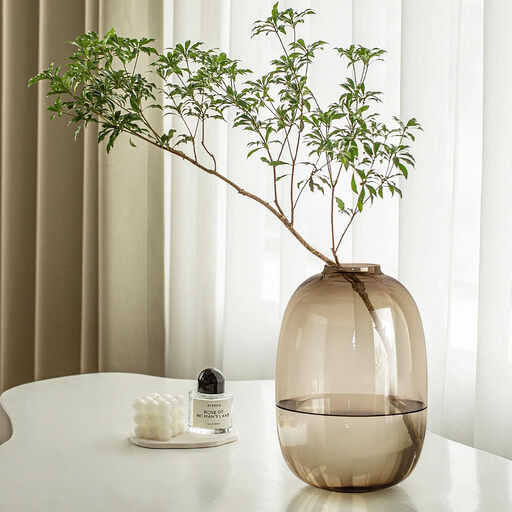
Why this product suits this shopper: At 25 cm tall, with a 2.5-inch opening, this vase is suitable for tables, shelves and sideboards, as well as smaller floral arrangements.
The stated dimensions make it easier to check whether you have enough space. The description also specifically mentions the thicker base and rounded shape.
Brown transparent glass; suitable for fresh, dried and artificial flowers, as well as branches.
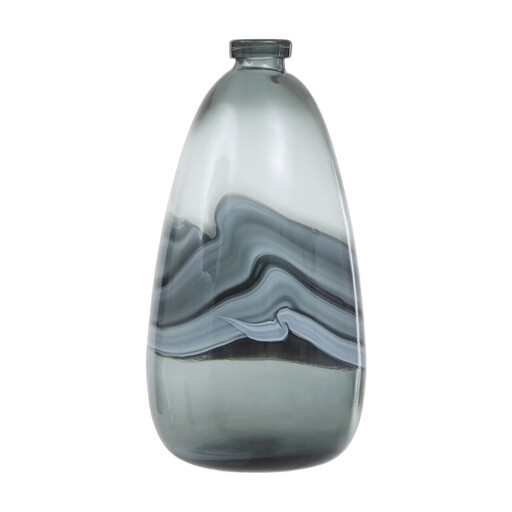
Why this product suits this shopper: This 40 cm glass vase has a narrow neck designed for long stems, and works well as a modern vase in your living space.
The height, width and material are clearly specified. The narrow neck also limits how many heavy branches you can arrange in it.
Glass, a grey gradient finish, a 12-litre capacity and easy care with a soft cloth.

Why this product suits this shopper: This 58 cm planter is designed for indoor and outdoor use. Its 31-litre capacity gives larger plants plenty of room.
The description gives details of the capacity, material, UV and moisture resistance, and an opening that can be sealed or drilled.
A blend of stone, polyresin and fibreglass; weighs 3.5 kg; no assembly required.
A large vase for your living room, hallway or sideboard should always be placed on a flat, sturdy surface. For glass vases, a non-slip mat is a good idea, as long as it doesn’t affect stability. Change the water regularly and wipe up any spills straight away, especially on wooden furniture.
Dried flowers and pampas grass usually only need dry cleaning. Only fill a vase with water for fresh flowers if the product information says it’s suitable. Planters with drainage holes should be placed on a suitable base to prevent moisture from damaging the floor or furniture.
We’ve put together a complete, regularly updated list of products that meet these strict selection criteria and fully comply with the safety regulations in force in the EU.
Around 20 to 35 cm is often a practical size for a sideboard or table. A floor-standing vase can be around 40 to 60 cm tall. The space available, the vase’s diameter and the weight of the arrangement are still key considerations.
A vase for pampas grass should have a sufficiently narrow opening and a stable base. Bottle-shaped designs or tall models with narrow necks work well for long stems. Before you buy, check whether the vase is intended for decorative use only or can also hold water.
Choose a wide base, place the vase on a flat surface and avoid putting heavy branches all on one side. For lightweight containers, adding a stable filler to the bottom can also help. Keep fragile vases out of reach of children and pets when they’re unsupervised.